
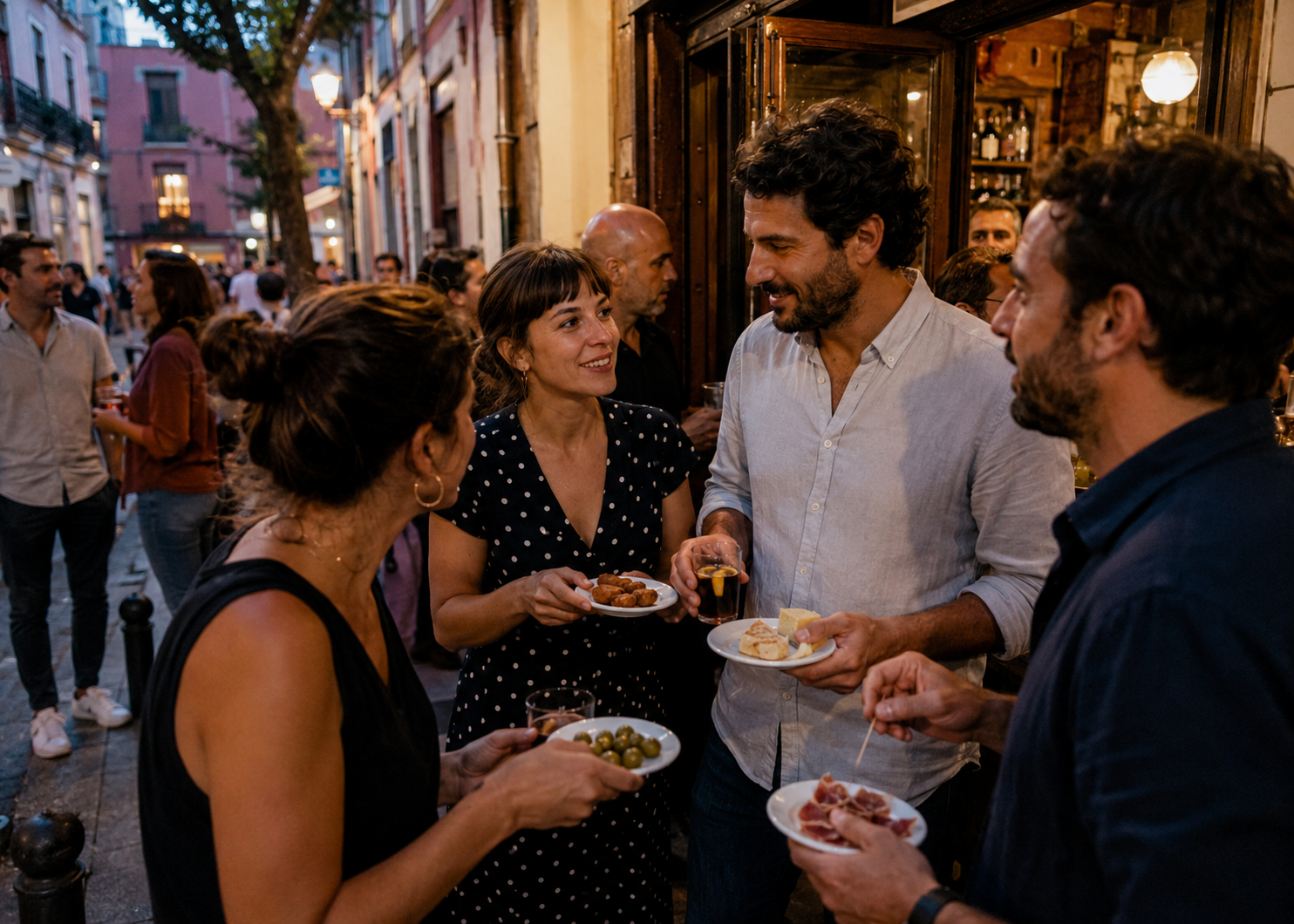
Walk into a tapas bar near the Puerta del Sol in Madrid, the heart of the tourist district, and you will see two entirely different meals happening at once. At one table, the tourists, ordering the famous things, the sangria, the paella, the patatas bravas drowned in two sauces, certain they are eating the real Spain. At the next table, the Madrileños, ordering something else entirely, the things locals actually eat, which are mostly not the things on the tourist’s table. The gap between what tourists order in a Spanish tapas bar and what Madrid locals actually order is wide, and crossing it is the difference between the tourist version of tapas and the real thing that Madrid eats.
The tourist tapas are not all bad, but they are either things locals rarely order, tourist-trap versions of real dishes, or simply not what Madrileños eat day to day, while the real local tapas, the ones the Madrid regulars are ordering, go largely unnoticed by the tourist working through the famous list. After time spent at Madrid bars watching the divide, here are five tapas that tourists order constantly and Madrileños tend to avoid, why the locals skip them, and what they actually order instead, so you can eat the real Madrid.
Sangria, The Drink Locals Almost Never Order
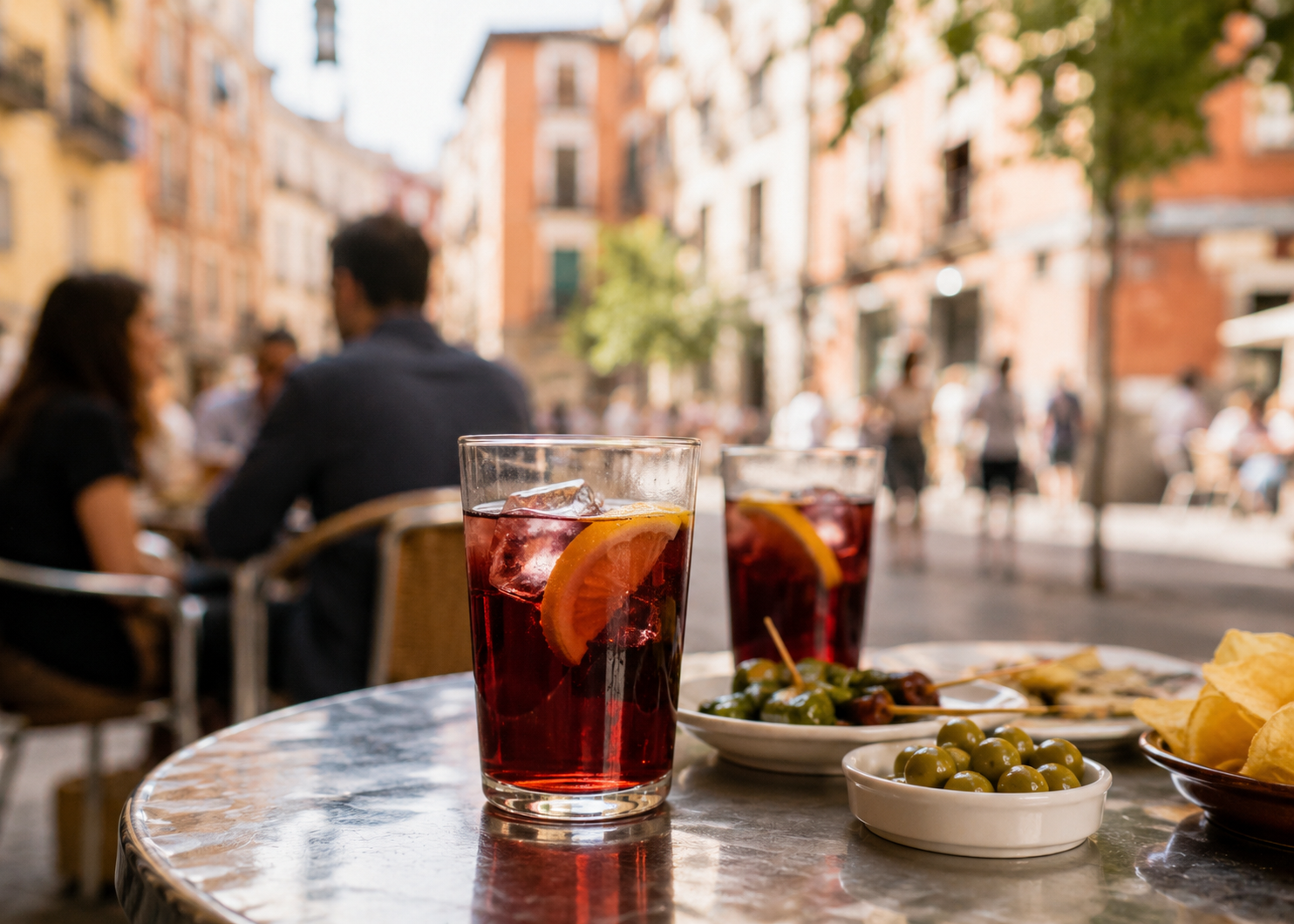
Start with the drink, since the most reliable tourist tell in any Spanish bar is the sangria, which Madrileños almost never drink.
Sangria, the fruity wine punch that tourists order as the quintessential Spanish drink, is something Spaniards themselves rarely order, regarded as a touristy thing, often made cheaply for tourists from poor wine and sold at inflated prices, and a Madrileño would almost never order sangria in a bar, considering it neither what they drink nor good value. The tourist ordering a jug of sangria, certain it is the authentic Spanish choice, marks themselves immediately, since the locals at the next table are drinking something else entirely, the real everyday drinks of Spain, while the sangria is mostly a tourist product, sweet and overpriced and not what Spaniards actually drink. It is the clearest drink tell in a Spanish bar, the sangria that locals avoid.
What Madrileños actually drink is the everyday Spanish bar drinks, the caña, the small fresh glass of draft beer that is the default order, the glass of regional wine, the vermut, the vermouth that is a beloved aperitif especially before lunch, or for a refreshing wine drink, the tinto de verano, red wine with soda or lemon soda, which is what Spaniards drink when tourists drink sangria. The tinto de verano in particular is the local’s refreshing summer wine drink, lighter and less sweet and far cheaper than sangria, what Madrileños actually order on a hot day, and ordering it, or a caña, or a vermut, instead of sangria, is the first step to drinking as Madrid drinks. Order the caña or the tinto de verano, skip the sangria, and you have crossed the first divide into the real local bar.
Paella, Not A Madrid Dish At All
The second great tourist order Madrileños avoid is paella, which is not a Madrid dish and is usually a poor tourist version when served there.
Paella, which tourists order everywhere in Spain as the national dish, is actually a regional dish from Valencia, not from Madrid, and the paella served in the tourist bars of Madrid is typically a mediocre frozen or pre-made tourist version, nothing like the real Valencian dish, so Madrileños rarely order paella in Madrid, knowing it is neither local nor good there. The tourist ordering paella in a Madrid tapas bar is ordering a Valencian dish, badly made for tourists, in a city where it is not the local food, a clear marker of not knowing that paella belongs to Valencia and is rarely done well outside it. Real paella is a wonderful thing in Valencia, made properly, but the Madrid tourist-bar version is a trap the locals avoid.
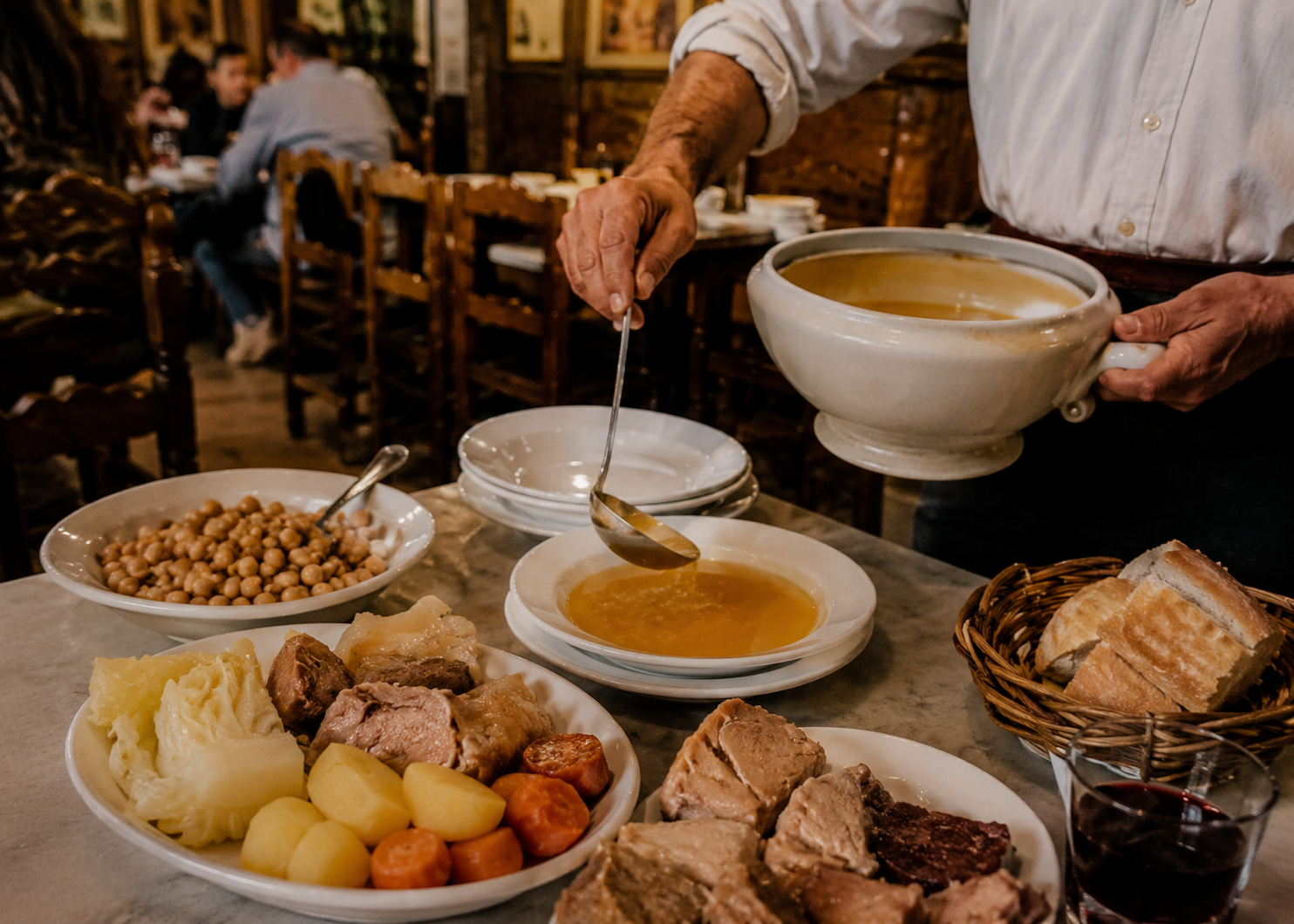
What Madrileños actually eat reflects Madrid’s own food, the local dishes of the capital rather than the Valencian paella, the cocido madrileño, the great chickpea and meat stew that is Madrid’s signature dish, the callos a la madrileña, the tripe stew, the bocadillo de calamares, the fried squid sandwich that is a Madrid specialty, and the many tapas of the local repertoire. To eat as Madrid eats, order the Madrid dishes, the cocido in winter, the calamares sandwich, the local tapas, rather than the Valencian paella that does not belong to the city, and if you want real paella, save it for Valencia where it is done properly. Eat Madrid’s own food in Madrid, skip the tourist paella, and you eat the real local cuisine of the capital.
Patatas Bravas Done The Tourist Way
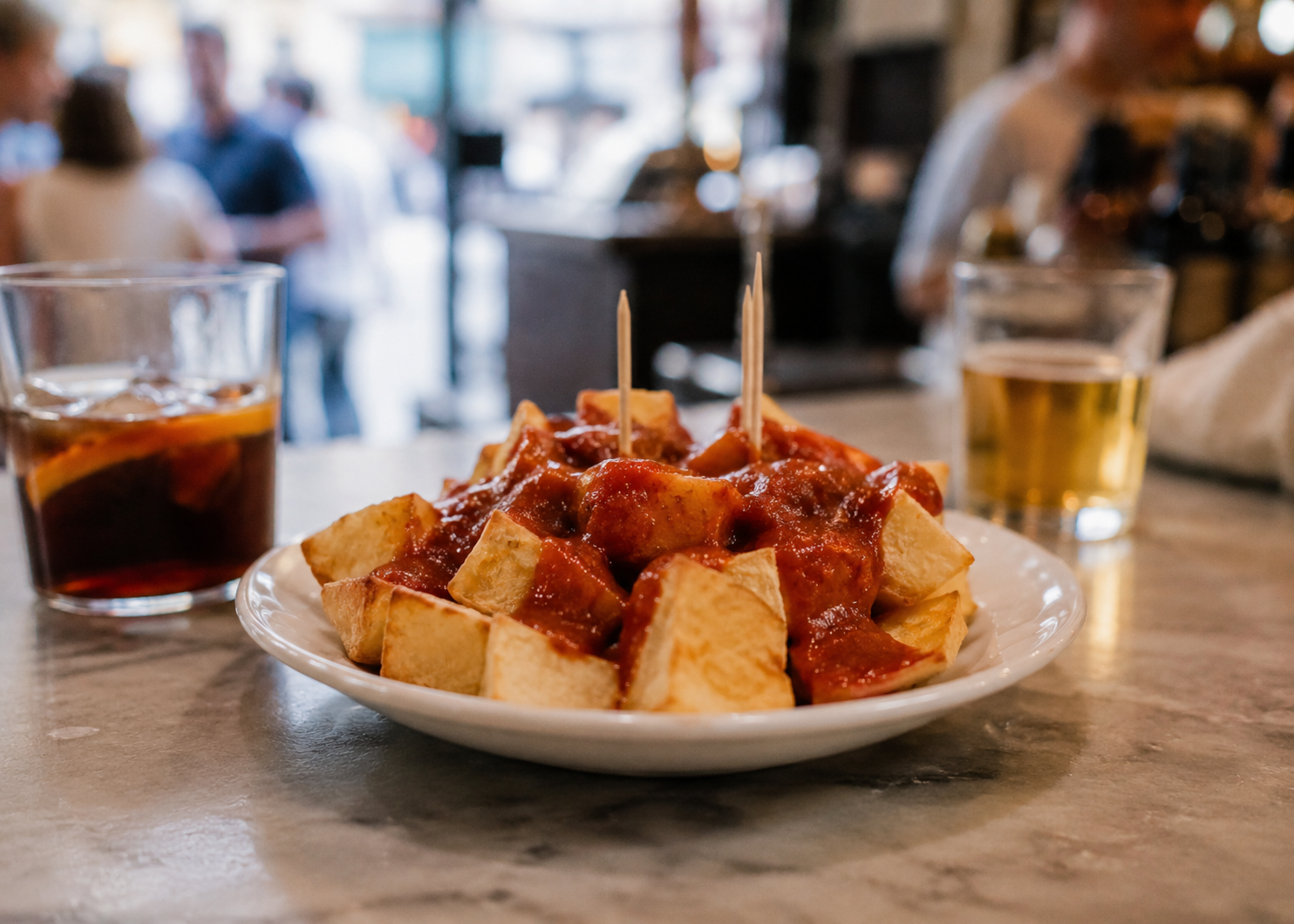
The third is a real tapa that tourists order in a tourist-trap version, the patatas bravas, which locals eat but not the way the tourist bars serve them.
Patatas bravas, fried potatoes with a spicy sauce, are a genuine and beloved Spanish tapa that Madrileños do eat, but the tourist version, drowned in two sauces, a spicy one and a garlicky aioli, often poorly made, is not quite how the locals have them, the authentic bravas being simpler, the potatoes good and the sauce a proper spicy brava sauce, not the doubled-up tourist presentation. The issue is less that tourists order bravas, which are real, than that they order them in the tourist bars that do a poor doubled-sauce version, while the locals know where to get good bravas done properly, with a real spicy sauce rather than the tourist-trap two-sauce drowning. So the bravas themselves are fine, but the tourist version and the tourist venue are the trap.
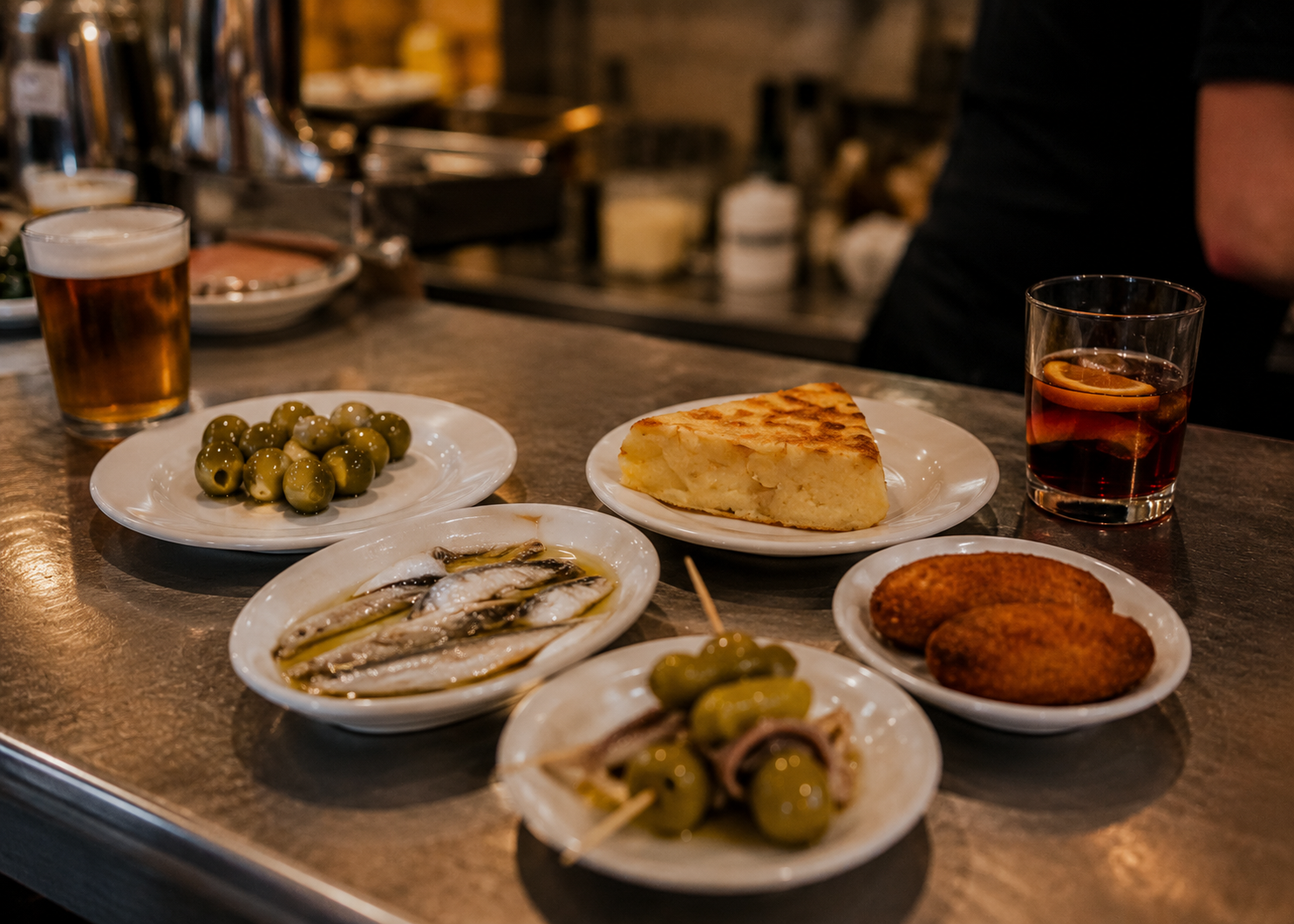
What Madrileños do is eat their bravas at the good local bars that make them properly, with a real brava sauce, the potatoes crisp and good, the sauce genuinely spicy in the traditional way, not the doubled-up aioli-and-ketchup-spice tourist version. And they order alongside them the other genuine tapas of the local repertoire, the tortilla española, the croquetas, the good jamón, the pimientos de padrón, the boquerones, the real everyday tapas that Madrileños actually eat. To eat as the locals do, get your bravas at a good local bar where they are made properly, and fill the rest of the table with the real traditional tapas rather than the tourist versions, and you eat the genuine Madrid tapas rather than the tourist-trap imitations.
Anything On The Picture Menu
The fourth is less a single dish than a category, the things tourists order from the picture menus at the tourist-trap bars, which locals never patronize.
The bars with the big photo menus, the multilingual signs, the staff beckoning tourists in from the famous squares, serve a tourist version of tapas that Madrileños never eat, since no local would patronize these tourist traps, knowing the food is mediocre, overpriced, and made for tourists rather than for Spaniards. The tourist ordering from the picture menu at the bar on the Plaza Mayor is eating the tourist-trap version of everything, the generic, the frozen, the poorly made, while the locals are at the unmarked bar down a side street eating the real thing, and the whole category of picture-menu tourist-bar food is what Madrileños avoid entirely. It is not a specific dish but a whole tier of tourist food that the locals never touch.
What Madrileños do is eat at the local bars, the unpretentious neighborhood places without the picture menus and the tourist trappings, where the food is made for locals, good and cheap and real, the genuine tapas of Madrid served to the Madrileños who actually live there. Finding these places, away from the tourist squares, full of locals, without the photo menus, is the key to eating real Madrid tapas, since where you eat determines what you eat, and the local bar serves the real food while the tourist trap serves the imitation. Avoid the picture-menu tourist bars entirely, seek out the local neighborhood places, and you eat the real Madrid tapas that the locals eat rather than the tourist version.
Overpriced Seafood And Tourist Raciones
The fifth is the category of overpriced tourist seafood and large raciones that the tourist bars push and the locals avoid.
The tourist bars push expensive seafood dishes, the big platters of mediocre seafood, the overpriced gambas, the tourist raciones designed to extract money from visitors who do not know the prices, and Madrileños avoid these, knowing them to be poor value and often poor quality, made for tourists who will pay tourist prices for unremarkable seafood. The tourist ordering the big expensive seafood platter at the tourist bar is paying inflated prices for mediocre food, while the locals know which bars do good seafood at fair prices and which dishes are worth ordering, avoiding the tourist seafood traps. The overpriced tourist seafood is another thing the locals skip, knowing the value and quality are both poor in the tourist venues.
What Madrileños do is order the genuine good-value tapas and the seafood that is actually worth it at the right places, the boquerones, the good fresh seafood at the bars that do it well and fairly, the proper raciones at the local places, rather than the overpriced tourist seafood platters. They know the real value, ordering the things that are good and fairly priced, the local tapas, the proper dishes at the proper bars, and avoiding the tourist seafood traps that charge much for little. To eat as the locals do, order the genuine good-value tapas at the local bars, be wary of the pushed expensive tourist seafood, and let the locals’ knowledge of value and quality guide you, and you eat well and fairly rather than falling for the overpriced tourist seafood that Madrileños avoid.
The Real Way To Eat Madrid Tapas
Behind the five tourist traps lies the real way to eat Madrid tapas, which is worth drawing out as the positive lesson.
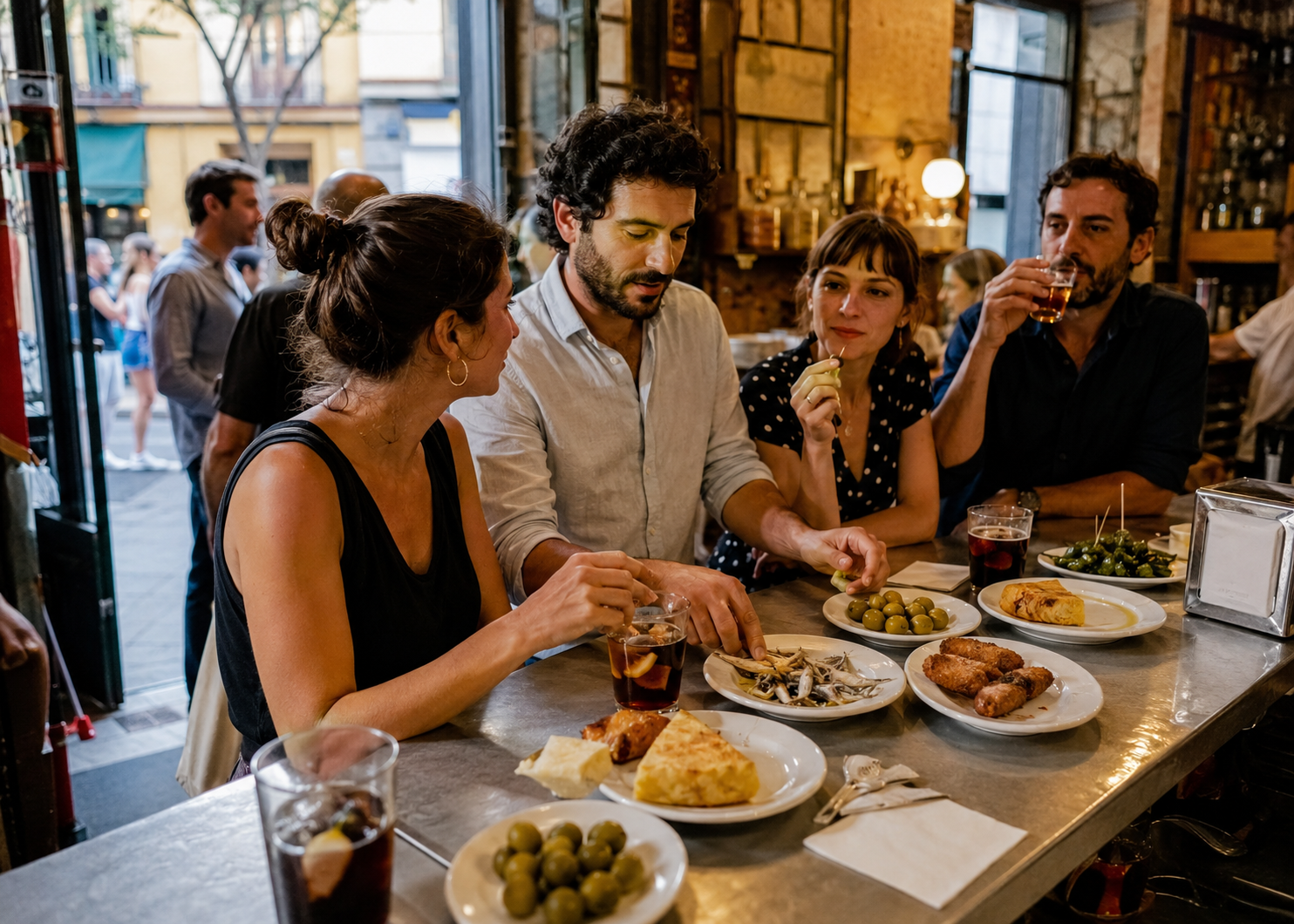
The pattern across all five is that the tourist orders, the sangria, the paella, the doubled-sauce bravas, the picture-menu food, the overpriced seafood, are things found at the tourist-trap bars near the famous squares, mediocre and overpriced and not what locals eat, while the real Madrid tapas, the caña and tinto de verano, the local Madrid dishes, the properly made tapas, the good-value real food, are found at the neighborhood bars where the Madrileños actually eat. Eating real Madrid tapas means getting away from the tourist squares and their picture-menu traps to the local bars, ordering the local drinks and dishes rather than the tourist famous-list, and being guided by what the Madrileños eat rather than by the tourist fantasy of Spanish food. The tourist list is a trap, and the real tapas lie at the local bars just beyond it.
The way to do it is to walk away from the tourist center, find the neighborhood bars full of locals without the photo menus, order the caña or vermut or tinto de verano, order the real tapas, the tortilla, the croquetas, the good jamón, the properly made bravas, the local Madrid specialties, and eat as the Madrileños do, well and cheaply and authentically. Let the locals guide you, eat where they eat, order what they order, and the real world of Madrid tapas opens up, far better and cheaper and more genuine than the tourist version near the squares, the actual food and drink of Madrid rather than the imitation sold to visitors. The five tourist traps are worth knowing precisely so you can avoid them and eat instead the real tapas of Madrid, which are one of the great pleasures of the city and almost entirely different from the tourist version.
How Madrileños Actually Order And Eat
Beyond which dishes to choose, the way Madrileños order and eat tapas is itself different from the tourist approach, and worth understanding to eat as they do.
The local way of eating tapas is often mobile and social, the tapeo, moving from bar to bar, having a drink and a tapa or two at each, rather than settling in one place for a whole meal, the pleasure being in the movement, the variety, the social circuit of the bars, a way of eating the tourist parked at one tourist bar never discovers. Madrileños also tend to order a few things to share, standing at the bar or at a small table, grazing over the tapas with their drinks, ordering as they go rather than from a fixed list, following the rhythm of the bar and the social evening. To eat as they do is to embrace this mobile social grazing, the tapeo from bar to bar, the sharing, the ordering as you go, rather than the tourist’s single sit-down at one venue working through a list.
Timing matters too, since Madrileños eat tapas at the Spanish hours, the pre-lunch vermut and tapa around one or two, the evening tapas from eight or later, not the early tourist hours, so eating at the right times puts you among the locals in the bars at their liveliest rather than alone in an empty bar at the wrong hour. Order a few things at a time, share them, move between bars, eat at the Spanish hours, drink the local drinks, and you eat tapas as Madrid eats them, a social mobile grazing pleasure rather than a tourist sit-down meal. This is the real texture of Madrid tapas, the how as much as the what, and adopting it completes the crossing from the tourist version to the genuine local experience, the real Madrid tapas evening in all its mobile social pleasure.

About the Author: Ruben, co-founder of Gamintraveler.com since 2014, is a seasoned traveler from Spain who has explored over 100 countries since 2009. Known for his extensive travel adventures across South America, Europe, the US, Australia, New Zealand, Asia, and Africa, Ruben combines his passion for adventurous yet sustainable living with his love for cycling, highlighted by his remarkable 5-month bicycle journey from Spain to Norway. He currently resides in Spain, where he continues sharing his travel experiences with his partner, Rachel, and their son, Han.