
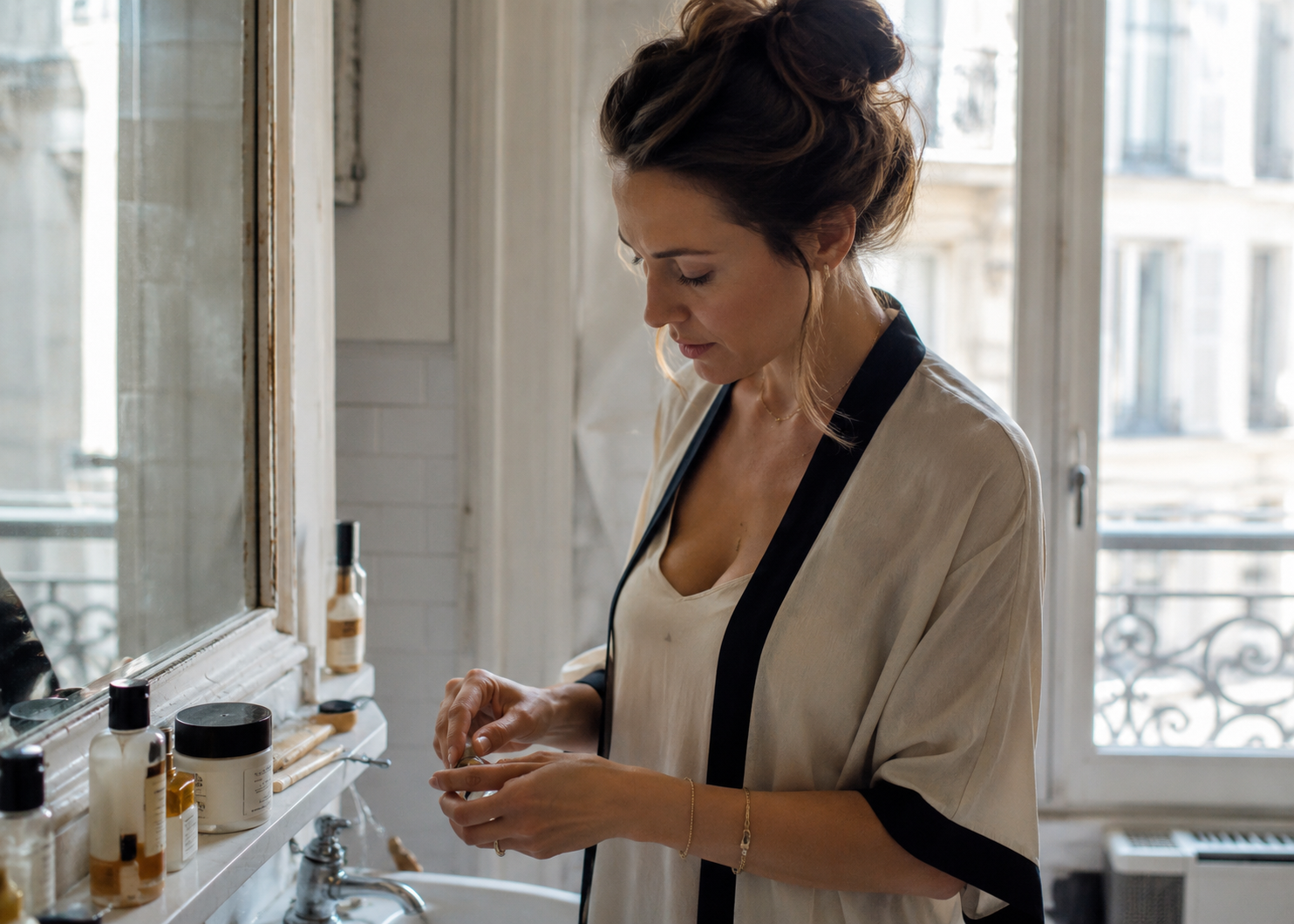
There is a difference in the air between how French women and American women relate to their own bodies, and it shows up everywhere, including in the small private matters of personal grooming and care. The American approach tends toward anxiety, rules, and a sense of obligation, a feeling that the body must be managed and corrected and brought into line with a demanding standard, the whole business freighted with worry and self-judgment. The French approach tends toward ease, a relationship with the body that is more relaxed, more accepting, less ruled by anxiety and external standards, more guided by personal pleasure and a settled comfort in one’s own skin. The contrast is real, and the French version is, by most measures, the healthier one.
This is not really about any specific practice but about a whole attitude, a relationship with the body and with the self that differs between the two cultures, and the French ease around these private matters is one visible instance of a broader and healthier relationship with the body that Americans can learn from. The point is not to prescribe what anyone should do, which is precisely the American error, but to observe a difference in attitude and to consider what the more relaxed French relationship with the body might offer. Here is the real difference between the French and American relationship to the body and personal care, why the French version is healthier, and what an American might take from it.
The French Relationship With The Body

The foundation of the difference is a whole relationship with the body, and the French version is marked by an ease and acceptance that the American version often lacks.
French culture, on the whole, holds a more relaxed and accepting relationship with the body than American culture, treating the body and its care as a natural and private matter to be approached with ease and personal pleasure rather than anxiety and obligation, the whole domain less freighted with the worry, judgment, and external pressure that characterize the American relationship. This French ease shows up across the board, in attitudes to food, to aging, to appearance, to the body’s natural functions and care, a settled comfort with the physical self that does not treat the body as a problem to be managed but as a natural thing to be lived in and cared for without fuss. The French woman tends to approach her body and its care from this place of relative ease, guided by what pleases her and feels right rather than by anxious adherence to demanding external standards.
The American relationship, by contrast, tends to be more anxious and rule-bound, the body experienced more as an object to be judged, corrected, and brought into line with demanding and often punishing standards, the whole domain of bodily care and appearance freighted with worry, obligation, self-criticism, and the sense of falling short. This anxious American relationship with the body, driven by relentless cultural and commercial pressure, treats personal care and appearance as a matter of obligation and judgment rather than ease and pleasure, the body a site of constant management and worry rather than comfortable habitation. The contrast between the relaxed French ease and the anxious American obligation is the heart of the difference, two fundamentally different relationships with the body, and the French one is the more comfortable and arguably the healthier.
Why The American Anxiety Is Manufactured
Understanding where the American anxiety comes from is liberating, since it reveals the worry as a cultural product rather than a natural or necessary state.
The American anxiety around the body and its care is not natural or universal but a manufactured cultural condition, produced by a relentless commercial and cultural machine that profits from female insecurity, the enormous industries built on making women feel inadequate about their bodies and appearance so as to sell the products and procedures that promise to fix the manufactured deficiencies. This machine teaches American women from a young age that their bodies are problems requiring constant management, that they fall short of demanding standards, that endless products and effort and worry are required to be acceptable, a relentless message of inadequacy that produces the anxiety and the obligation and the rules. The American relationship with the body is, in large part, a product sold to women, the insecurity manufactured and the anxiety profitable, not a natural state but an engineered one.
The French relationship, by contrast, while not free of commercial pressure, has been less thoroughly colonized by this machine of manufactured insecurity, retaining more of a relaxed cultural relationship with the body that resists the relentless American message of inadequacy. The crucial point is that the contrast reveals the American anxiety as cultural and manufactured rather than necessary, since the French demonstrate that women can relate to their bodies with far less anxiety, proving that the American worry is not the natural human condition but a particular and changeable cultural product. This is liberating to recognize, since an anxiety that was manufactured and sold can be questioned and refused, and the French ease shows that a more relaxed relationship with the body is entirely possible, the American worry being a cultural inheritance to set down rather than a truth to live by.
What The French Ease Actually Looks Like

It helps to be concrete about what the French relationship with the body looks like in practice, since the ease has real and describable features.
The French ease with the body shows up as a relationship guided more by personal pleasure and comfort than by anxious obligation, the French woman tending to care for herself in ways that please her and feel good rather than in anxious compliance with external rules, the whole approach more about her own comfort and pleasure than about meeting a demanding standard or avoiding judgment. It shows up as a confidence less tied to physical perfection, the French ideal of beauty and self-presentation famously more about a woman’s overall ease, style, and comfort in herself than about conforming to a single demanding physical standard, a confidence rooted in self-acceptance and personality rather than anxious perfectionism. And it shows up as a privacy and naturalness about the body’s care, treating these matters as natural and personal rather than as sources of anxiety and judgment.
This ease does not mean the French do not care about appearance, since they famously do, taking real pleasure in style and self-presentation, but the caring comes from a different place, from pleasure and self-expression rather than anxiety and obligation, the French woman cultivating her appearance because it pleases her rather than because she fears falling short. The difference is in the relationship, the same attention to self-care and appearance conducted from ease and pleasure rather than from worry and obligation, which makes the whole experience of inhabiting and caring for the body fundamentally different, lighter, more pleasurable, less anxious. The French ease is not indifference to the body but a different and healthier way of caring for it, from comfort and pleasure rather than anxiety, and that difference in the relationship is what an American might most valuably learn.
What An American Can Take From This
The point of the contrast is not to prescribe practices but to offer a different relationship with the body that an American can choose, and the lesson is real and freeing.
The transferable lesson is about attitude rather than action, the recognition that the anxious, rule-bound, obligation-freighted American relationship with the body is a manufactured cultural condition that can be questioned and replaced with the more relaxed French ease, a relationship guided by personal comfort and pleasure rather than anxiety and external judgment. An American woman does not need to adopt any specific French practice but can adopt the French attitude, beginning to relate to her own body and its care from a place of greater ease and self-acceptance, doing what pleases and feels right to her rather than what anxious compliance with demanding standards dictates, refusing the manufactured message of inadequacy. This is internal work, a shift in the relationship with the body, available to anyone willing to recognize the American anxiety as cultural and to choose the healthier ease instead.
The deeper point is permission, the recognition that the body is one’s own, to be cared for from comfort and pleasure rather than anxiety and obligation, that the demanding standards and the manufactured worry can be set down in favor of a more relaxed and self-accepting relationship with one’s own physical self. The French ease, in the end, is valuable to an American less as a set of practices to copy than as a demonstration that another relationship with the body is possible, freer, more pleasurable, less anxious, and that it can be chosen, the manufactured American worry refused in favor of the settled comfort the French model. Take from the French not a rule but a relationship, the ease and self-acceptance and the guidance by personal pleasure rather than external anxiety, and you take the most valuable thing the contrast offers, a healthier way of inhabiting and caring for your own body, freely chosen and freely lived.
What This Is Not Saying
It is worth being clear about what this observation is not, since the contrast can be misread and the real point is gentler than the misreadings.
This is not a claim that French women are superior or that American women are doing something wrong, since the American anxiety is not a personal failing but a response to a relentless manufactured cultural pressure that women did not choose, and the point is never to add another layer of judgment, you should be more relaxed, on top of the anxiety already there. Nor is it a prescription about what anyone should do with their body or their personal care, since the entire lesson is the opposite, that these are personal matters to be approached from one’s own comfort and pleasure rather than from any external standard, French or American, and the goal is the removal of anxious obligation rather than its replacement with a different set of rules. The observation is an offering of a different and freer relationship with the body, not an instruction, and certainly not a new standard to live up to.
The gentlest and truest version of the point is simply that the anxiety so many American women carry about their bodies is manufactured and optional, that another culture demonstrates a more relaxed relationship is possible, and that this relationship, guided by personal ease and pleasure rather than external worry, is available to anyone who wishes to move toward it. Whatever an American woman does with that, whether she embraces the French ease fully or loosens her own anxiety a little or simply files it away as something to consider, the value is in knowing that the worry is not necessary and that a freer relationship with her own body exists and can be chosen. The French ease offers permission and possibility, not pressure, the permission to relate to one’s own body with more comfort and less anxiety, and that permission, freely given and freely taken, is the whole of the gift.
The Broader French Lesson About The Body
The grooming question is really one instance of the broader French relationship with the body and pleasure, which is worth drawing out as the larger lesson.
The French ease around personal care is part of a whole French relationship with the body and its pleasures, the same ease that shows up in the French relationship with food, eaten with pleasure rather than guilt, with aging, approached with more acceptance than the American war on it, with appearance, cultivated from pleasure rather than anxiety, a coherent cultural relationship with the physical self marked throughout by ease, acceptance, and the guidance of pleasure rather than worry. This whole relationship is, by most measures of wellbeing, a healthier one than the anxious American alternative, the French ease with the body and its pleasures associated with less of the disordered worry, guilt, and self-punishment that the anxious American relationship produces, a more comfortable and sustainable way of inhabiting a body. The grooming question is just one visible instance of this larger and healthier French relationship with the physical self.
For the American, the broader lesson is that this whole relationship is available, that one can relate to the body and its care and its pleasures from the French place of ease and acceptance rather than the American place of anxiety and obligation, across food and aging and appearance and the private matters of personal care alike. The French model offers not a set of practices but a whole healthier relationship with the body, and the American who absorbs it, who begins to inhabit her body with more ease and less anxiety, to be guided by pleasure and comfort rather than worry and obligation, gains something valuable across the whole of her relationship with her physical self. Take the broader French lesson, the ease with the body and its pleasures, the acceptance and the guidance by pleasure rather than anxiety, and you take a healthier way of living in a body, of which the relaxed approach to personal care is just one happy and characteristic instance.

About the Author: Ruben, co-founder of Gamintraveler.com since 2014, is a seasoned traveler from Spain who has explored over 100 countries since 2009. Known for his extensive travel adventures across South America, Europe, the US, Australia, New Zealand, Asia, and Africa, Ruben combines his passion for adventurous yet sustainable living with his love for cycling, highlighted by his remarkable 5-month bicycle journey from Spain to Norway. He currently resides in Spain, where he continues sharing his travel experiences with his partner, Rachel, and their son, Han.