
The Portuguese café looks, to an American, like the most relaxed place on earth. Old men nursing tiny coffees for an hour, newspapers, the unhurried hum of a place with nowhere to be. So Americans walk in and behave the way they would at home, and a set of small invisible lines gets crossed, none of which anyone will mention, because the Portuguese are gentle and would never correct a stranger. But the lines are real, a quiet code that regulars follow without thinking, and the American who blunders across them gets served politely while never quite being let into the easy rhythm the locals enjoy.
These are not dress codes in the velvet-rope sense, since the Portuguese café is deeply informal and nobody is turned away for their clothes. They are something subtler, the unwritten rules of how you carry and present yourself in a Portuguese café, what marks you as someone who understands the place versus someone just passing through, and they are real enough that locals read them instantly. After time spent in these cafés watching it play out, here are seven of the quiet rules American tourists never see, why each one matters, and how to cross into the easy local rhythm rather than sit just outside it.
First, The Café Is Not An Office
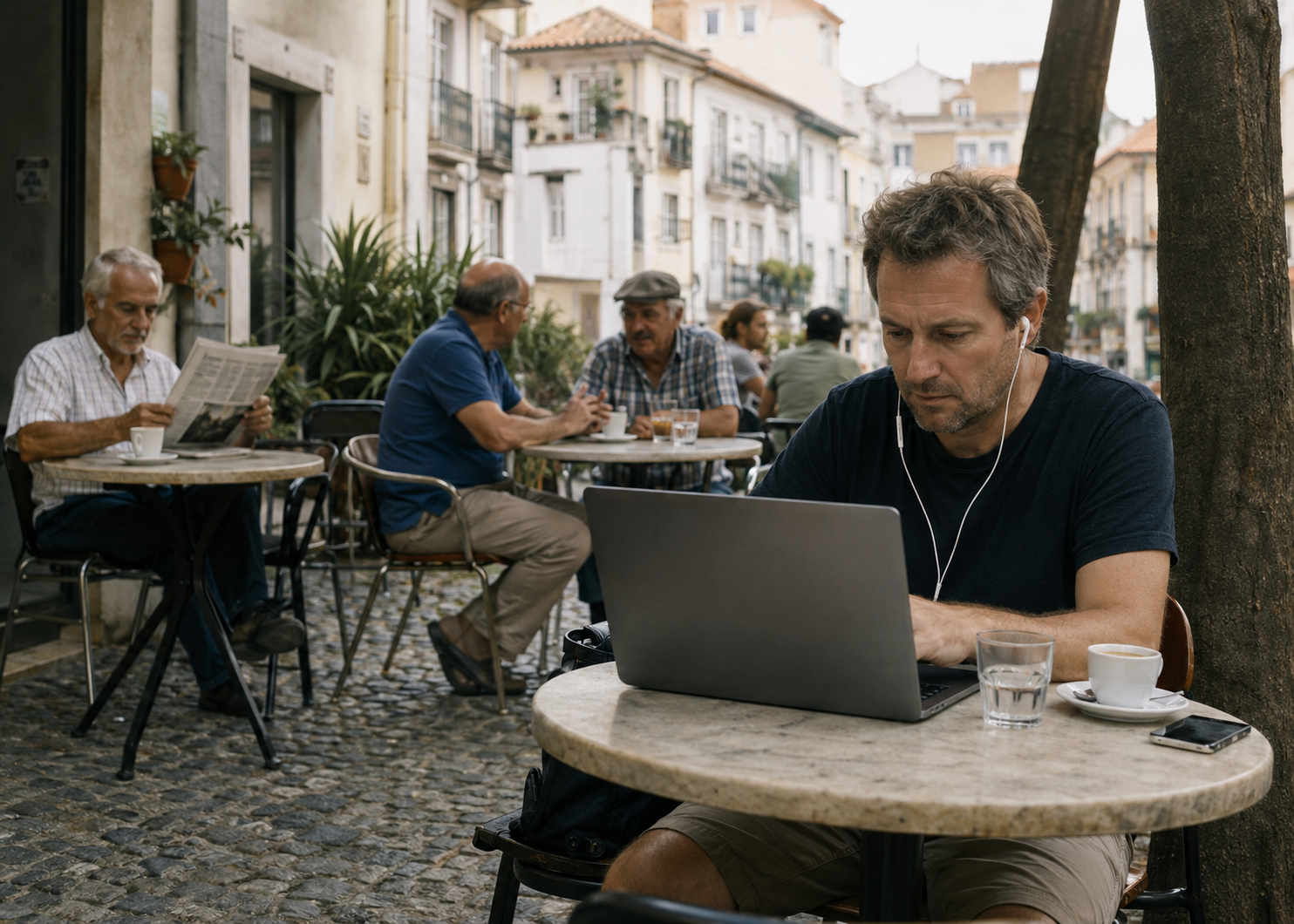
The first thing Americans get wrong is what the café is for, treating it as a workspace when it is a social space, and the difference shows immediately.
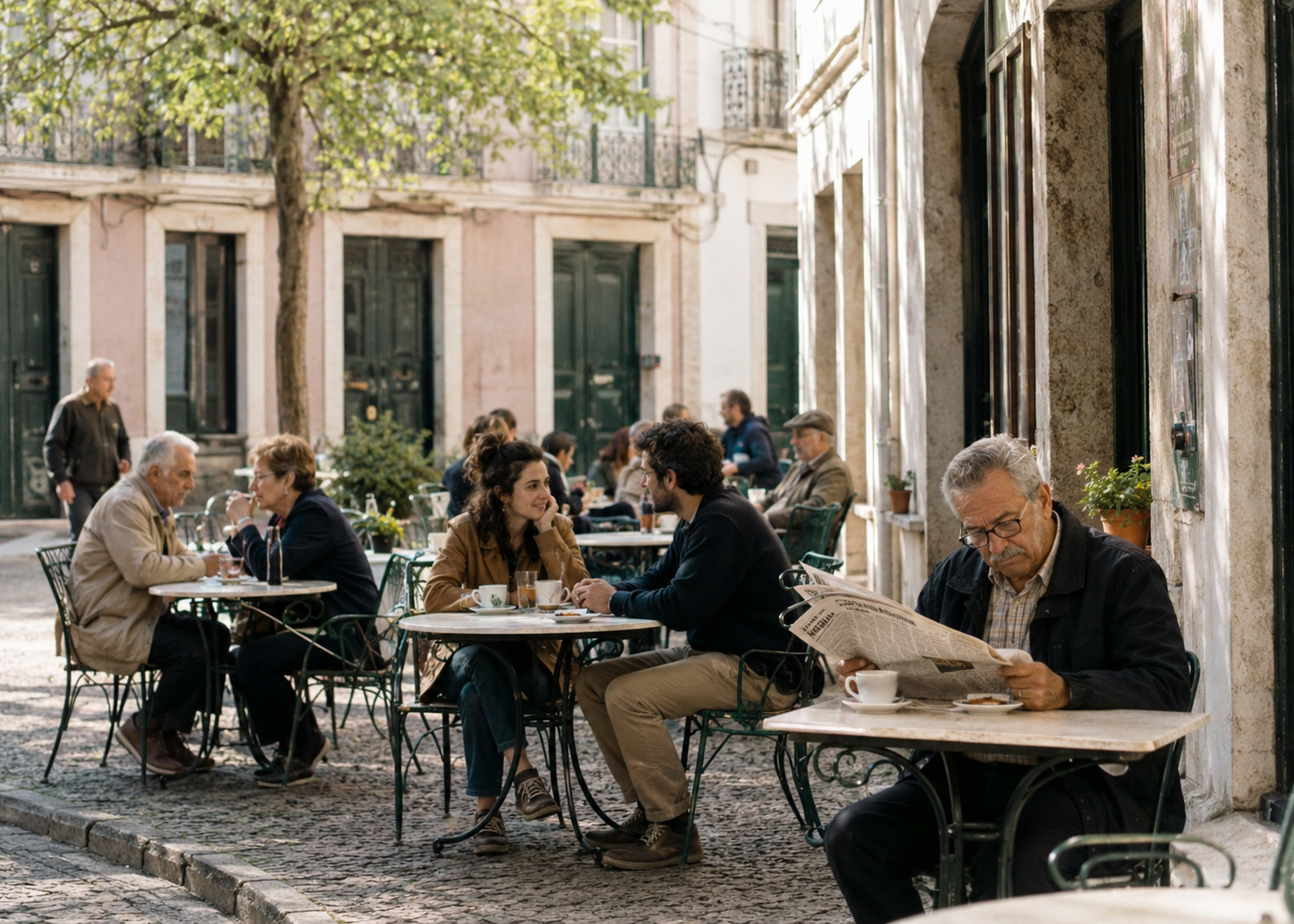
In America the café has become an office, people parked for hours behind laptops, headphones on, working in public, the café a place of solitary productivity, and Americans import this expectation to Portugal where it does not belong. The Portuguese café is a social institution, a place to talk, to read the paper, to watch the street, to be among people, not a place to set up a workstation and disappear into a screen for three hours, and the American hunched over a laptop with headphones on, treating the café as an office, reads as someone who has misunderstood the entire point of the place. It is not forbidden, nobody will say anything, but it marks you instantly as outside the culture, using a social space in a solitary American way.
The fix is to understand what the café is and use it accordingly, as a place to be present and social and unhurried rather than productive and isolated, to sit with a coffee and watch the street, read something on paper, talk to your companion, or simply be, the way the locals do. If you must work, the brief laptop session is one thing, but the all-day headphones-on workstation is the American habit that most marks you, and setting it aside, treating the café as the social, present, unhurried space it is, is the first step into the local rhythm. The café is for being among people, not for hiding from them behind a screen, and grasping that changes how you inhabit it entirely.
Second, Dress Like You Left The House On Purpose
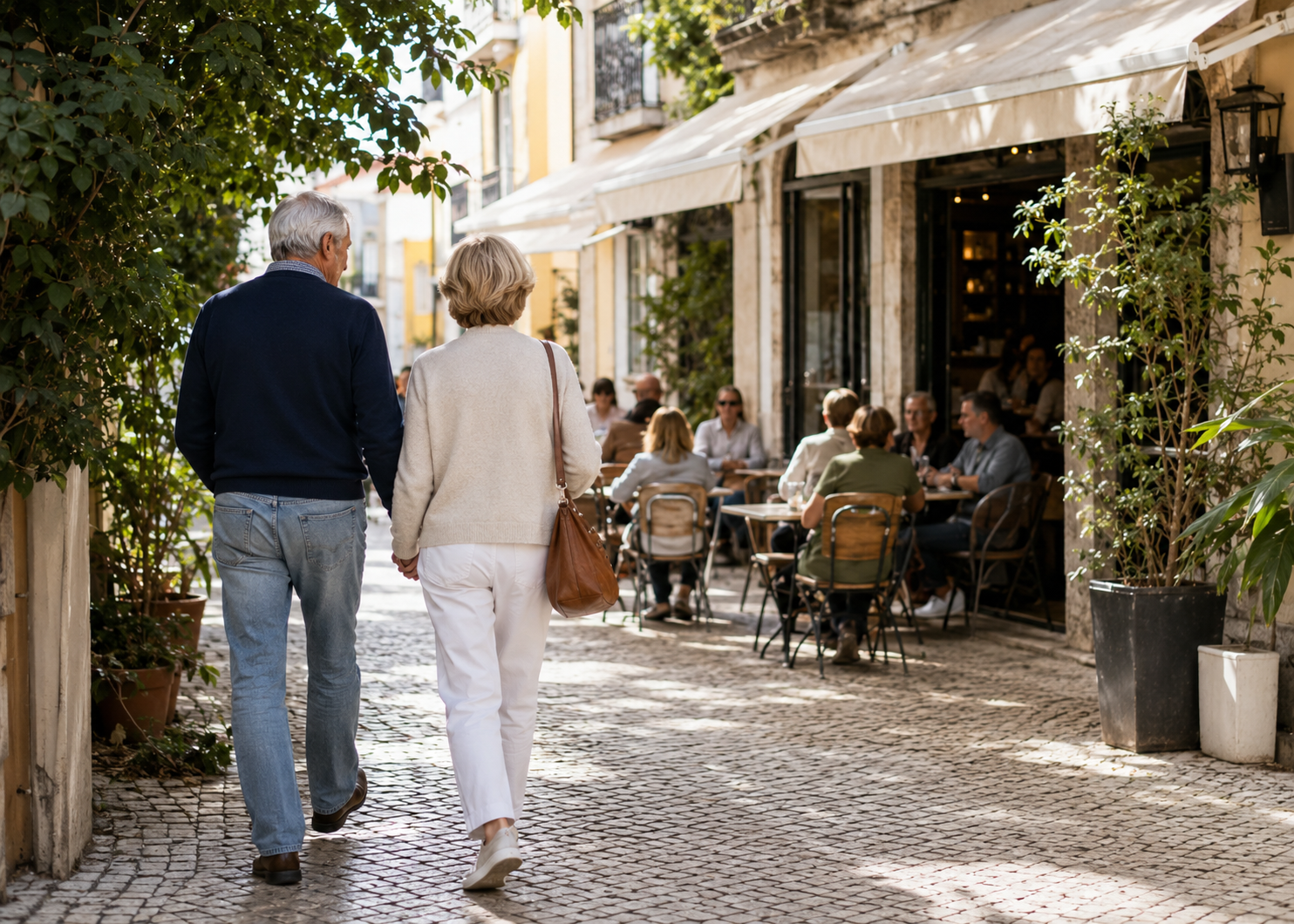
The Portuguese, like much of southern Europe, carry a quiet baseline of put-togetherness even in the most casual settings, and the American athleisure look violates it instantly.
The Portuguese tend to present themselves with a modest care even for the café, clean simple clothes, real shoes, a put-together ordinariness that is not formal but is deliberate, the look of someone who got dressed before leaving the house, and the American in gym clothes, athletic wear, flip-flops, or the rumpled just-rolled-out-of-bed look stands out against it. This is not about expense or fashion, since the Portuguese café standard is humble and unpretentious, but about a baseline of effort, the difference between clothes you chose and clothes you grabbed, and the athleisure-and-flip-flops American reads as someone who did not consider that leaving the house was an occasion worth dressing for, however minimally. The gym-clothes look in particular, so normal in America, marks the tourist sharply.
The fix is small and costs nothing, simply to dress with the modest deliberateness the Portuguese do, clean simple clothes, real shoes rather than athletic ones or flip-flops, the look of having gotten dressed rather than having grabbed whatever was nearest, which is an achievable standard requiring no fashion or expense. This is the same southern European principle that operates across the region, the quiet baseline of presentability that marks belonging, and meeting it in Portugal is easy, just leave the gym clothes for the gym and present yourself as someone who dressed on purpose, however simply. The bar is low and the effort is minimal, but the difference in how you read, local versus tourist, is real, and it starts with looking like you left the house intentionally.
Third, Order And Drink The Coffee The Portuguese Way
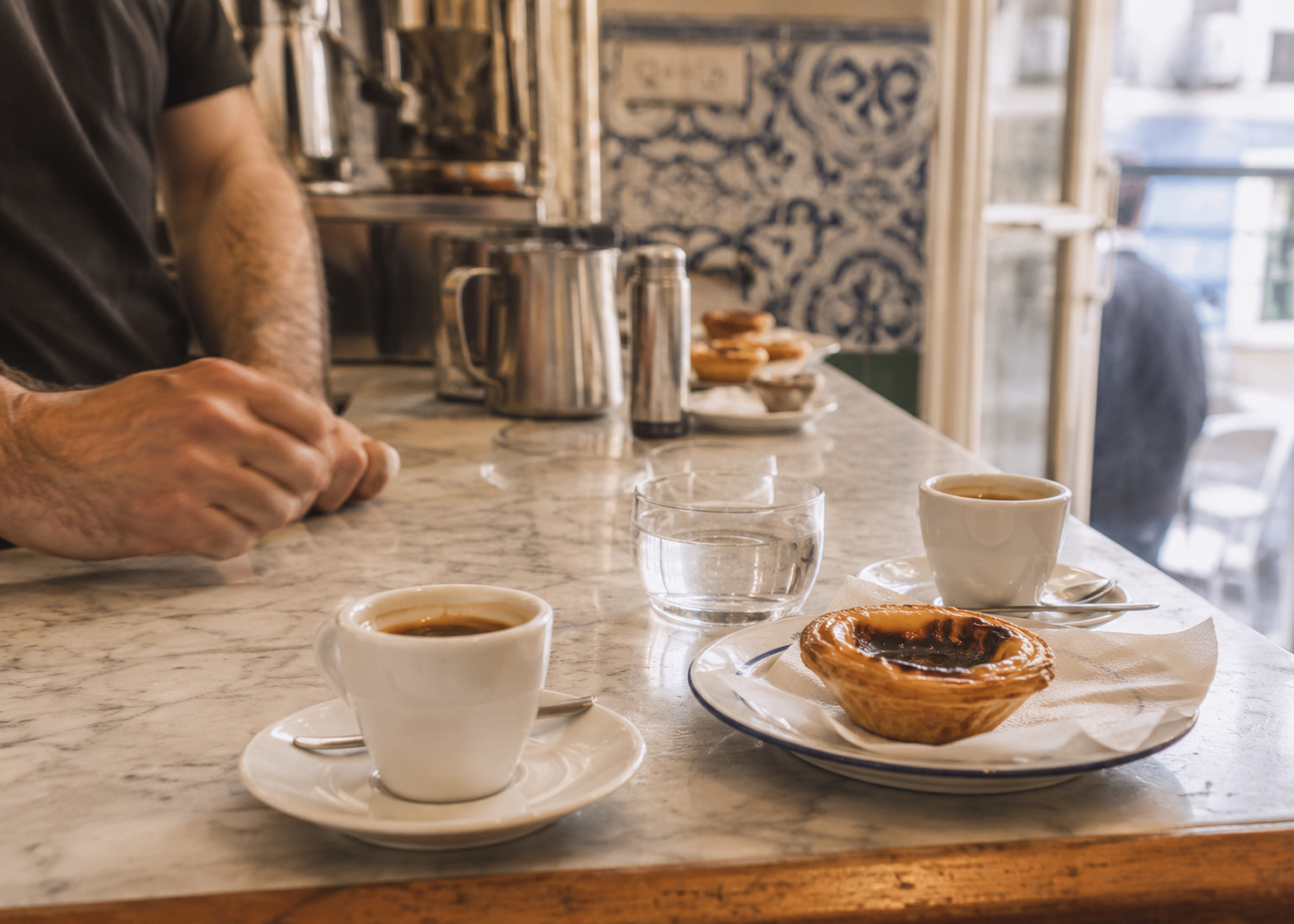
Coffee is the heart of the Portuguese café, and the way an American orders and drinks it announces them before the cup arrives.
Portuguese coffee culture is specific, built around the small strong espresso, the bica as it is called in Lisbon, taken quickly, often standing at the counter, sometimes with a pastry, a small ritual of a few minutes rather than a large drink carried around, and the American ordering a large milky coffee, a coffee to go, or some elaborate customized drink reveals the imported American coffee culture instantly. The Portuguese have their own coffee vocabulary and customs, the bica, the small coffee with milk, the specific local ways, and ordering in the American mode, the venti, the to-go cup, the modified drink, marks the tourist sharply, since Portuguese coffee is small, taken in place, and simple, not the large customized portable American product.
The fix is to learn and adopt the Portuguese coffee customs, ordering the small strong local coffee, drinking it in the café rather than demanding it to go, taking it the quick simple way the Portuguese do, perhaps standing at the counter with the regulars, which is both the authentic experience and the thing that marks you as someone who gets it. There is real pleasure in the Portuguese coffee ritual once you adopt it, the small perfect bica, the quick stop, the simplicity, and the American who learns to drink coffee the Portuguese way rather than importing the American version has crossed a meaningful line into the local culture. The coffee is the center of the café, and taking it the local way, small, simple, in place, is central to belonging there.
Fourth, Do Not Rush, And Do Not Be Rushed
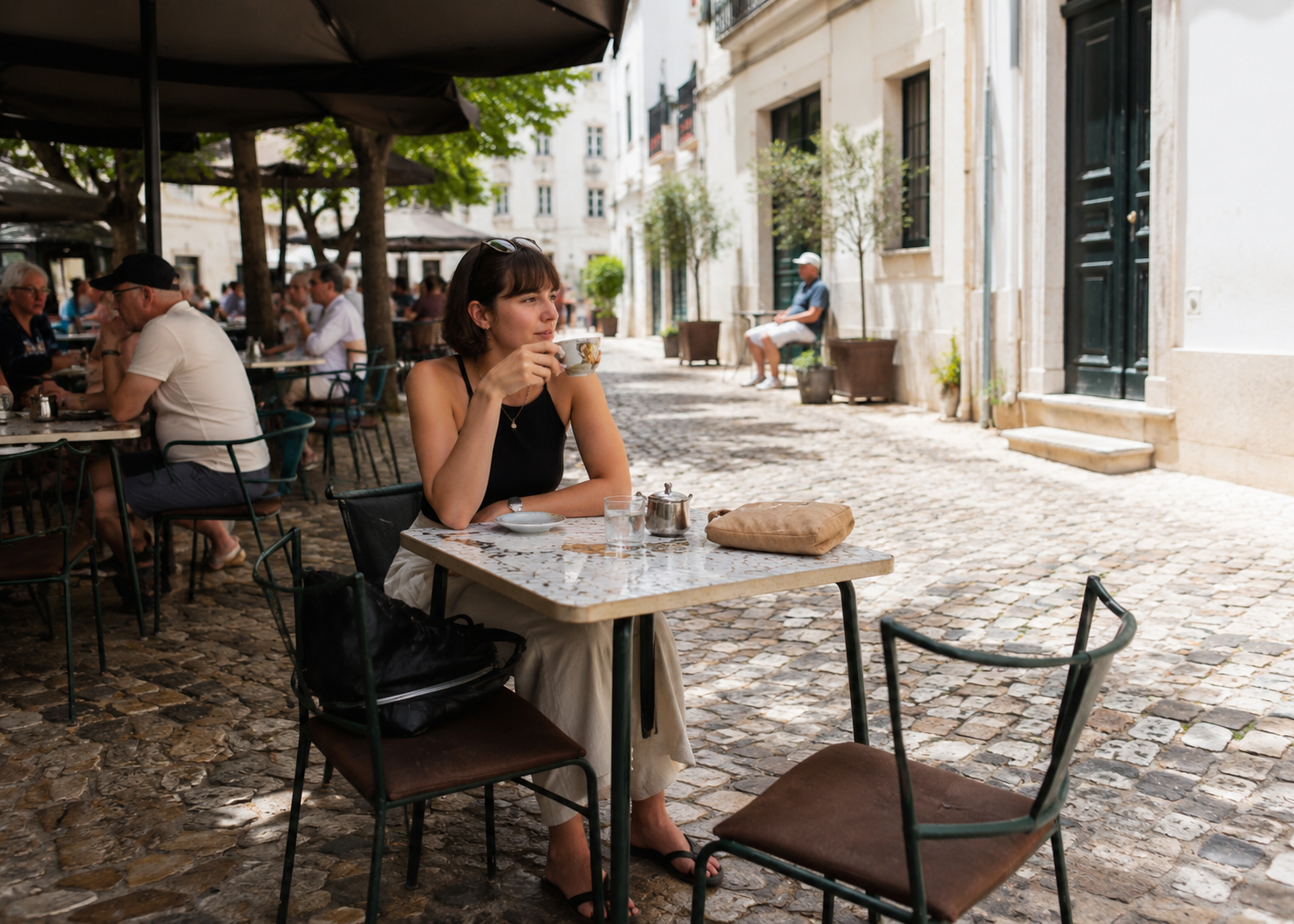
The pace of the Portuguese café is slow by design, and the American instinct to be efficient clashes with it in a way that shows.
The Portuguese café runs on an unhurried rhythm, the coffee nursed, the conversation unspooled, the time taken, with no pressure to order quickly, drink fast, and leave, the slowness being the entire point, a respite from hurry rather than a transaction to complete efficiently. The American instinct, to move quickly, to order promptly, to drink and go, to treat the café visit as an errand to dispatch, clashes with this unhurried rhythm and marks the tourist who has not slowed to the local pace, still operating on American efficiency in a place built for lingering. Equally, the American who feels they must keep buying things to justify their presence, who cannot simply sit, misunderstands a culture where nursing one coffee for an hour is entirely normal and expected.
The fix is to slow down to the café’s rhythm, to order without hurry, drink without rushing, sit without feeling you must justify the seat with constant ordering, and let the café be the unhurried social pause it is meant to be, which is both the authentic way and a genuine pleasure once you allow it. The Portuguese café is one of the great slow institutions, a place to decompress and be present and unhurried, and the American who surrenders the efficiency instinct and settles into the slow rhythm not only stops marking themselves as a tourist but discovers the actual point of the place, the unhurried social ease that is its whole gift. Slow down, take your time, do not rush or feel rushed, and the café opens into the restful social space it has always been.
Fifth, Greet People, The Right Amount
Portuguese café culture has its own etiquette of greeting and acknowledgment, and the American either overdoes it or misses it entirely.
The Portuguese observe small courtesies in the café, a greeting to the staff on entering, a bom dia or boa tarde, an acknowledgment of the people around, a basic politeness and warmth that is expected and noticed, and the American who breezes in without greeting, who treats the staff as invisible service, misses this small but real courtesy. At the same time, the American who overdoes it, the loud effusive over-friendly American manner, the excessive chattiness, can read as too much in a culture of warm but more measured courtesy, so the rule is the right amount, a genuine but not overwhelming politeness, the greeting, the acknowledgment, the basic human warmth without the American excess. Getting this calibration right, present and polite but not effusive, is part of fitting the café’s social texture.
The fix is to observe and match the local courtesy, greeting the staff and acknowledging people with a simple bom dia or boa tarde, being warm and polite in the measured Portuguese way rather than either cold and transactional or loud and effusive, the calibrated middle that fits the culture. These small courtesies, the greeting on entering, the acknowledgment, the basic warmth, matter in Portugal and are noticed, and meeting them in the right measure, present and polite without American excess, marks you as someone who understands the social texture of the place. The café is a community space, and observing its small courtesies of greeting and acknowledgment, in the right amount, is part of being a good and recognized presence in it rather than an oblivious or overwhelming one.
Sixth, Keep Your Voice Down
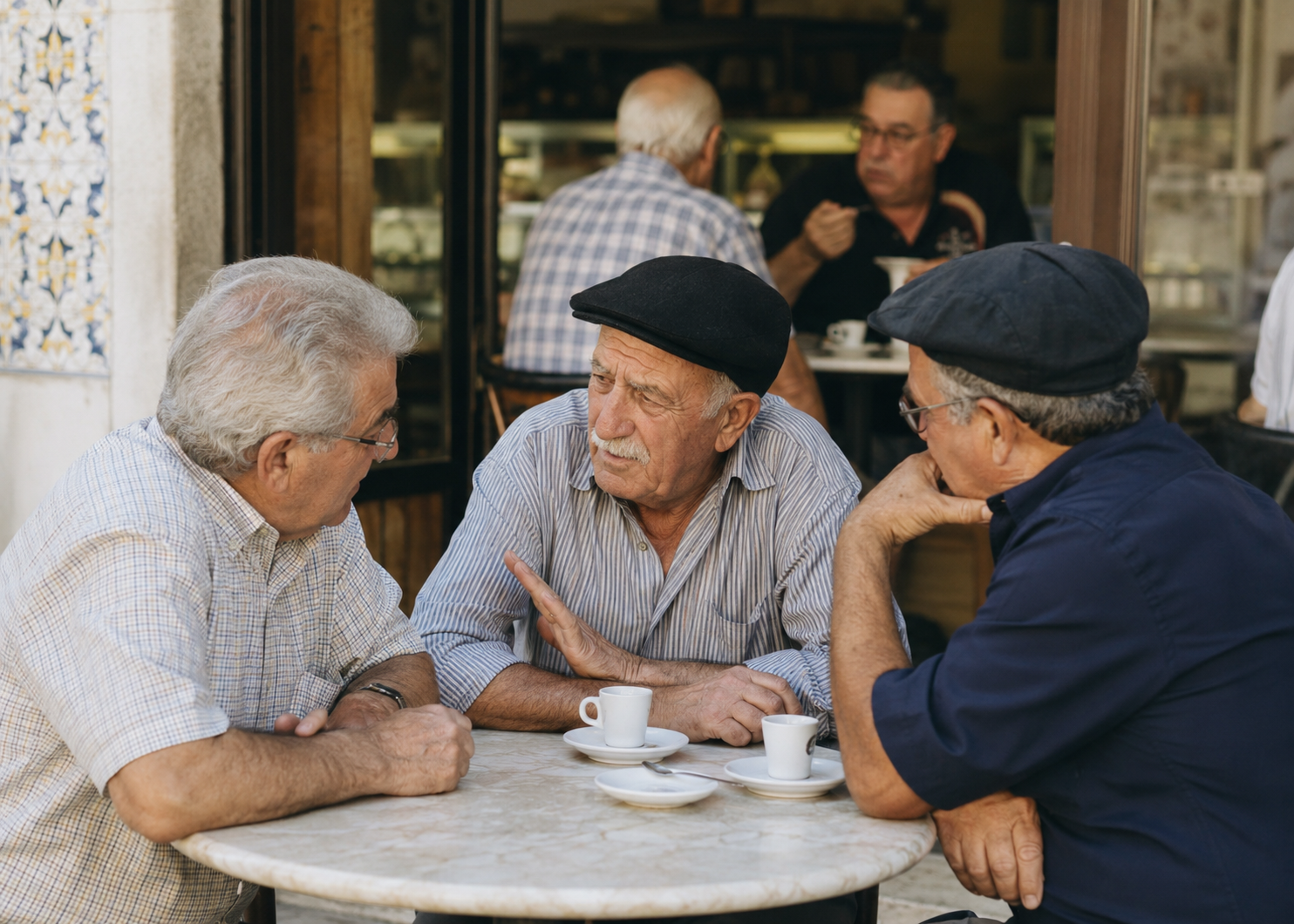
Volume is one of the clearest tells, since the American voice, pitched for American spaces, carries too loud for the Portuguese café.
Americans are, by the standards of much of Europe, loud, the American speaking voice pitched louder than the European norm, the American conversation carrying across a room in a way that European conversation does not, and in the relatively quiet, intimate Portuguese café this volume marks the American instantly. The Portuguese café, even when busy and social, operates at a lower volume than its American equivalent, conversations kept to their tables, the overall hum gentler, and the American party talking at American volume, audible across the whole room, stands out sharply against this quieter norm, however friendly and unremarkable the same volume would be at home. This is one of the most reliable and least conscious tells, the simple matter of how loud you are.
The fix is awareness and a small adjustment, simply noticing the volume of the room and matching it, keeping your conversation to your table, pitching your voice to the gentler European level rather than the louder American one, which once you are conscious of it is an easy adjustment. The Portuguese are not silent or cold, the café is social and warm, but it operates at a lower volume than Americans are used to, and matching that volume, keeping your voice down to the local level, removes one of the clearest tourist tells and lets you blend into the room’s gentle hum rather than dominating it. Lower your voice to match the room, and you stop announcing yourself across the café with every sentence.
Seventh, Understand That Sitting Is A Privilege You Pay For Quietly
The final rule concerns the small economics and etiquette of the table, which work differently than Americans expect.
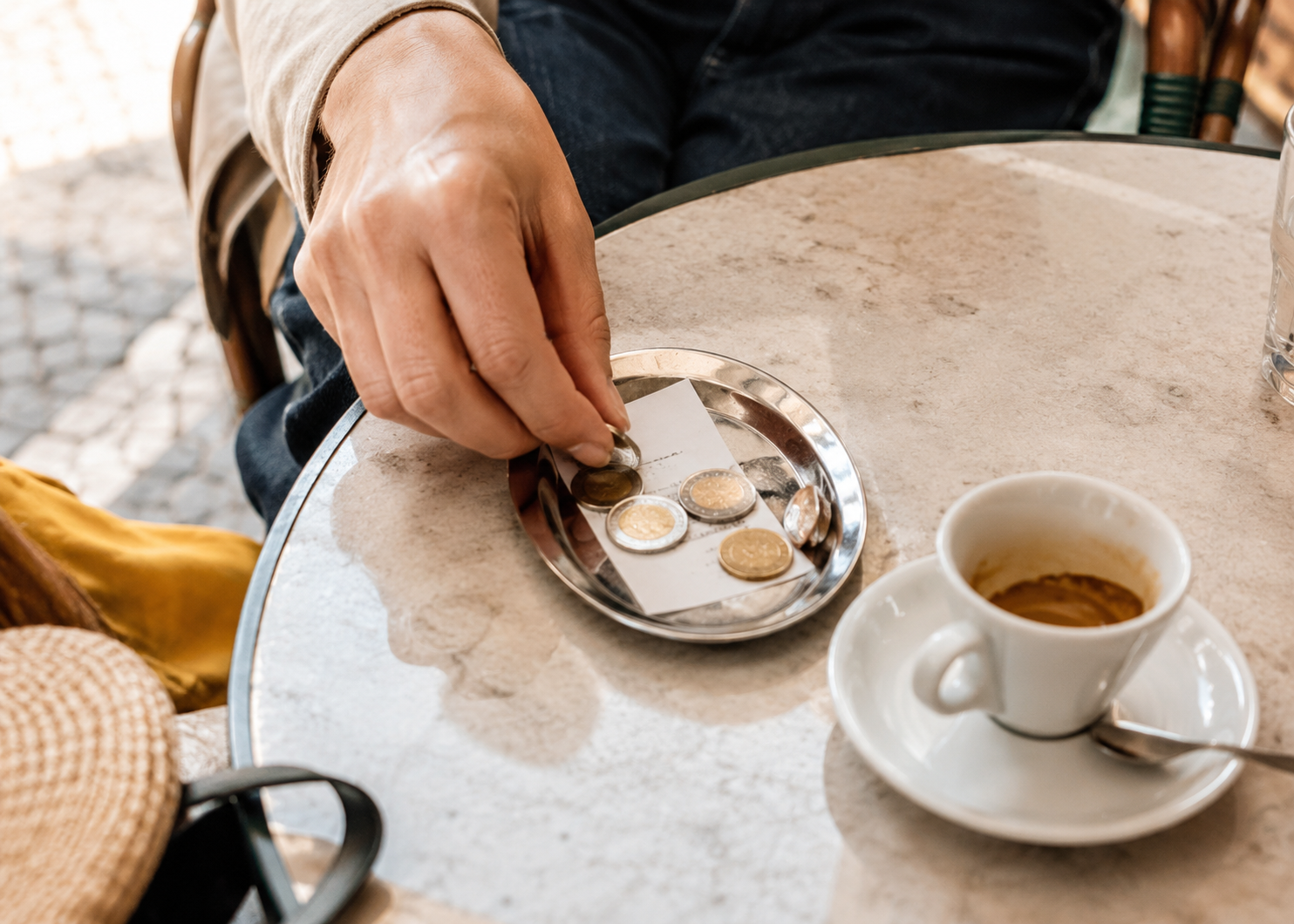
In many Portuguese cafés there is a quiet understanding about sitting versus standing, with the price sometimes differing between drinking your coffee standing at the counter, the quick local way, and sitting at a table to be served, the more leisurely option, and Americans often do not realize this distinction exists. The deeper etiquette is that taking a table means settling in as a guest of the establishment, an exchange that the Portuguese understand instinctively, where sitting is for lingering and being served while the quick coffee is taken standing, and the American who does not grasp this can misjudge the situation, sitting for a quick coffee that locals would take standing, or not understanding the gentle economics of the table. None of this is enforced harshly, but it is part of the unspoken code of how the café works.
The fix is to understand the basic distinction, that standing at the counter is the quick cheap local way for a fast coffee while taking a table is for settling in and lingering and being served, and to choose accordingly, standing for the quick bica, sitting when you genuinely mean to linger, matching your choice to your intention the way the locals do. This small piece of café literacy, knowing when to stand and when to sit and what each means, completes the picture of how to inhabit the Portuguese café correctly, and it is the kind of thing that marks the difference between someone fumbling through and someone who understands the rhythms of the place. Learn the small etiquette of standing and sitting, and the last of the invisible lines becomes visible, letting you move through the café with the quiet competence of someone who belongs.

About the Author: Ruben, co-founder of Gamintraveler.com since 2014, is a seasoned traveler from Spain who has explored over 100 countries since 2009. Known for his extensive travel adventures across South America, Europe, the US, Australia, New Zealand, Asia, and Africa, Ruben combines his passion for adventurous yet sustainable living with his love for cycling, highlighted by his remarkable 5-month bicycle journey from Spain to Norway. He currently resides in Spain, where he continues sharing his travel experiences with his partner, Rachel, and their son, Han.