
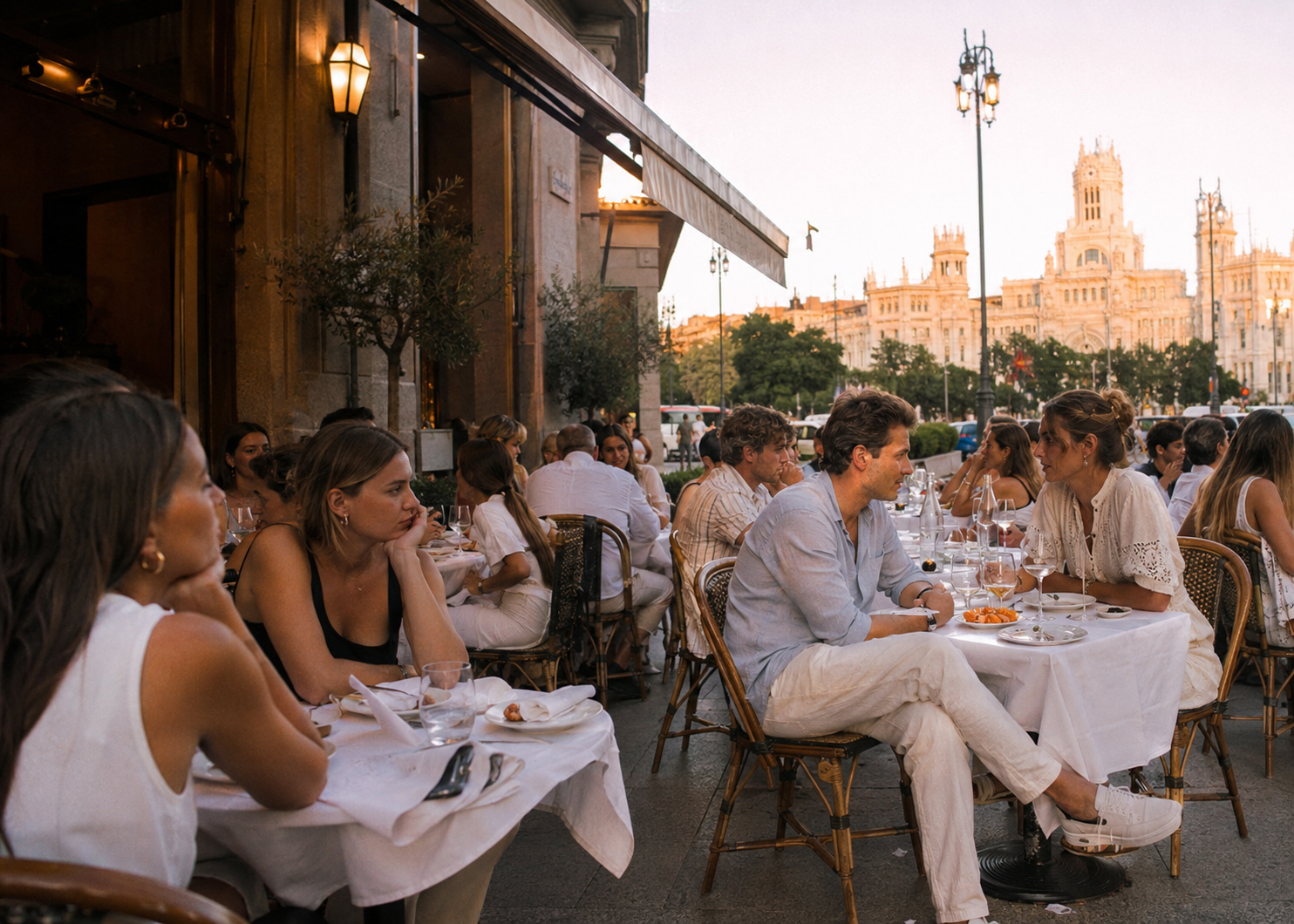
You can stand on any restaurant terrace in Madrid at nine on a Friday night and play the game. Spot the Americans. It takes about four seconds, and it is never the accent, because nobody has spoken yet. It is the clothes. Spain is not a formal country, nobody is wearing a tie, and yet a set of unwritten rules operates in every restaurant from the corner bar to the white-tablecloth place, and Americans break the same seven of them every single time.
Nobody will say anything. That is the part Americans never learn, because Spaniards do not confront, they just notice, file it, and treat you ever so slightly as a tourist for the rest of the meal. After years of living here, and one memorable evening of being silently outdressed by an eighty-year-old woman at a neighborhood bar, here are the seven mistakes, why each one registers, and the small adjustments that make you read as a resident instead.
First, Gym Clothes At The Dinner Table
The leggings, the athletic shorts, the moisture-wicking shirt with the little reflective logo. In Spain these say one thing. You are exercising, or you have given up.
Spaniards exercise plenty. They do it in athletic clothes, and then they go home and change, because in Spain athletic clothes are equipment, not an outfit. Wearing them to a restaurant reads roughly the way arriving in a wetsuit would, technically clothed, clearly confused about what activity is happening. The dinner table is a social occasion, and showing up in performance fabric announces that you did not consider it one. An American couple in matching quarter-zips at a Friday dinner service is visible from across the room, and every Spaniard in the place has clocked them before the bread arrives.
The fix costs nothing. A plain shirt with a collar or a simple blouse, trousers or a skirt that never met a gym. You do not need to be elegant. You need to have changed.
Second, The Baseball Cap That Never Comes Off
The cap is American national dress, and Americans wear it the way other people wear hair, indoors, outdoors, at the table, through the entire meal.
In Spain a cap at the dinner table reads as either a teenager or a man hiding from someone. Spanish men wear caps too, in the sun, walking, at the beach. Then they take them off, especially indoors, especially eating, because a hat at the table still carries a faint charge of rudeness here that it lost in America decades ago. The sixty-year-old American in the crisp vacation cap at a 9:30 dinner service is wearing a small flag. The waiters have a private word for the look. Nobody will share it with him.
Off at the door, or at least off at the table. That is the whole rule. If the hair underneath is the issue, know that Spain is a country of magnificently bald men who have made peace with it in public.
Third, Beachwear Anywhere That Is Not The Beach
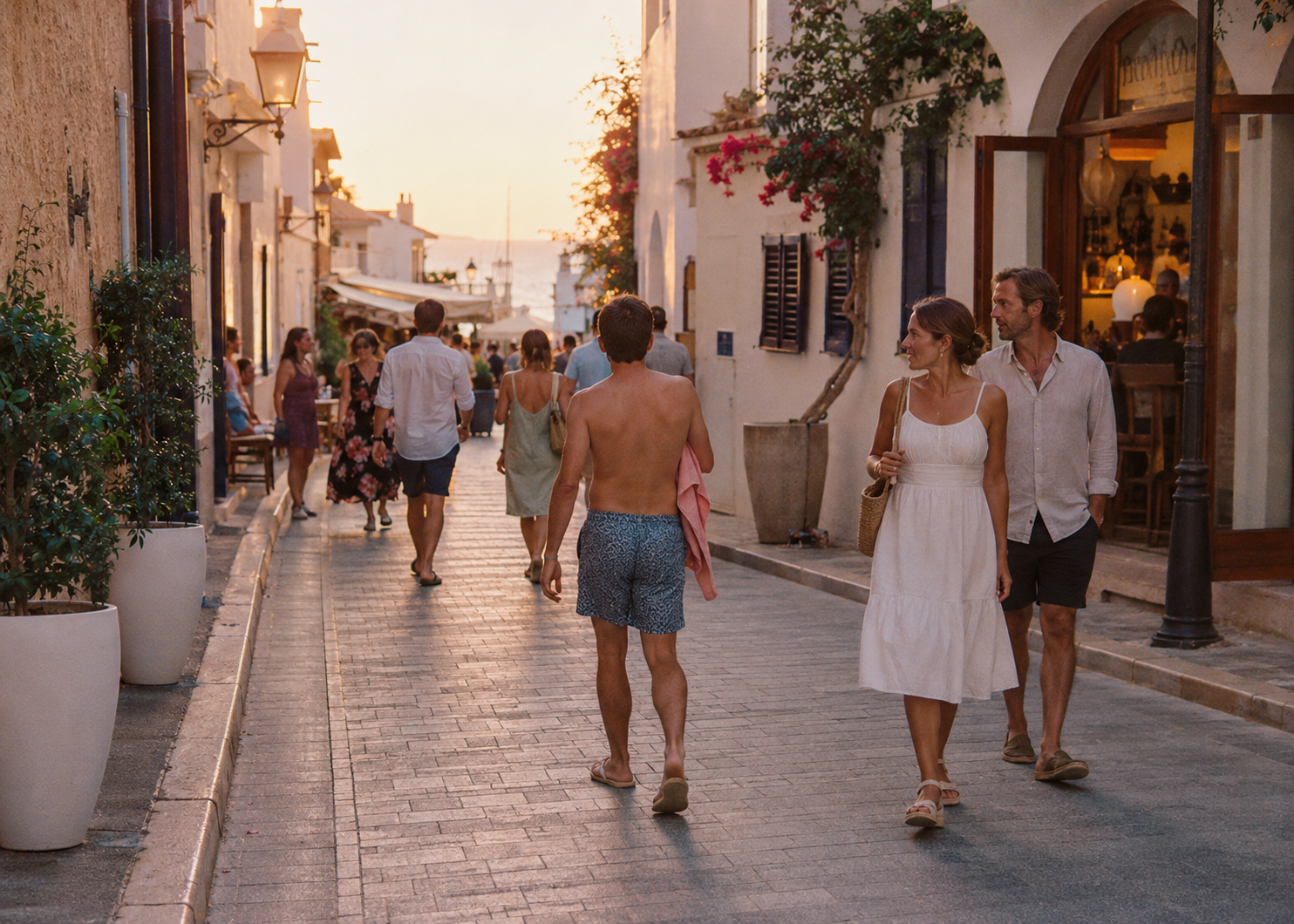
Flip-flops on a city street. Swim shorts at a lunch place three blocks inland. The shirt that is technically a shirt but is clearly a swim cover-up.
Spain has a strict mental geography, and the beach ends where the sand ends. On the sand, anything goes. One street back, the flip-flops and the bare torso become a small public offense, and some beach towns have literally made it one, with fines for walking the streets in swimwear. The same applies in softer form everywhere. Sandals are fine, Spaniards wear good leather sandals all summer. Flip-flops, the rubber shower kind, mark you instantly, and flip-flops at a restaurant mark you twice. The visible swimsuit under clothes at dinner says you have been wearing the same thing since eleven this morning, which is exactly what it says.
The fix is one bag with one change of clothes, the move every Spanish beach family makes by instinct. The day belongs to the swimsuit. The evening gets its own outfit, even a simple one. Especially the feet.
Fourth, The Enormous White Athletic Sneakers
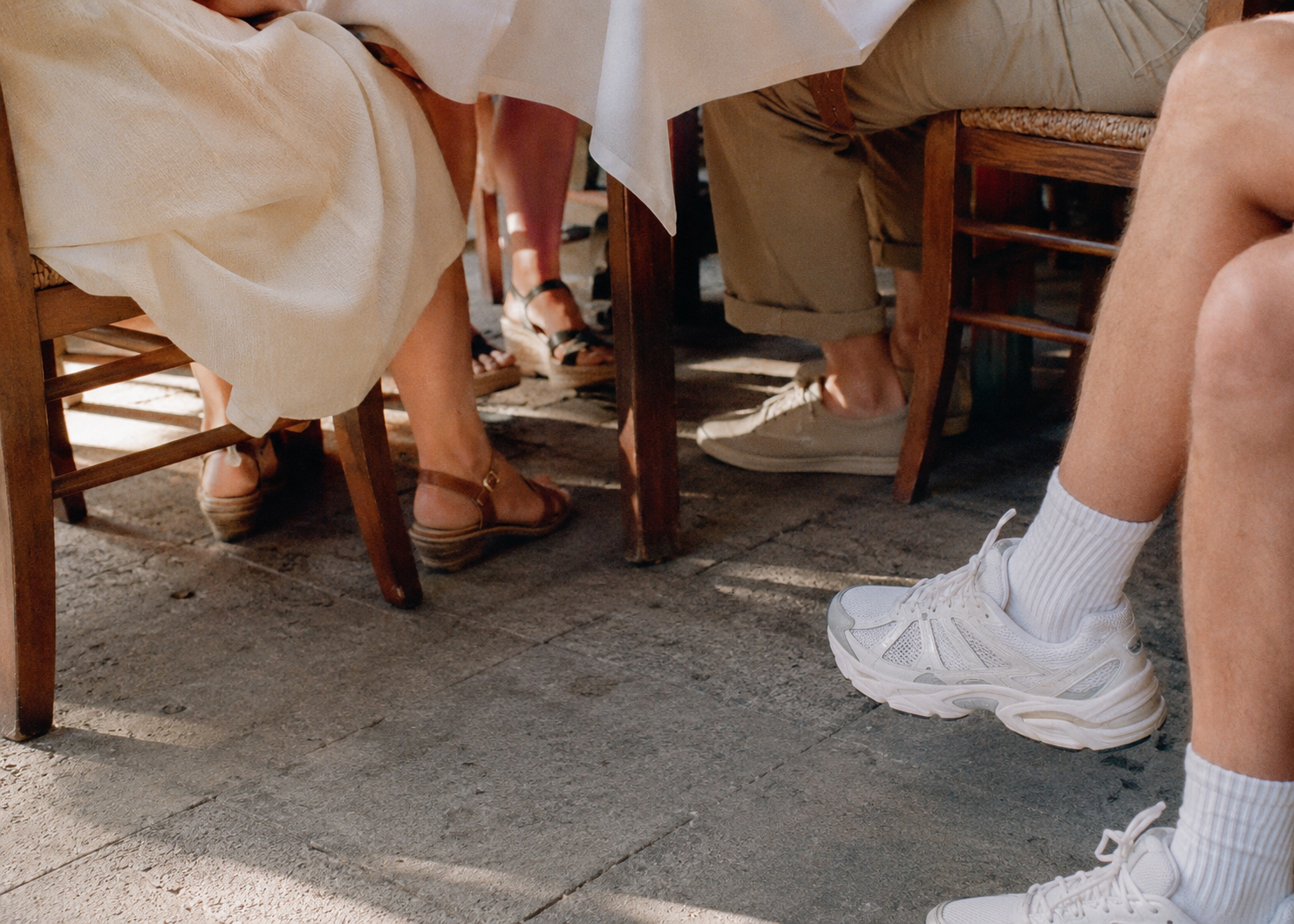
This one is unfair, because Spaniards wear sneakers constantly, and the American looks down, sees sneakers on local feet, and concludes his are fine. They are not the same sneakers.
The Spanish street sneaker is slim, plain, usually leather or canvas, white or neutral, and worn with intent. The American restaurant sneaker is a running shoe, a great padded orthopedic cloud built for marathons and worn for none, often in a technical mesh with logos. The difference is visible at fifty meters. One is a shoe that happens to be casual. The other is sports equipment on the wrong continent. Add the white athletic socks pulled up over the ankle and the identification is complete, no passport required.
If your knees demand the cushioned shoe, your knees win, comfort is not a crime. But if you are choosing freely, a plain pair of simple sneakers or leather shoes does more for how Spain treats you than anything else in your suitcase. Spaniards judge a person from the shoes up. It is the first thing they check and the last thing Americans think about.
Fifth, Dressed For An Expedition
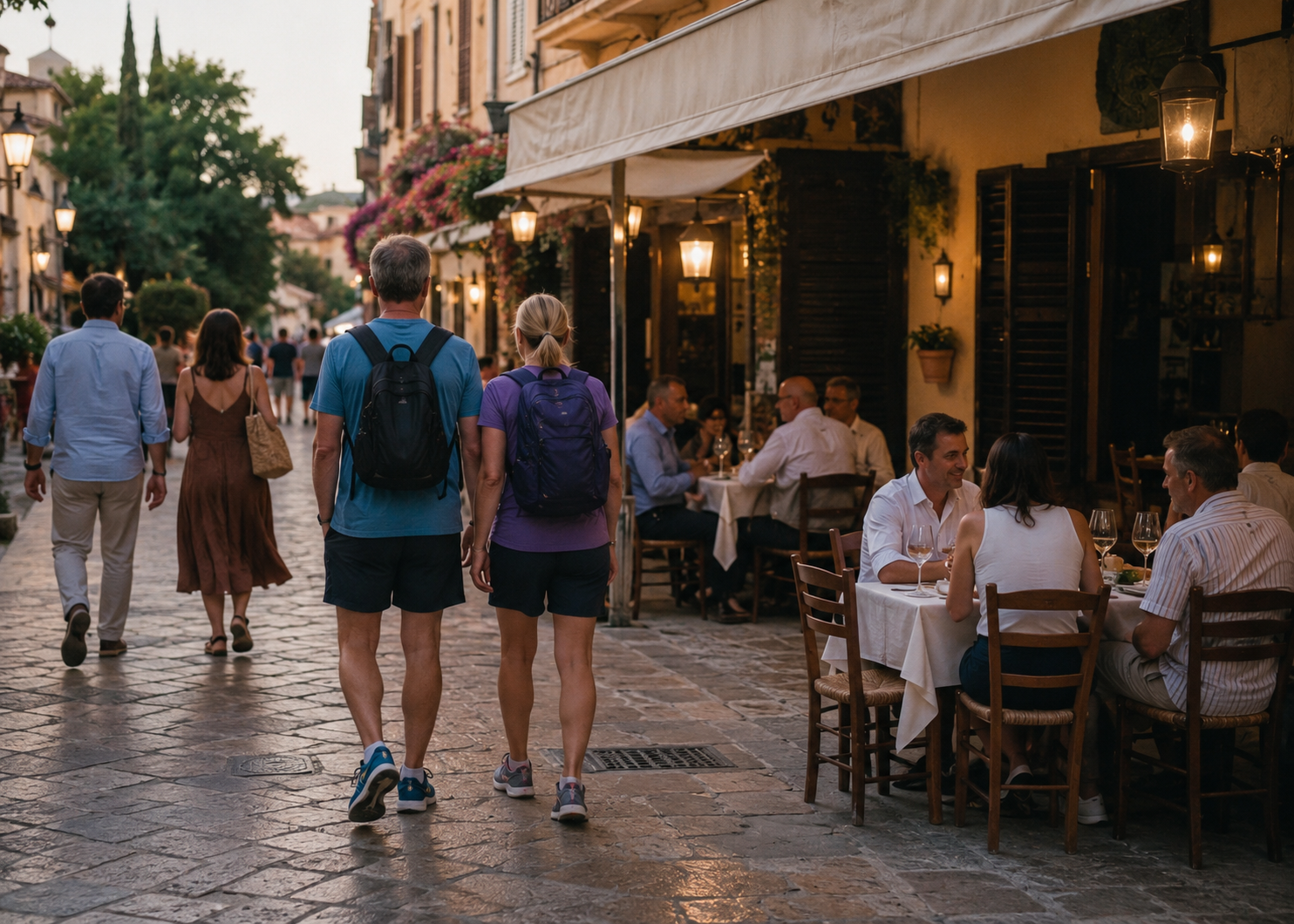
Cargo shorts with eleven pockets. The zip-off trousers. The technical vest, the hiking sandals, the small backpack worn at dinner, in a city, on flat ground, four hundred meters from the hotel.
Americans dress for cities the way they would dress for terrain, ready for weather, distance, and emergencies that a Spanish city does not offer. The look is practical and it reads as deeply foreign, because the Spaniard at the next table is navigating the same evening in linen trousers and is carrying, in total, a phone and keys. The expedition outfit announces that you regard this place as wilderness to be traversed rather than a town to spend an evening in, and there is something in that which Spaniards find quietly funny. The eleven pockets hold, on inspection, the same phone and keys.
Leave the gear for the Camino, where it belongs and where Spaniards wear it too. A city evening needs nothing technical. The lighter you carry, the more local you read, and the backpack, at dinner, goes under the chair or back at the hotel.
Sixth, Socks With Sandals, Still, Somehow
It should not need saying in 2026. Every summer proves it does.
The white sock inside the hiking sandal remains the single fastest way to be identified as a foreign tourist in Spain, a signal so universally legible that Spanish comedians do not even bother with it anymore, it is considered too easy. The sock-and-sandal does not say casual. It says that comfort has won a total victory over every other consideration, and Spain, a country where the abuelas put on earrings to buy bread, registers that surrender with a small national shudder.
Bare feet in sandals. Socks in shoes. The two systems do not mix, and there is no temperature, surface, or podiatric argument that changes the verdict. This is the cheapest fix on the list. It costs the removal of one item.
Seventh, Not Understanding Arreglado
The first six are symptoms. This is the disease, and curing it fixes everything at once.
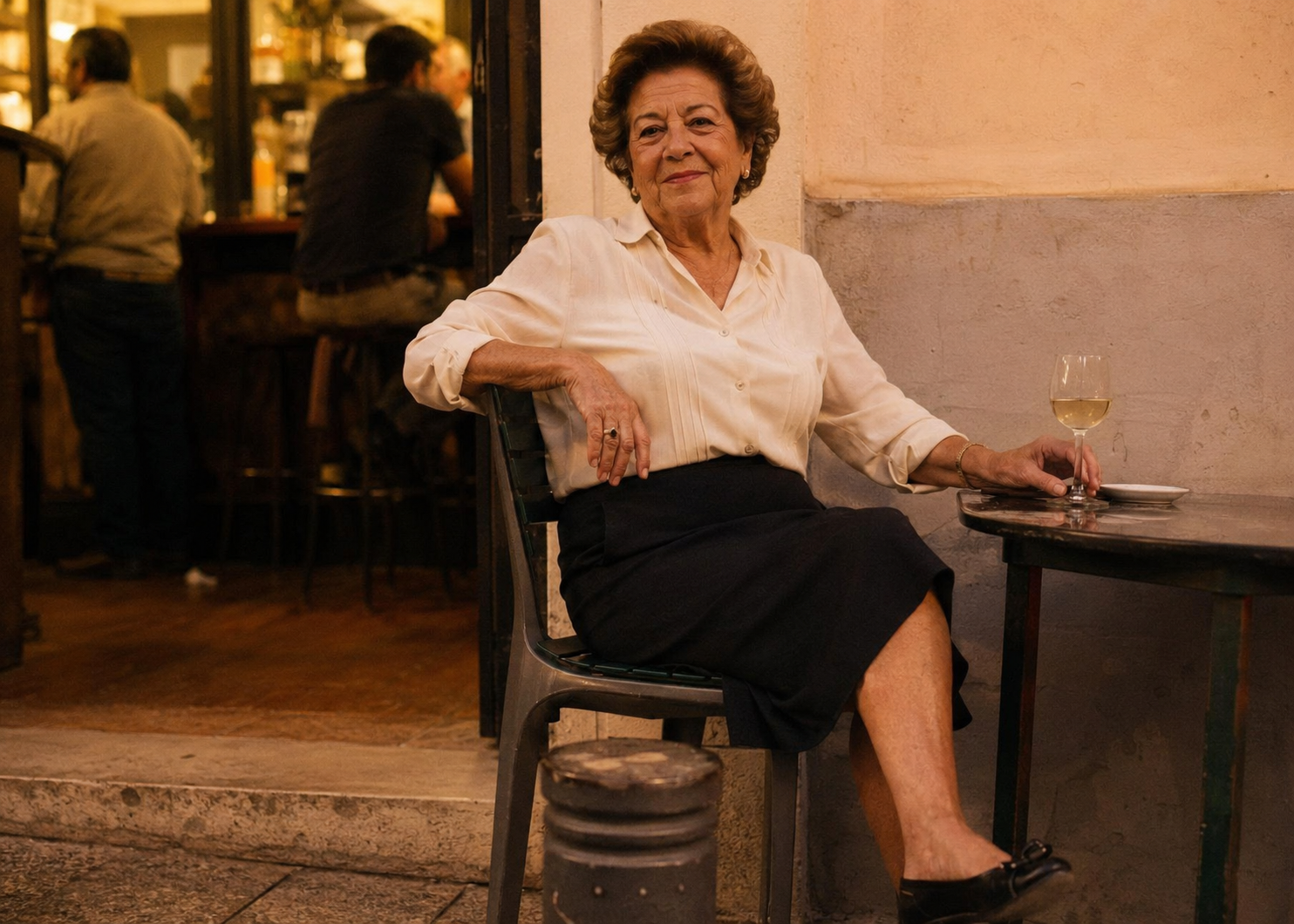
Spanish has a word, arreglado, fixed up, put together, and it is the actual dress code of the entire country. It does not mean formal. It means that before going out, you did something, you considered the occasion and adjusted yourself for it, clean shirt, decent shoes, hair settled, the small visible effort that says the evening matters. The eighty-year-old señora at the neighborhood bar in her pressed blouse and gold earrings is arreglada. The millionaire in the plain clean polo is arreglado. The American in the crumpled tee he has worn since the airport is not, and no price tag on the tee changes that, because arreglado measures effort, not money.
This is why Americans misread Spanish casualness. They see no ties and conclude no rules, when the rule is simply that you show up having tried, a little, visibly, for the people you will share the room with. It is a form of respect, the same one behind taking off the cap and changing out of the swimsuit. Grasp it once and the seven mistakes collapse into one instruction. Before you leave the room, do something. Anything. Spain will meet you more than halfway.
What Spaniards Actually Wear, So You Can Copy It
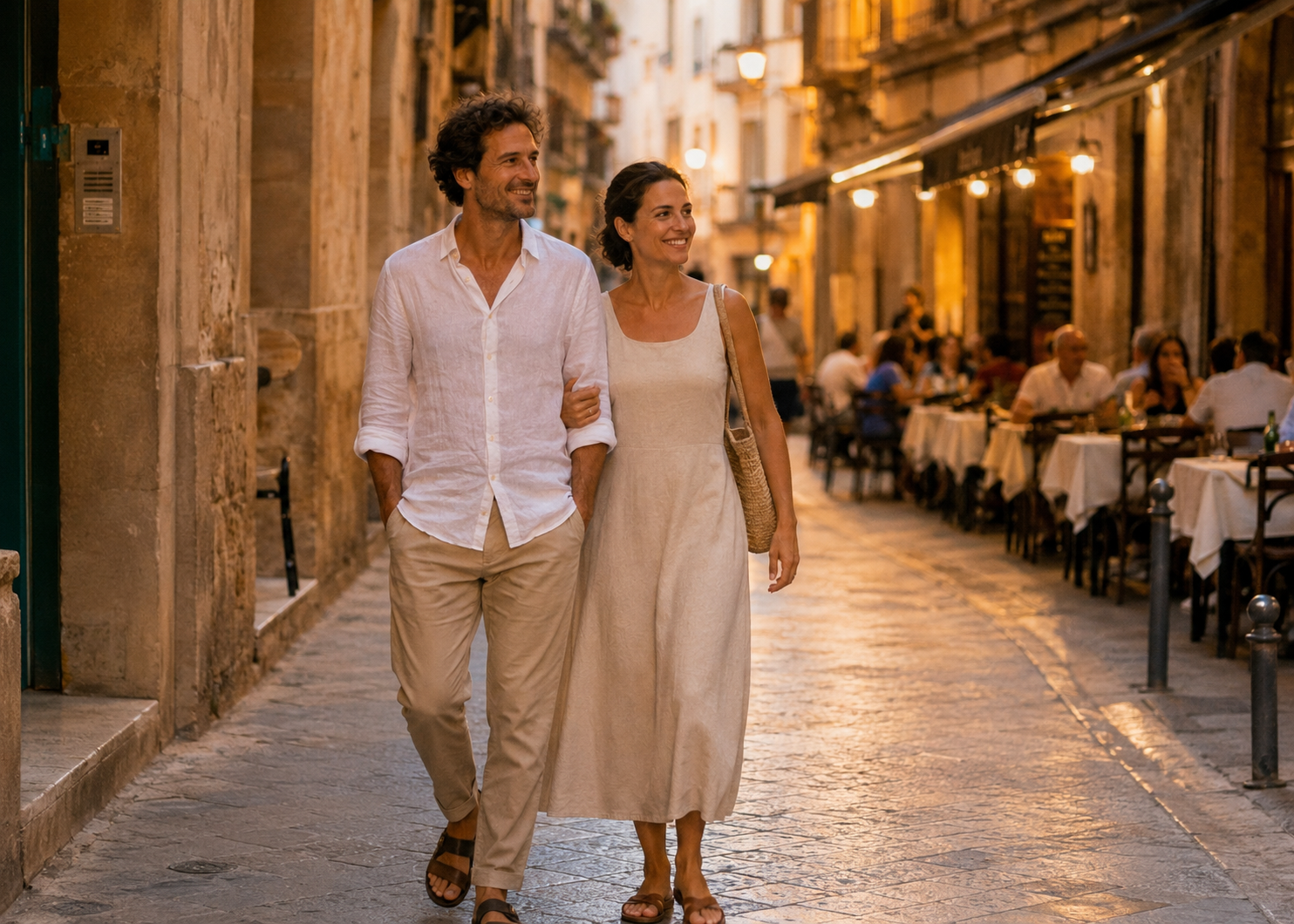
Abstractions only help so much. Here is the actual uniform, observable on any Spanish street between May and October, available in any shop, and impossible to get wrong.
For men, a linen or cotton shirt, plain or subtly patterned, or a decent polo. Chinos or simple trousers, shorts only in genuine heat and then tailored ones, not cargo. Leather loafers, espadrilles, plain leather sandals, or those slim clean sneakers. A real belt. That is the whole costume, and a sixty-year-old American man in exactly this reads as continental within ten meters. For women, the Spanish summer answer is most often a dress, simple, cotton or linen, with flat structured sandals or espadrilles, small earrings, done. Not because trousers are wrong, Spanish women wear them constantly, but because the simple dress solves the entire arreglada question in one garment with less effort than the leggings took.
Notice what is absent from both lists. Nothing is expensive. Nothing is formal. Nothing requires a body type or an age, and in fact the most reliable practitioners of the uniform are the oldest people on the street. The whole system is available at any Spanish chain store for less than an American spends on one pair of the wrong sneakers, which is its own quiet comment on the matter.
The Hour Matters As Much As The Outfit
There is a time dimension to Spanish dress that Americans miss entirely, and it explains half the mismatches on any terrace.
Spanish evenings have a ceremony to them, the paseo, the slow social walk before dinner when the whole town comes out, and people dress for the evening as an event that begins around eight and runs late. Dinner at 9:30 or 10 is the social peak of the day, and the clothes acknowledge it. The American pattern inverts this. Americans eat at the hour Spaniards consider late lunch, often still in the day’s sightseeing clothes, because in the American mental schedule dinner is the end of the day’s activities rather than the beginning of the evening’s. So the 7 p.m. American in the day’s shorts and the 10 p.m. Spaniard dressed for the night are not just eating at different hours. They are performing two different ideas of what dinner is.
You do not have to adopt the Spanish stomach schedule, though your evenings will be better if you do. But understand that the later the hour, the higher the standard, and that a 10 p.m. table at a good place is the most dressed moment of Spanish daily life. Walking into it in afternoon clothes is the equivalent of arriving at a dinner party in what you mowed the lawn in. The room will be perfectly polite about it. The room will also have noticed.
A Note On August And The Coast
Fairness requires one concession. The rules flex by geography and by month, and you should know where the slack is.
Beach towns in August are the loosest Spain gets. In a chiringuito with sand underfoot, shorts and sandals at dinner are normal, the cover-up is forgiven within sight of the water, and even the cap survives. The further inland and the bigger the city, the tighter the code, with Madrid and Sevilla at the strict end and a Cádiz beach bar at the loose one. Seasons matter too. The linen-and-espadrille summer uniform gives way in October to jackets and proper shoes, and a Spanish autumn terrace is noticeably more dressed than an American one in the same weather, because the principle underneath, arreglado, never takes a season off.
So calibrate to the room you are actually in. The skill is reading the locals at the next table, which Spaniards themselves do automatically, and matching the register. When in doubt, dress one small notch above your guess. In Spain, the overdressed foreigner is charming. The underdressed one is filed under tourist, and the file, once opened, stays open all evening.
The last word belongs to the woman who taught me all of this without saying a sentence about clothes. She is at her corner table most evenings, somewhere past eighty, blouse ironed, earrings on, shoes that have never met a trail. She has watched twenty summers of foreigners come through that bar in their performance fabrics and their caps, and she has never once commented, because she does not need to. She just sits there, arreglada, being the standard. Match her effort, not her wardrobe, and Spain opens. It really is that simple, and it really is that watched.

About the Author: Ruben, co-founder of Gamintraveler.com since 2014, is a seasoned traveler from Spain who has explored over 100 countries since 2009. Known for his extensive travel adventures across South America, Europe, the US, Australia, New Zealand, Asia, and Africa, Ruben combines his passion for adventurous yet sustainable living with his love for cycling, highlighted by his remarkable 5-month bicycle journey from Spain to Norway. He currently resides in Spain, where he continues sharing his travel experiences with his partner, Rachel, and their son, Han.