
The first summer I spent in Spain, I did everything wrong. I threw the windows open in the afternoon to let some air in, I kept busy through the middle of the day, I drank cold water by the liter and wondered why I still felt wrung out, and I treated the heat as something to push through rather than something to live with. My suegra, my mother-in-law, watched all this with the patient amusement of a Spanish woman who has survived seventy-odd summers in this country, and over the six summers since, she has quietly corrected every one of my mistakes, teaching me a whole routine of heat-survival habits that Spanish households have used for generations and that most Americans, including me, arrive not knowing at all.
The habits are not dramatic and not secret, just the accumulated practical wisdom of a culture that has dealt with brutal summer heat for centuries without air conditioning, and they work. From my kitchen in Madrid, where the summer can be genuinely punishing, I can tell you that learning these seven habits from my suegra changed the way the heat feels entirely, from an enemy to be fought into a thing to be managed gracefully. Here are the seven specific habits she has drilled into me, the ones most Americans skip, and why each one works.
The First Habit, The Shutters And Windows Dance
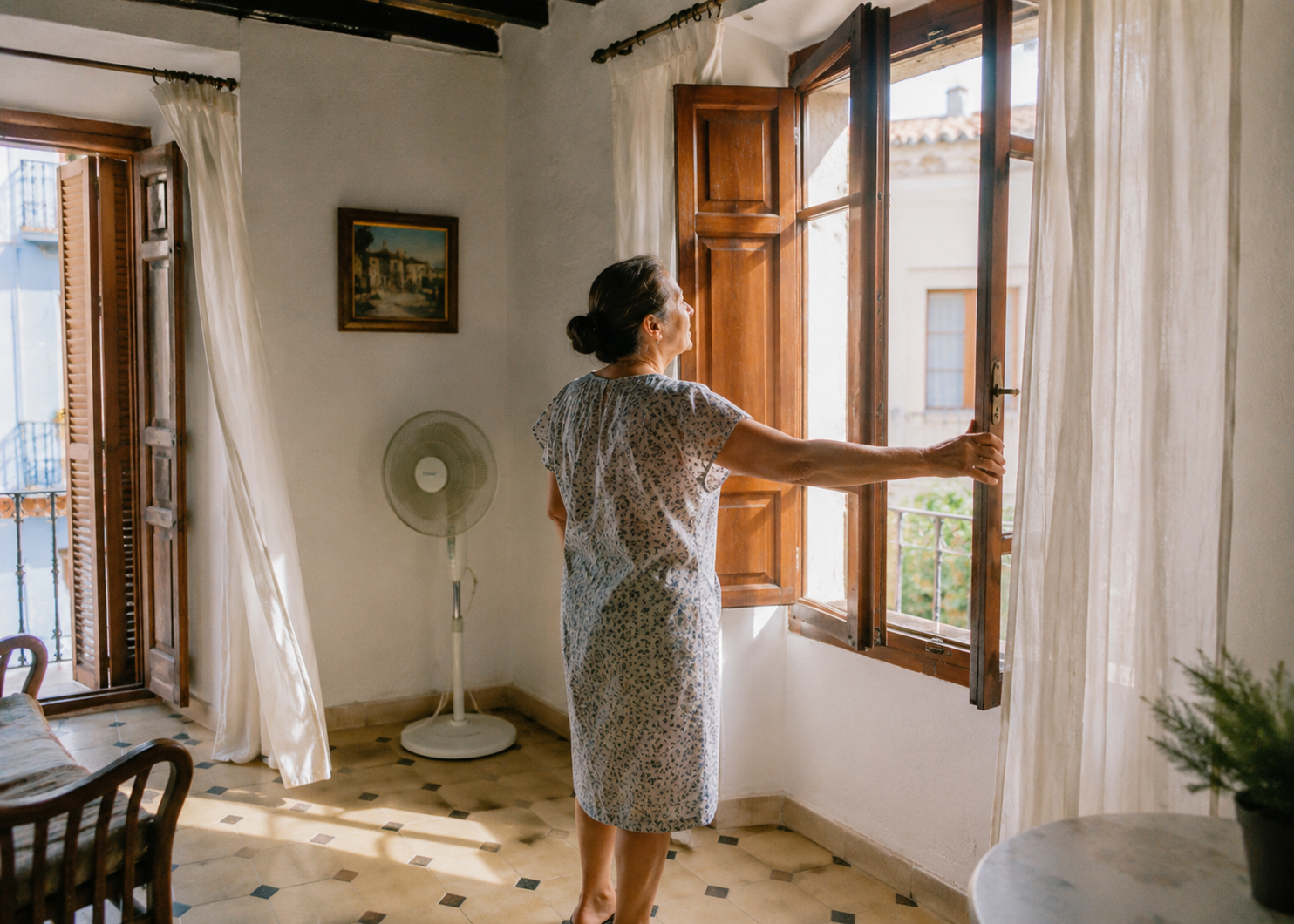
The first thing my suegra taught me, and the one I got most wrong, is the daily choreography of shutters and windows, opening and closing them at exactly the right times.
The mistake I made was opening the windows in the heat of the day to let air in, which is exactly backwards, since in the afternoon the air outside is hotter than the air you have carefully kept cool inside, so opening up just lets the heat flood in. What my suegra does, and what I now do, is the opposite, throwing the windows wide open in the cool of the early morning and the night to let the cool air flow through and flush out the day’s heat, then closing the windows and pulling the shutters or blinds down tight through the entire hot part of the day to seal the cool air in and keep the sun and the hot air out. The house becomes a cool dark cave through the worst of the heat, holding the coolness gathered overnight.
This single habit, the morning-and-night-open, day-closed-and-shuttered rhythm, makes an enormous difference, keeping a house remarkably cool through a brutal day with no air conditioning at all, simply by managing when the air and light are let in. The persianas, the external shutters or blinds that Spanish homes have, are central to this, since they block the sun before it even hits the glass, and my suegra treats lowering them at the right moment as seriously as anything in the day. Americans, used to air conditioning and to leaving windows as they are, almost never do this dance, and it is the first and biggest thing they miss, the daily rhythm of opening to the cool and sealing against the heat that keeps a Spanish home livable.
The Second Habit, Respecting The Midday Shutdown
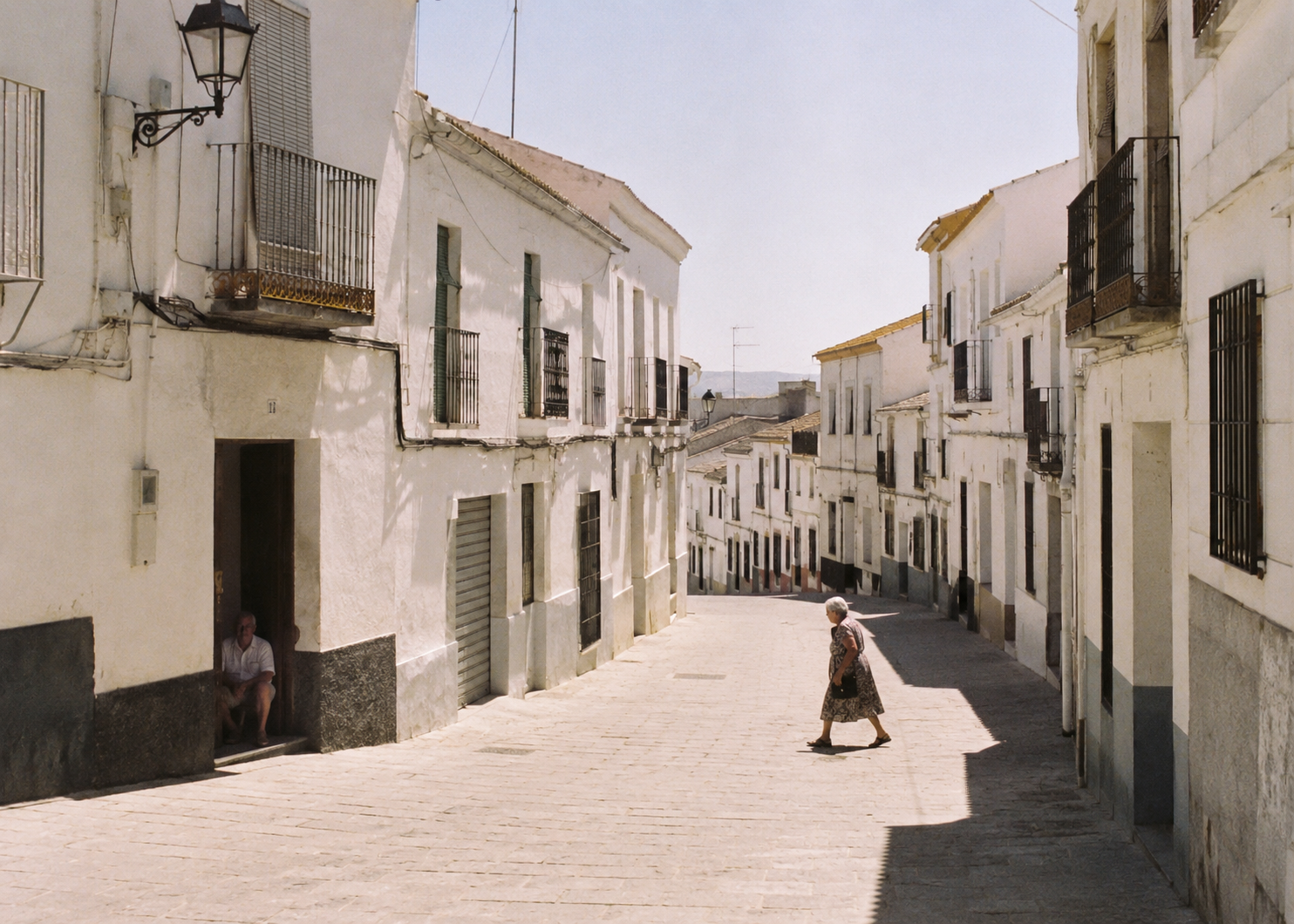
The second habit is the one most foreign to the American work ethic, the genuine midday shutdown, stopping during the hottest hours rather than pushing through them.
In the American mind, the middle of the day is prime working time, and stopping for hours in the early afternoon feels like laziness or waste, which is exactly the attitude my suegra has spent six summers correcting in me. The Spanish wisdom is that the hottest hours of the day, roughly the early to mid afternoon, are simply not for exertion, that trying to work, rush around, or be productive through the peak heat is both miserable and genuinely unwise, and that the sensible thing is to slow right down, stay inside in the cool, rest, eat the main meal, and let the worst of the heat pass before resuming activity. This is the real logic of the siesta culture, not laziness but a rational adaptation to a climate where the middle of the day is genuinely hostile.
What this looks like in practice is arranging the day around the heat, doing the active things, the errands, the work, the going out, in the cooler morning and the evening, and treating the peak afternoon hours as a time to be still and cool and unhurried inside. My suegra is mystified by the foreign insistence on pushing through the worst heat, seeing it as both unpleasant and slightly foolish, when the obvious thing is to simply not fight the heat at its peak and instead wait it out in the cool. Americans, with their push-through-everything instinct, find this hardest to adopt, but it is one of the most important habits, the recognition that some hours are not for exertion and that respecting that is wisdom rather than weakness.
The Third Habit, Eating For The Heat
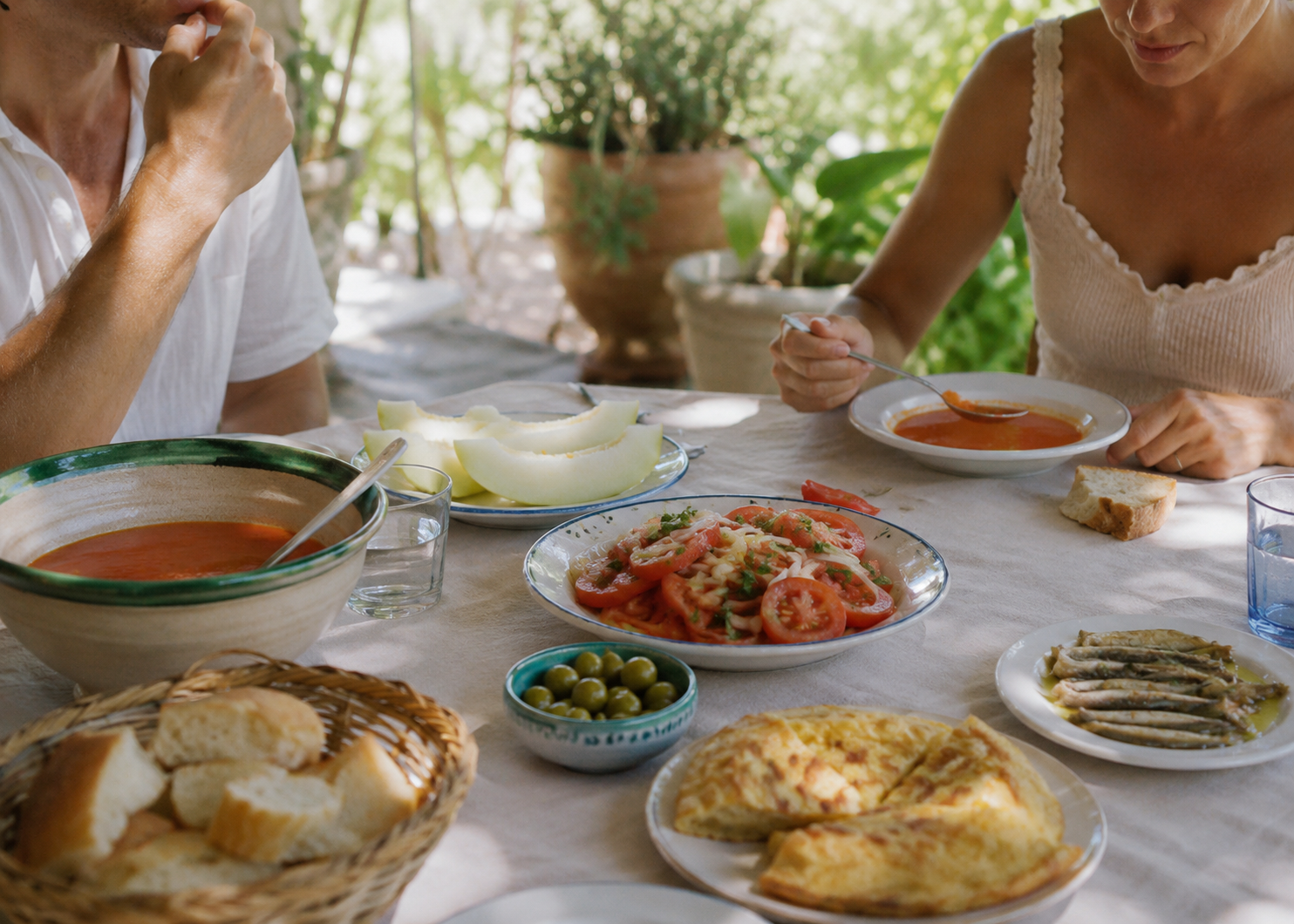
The third habit is about food, eating in the way that suits the heat rather than fighting it with the wrong meals, which my suegra approaches with real intention.
The Spanish summer diet is built around the heat, light, cooling, hydrating foods rather than heavy hot ones, and my suegra eats accordingly through the summer, the cold soups like gazpacho and salmorejo that hydrate and cool and nourish all at once, the abundant fresh fruit, the light salads, the simple cool dishes that do not require heating the kitchen or sitting heavy in the stomach in the heat. The gazpacho in particular is a daily summer staple, a cold vegetable soup that is essentially liquid hydration and nutrition in a bowl, perfectly suited to a hot day, and the fruit, the melon, the peaches, the watermelon, is both food and hydration, eaten constantly through the hot months. The eating is light and cool and frequent rather than heavy and hot.
The contrast with the American instinct is sharp, since Americans often continue eating heavy, hot, substantial meals regardless of the heat, which both requires heating the kitchen and sits heavily in a body already struggling with the temperature. My suegra eats the cold soups and the fruit and the light dishes precisely because they suit the heat, cooling and hydrating the body and asking little of it, and she avoids heating the kitchen with heavy cooking in the worst of it. This is a habit Americans skip, continuing their usual eating through a heat their food is not adapted to, when the Spanish way of eating light and cool and hydrating through the summer is both more pleasant and genuinely better suited to surviving the heat in comfort.
The Fourth Habit, Dressing The Spanish Way
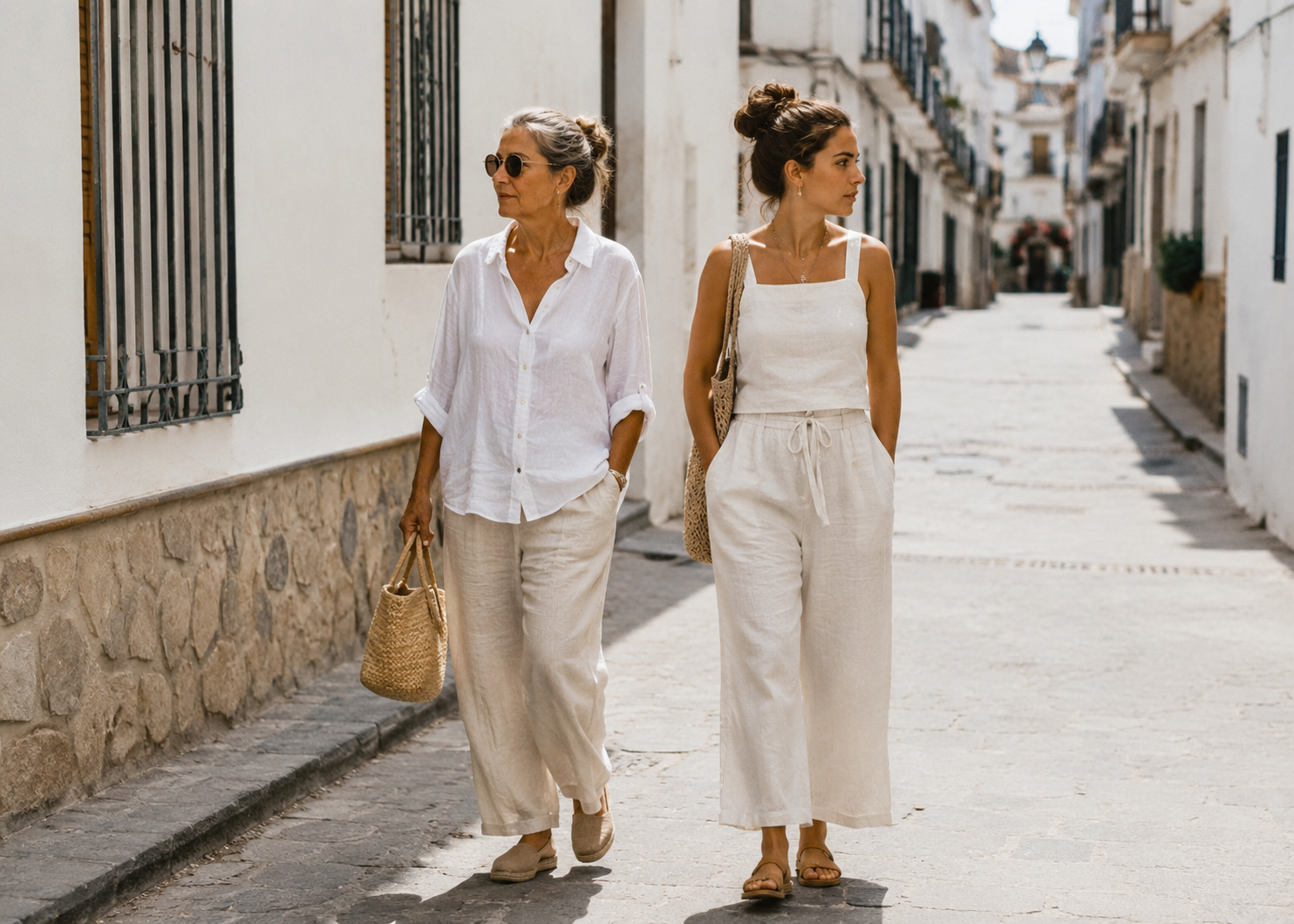
The fourth habit is about clothing, dressing in the way that actually works in heat, which is not always what the American instinct suggests.
My suegra dresses for the heat in natural fabrics, loose cuts, and surprising choices an American might not expect, the light linen and cotton that breathe, the loose flowing cuts that let air move, and crucially a willingness to cover up rather than strip down, since covering the skin in loose light fabric can be cooler than baring it to the sun. She wears the loose linen, keeps her arms and shoulders covered with light fabric in the strong sun, wears the espadrilles and the light shoes, and dresses in a way that works with the heat rather than fighting it, a wisdom about hot-weather dress that comes from generations of living in it. The fabrics breathe, the cuts let air flow, and the coverage protects from the sun, all of it more comfortable than it sounds to someone used to minimal summer clothing.
The American instinct in heat is often to wear as little as possible and to favor whatever is coolest-seeming, synthetic athletic fabrics, tight or minimal clothing, baring the skin to the sun, which can actually be hotter and more uncomfortable than the Spanish approach of loose, breathable, natural fabric with sensible coverage. My suegra would never bake her bare shoulders in the Madrid sun, knowing that loose light linen protects and cools better than exposed skin, and she favors the natural fabrics that breathe over the synthetics that trap heat and sweat. This is a habit Americans often skip, dressing for heat in ways that feel intuitive but work poorly, when the Spanish way of loose, breathable, covering dress is genuinely cooler and more comfortable.
The Fifth Habit, Hydrating With Intention
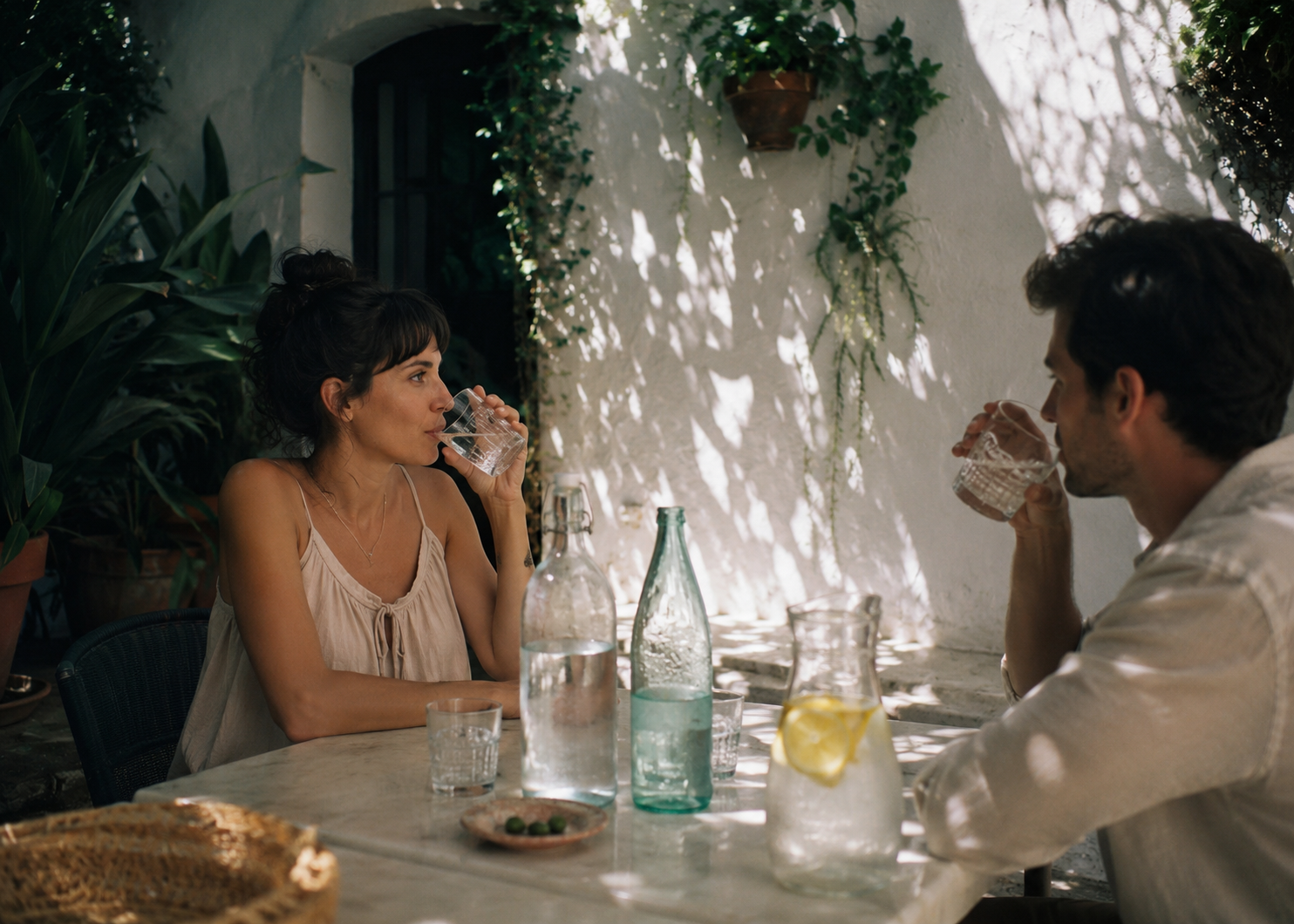
The fifth habit is about hydration done properly, which is more than just drinking cold water, and which my suegra approaches with more nuance than I first understood.
My early instinct was to drink large quantities of very cold water, which feels right but is not the whole picture, and my suegra has taught me a more intentional approach to staying hydrated in the heat. She hydrates steadily throughout the day rather than in large gulps, drinks water at cool rather than icy temperatures since very cold water can be less effective and more of a shock, and crucially gets much of her hydration through the food, the water-rich fruit and the cold soups and the general light cooling diet that hydrates as it nourishes. The hydration is constant, gentle, and partly through food, rather than occasional large quantities of icy water, which is a more effective way to keep a body hydrated through a long hot day.
She also pays attention to replacing what the heat takes beyond just water, understanding intuitively that sweating a great deal in the heat depletes more than water alone, and the traditional Spanish summer diet, with its salty and varied foods alongside the hydrating ones, helps replace it. The American habit of chugging large quantities of ice water and little else can actually be less effective, and my suegra’s steady, food-inclusive, sensibly-cool approach to hydration keeps the body better balanced through the heat. This is a subtle habit Americans often skip, treating hydration as just drinking cold water when the Spanish way of steady gentle hydration partly through cooling food is more effective at keeping a body comfortable and functional through real heat.
The Sixth Habit, Coming Alive In The Evening
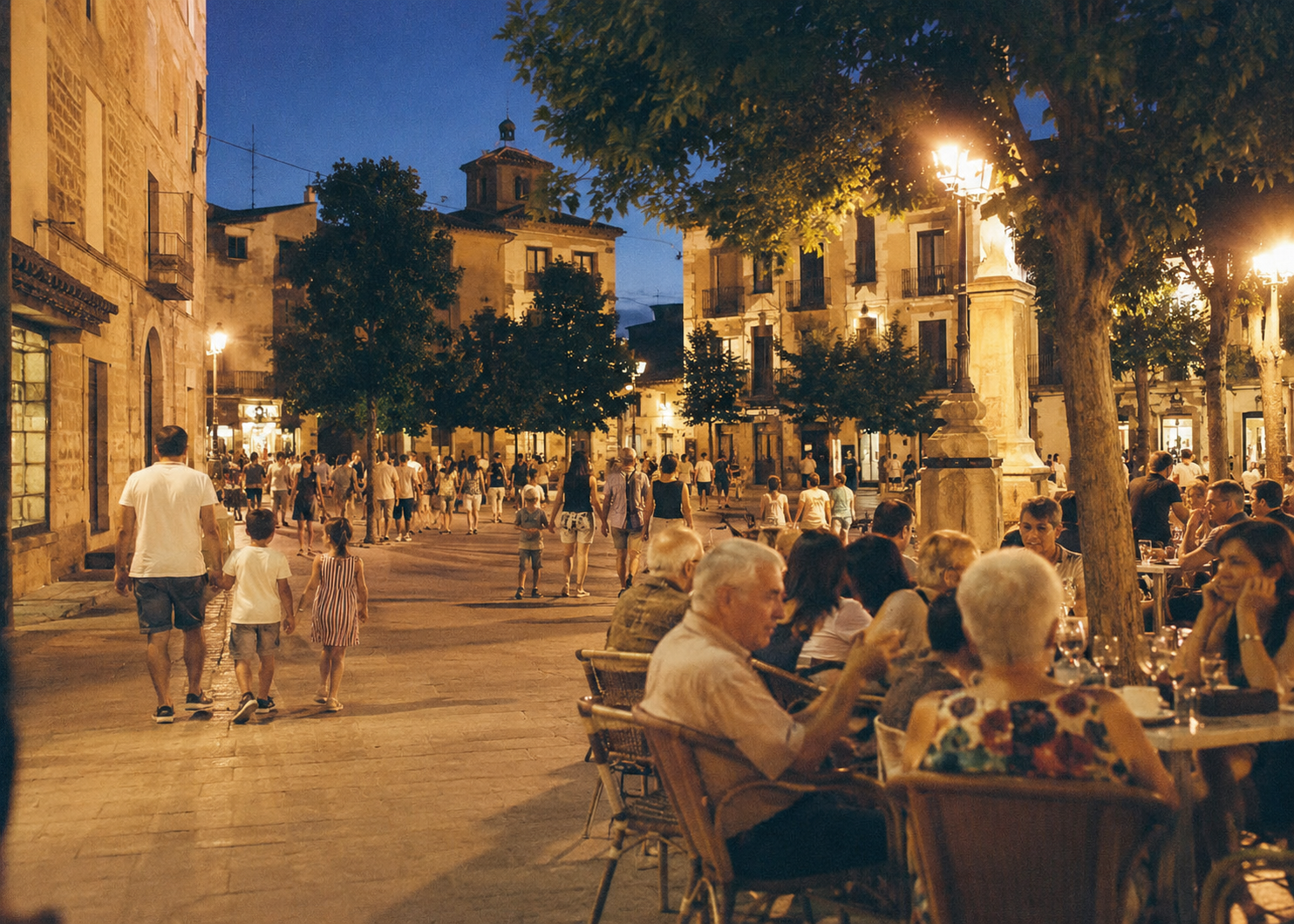
The sixth habit is about the rhythm of the day, the way Spanish life shifts to the evening in summer, coming alive after the heat breaks rather than during it.
My suegra, like all of Spain, lives in summer on an evening-and-night rhythm, with the social life, the going out, the eating, the activity all shifting to the cool of the evening and well into the night, the streets and plazas filling up only after the worst heat has passed, the dinner eaten late, the evening paseo and the socializing happening in the pleasant cool of the night rather than the hostile heat of the day. This is why Spanish summer life seems to happen so late by American standards, the late dinners, the children playing in the plaza at eleven at night, the social life of the warm months lived largely after dark, because the evening and night are when the heat finally relents and life becomes pleasant again. The day is for surviving the heat, the evening and night for actually living.
The American instinct is to keep the usual daytime rhythm regardless of the season, socializing and dining at the usual hours, which in a Spanish summer means doing everything during the hostile heat and missing the lovely cool of the evening when life is actually pleasant. My suegra shifts her whole rhythm to the cool hours, resting and laying low through the heat and coming alive in the evening, which is both more comfortable and more sociable, since it is when everyone else is out too. This is a habit Americans skip, holding to their daytime rhythm through a summer that rewards an evening one, when the Spanish shift to living in the cool of the night is both the pleasant and the sensible way to spend a hot-climate summer.
The Seventh Habit, Accepting The Heat
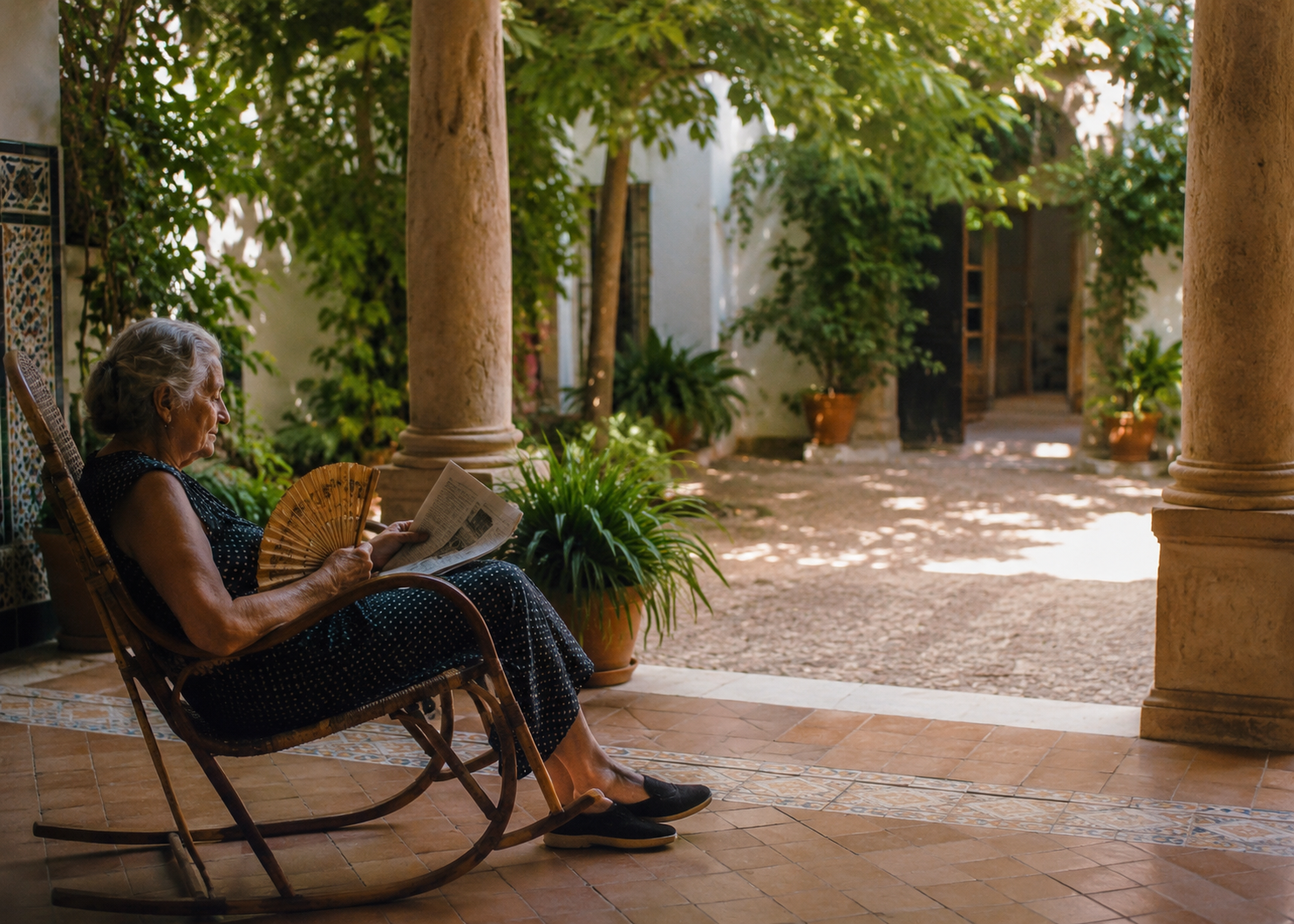
The seventh habit is the most philosophical, and the one that underlies all the others, the acceptance of the heat as something to live with gracefully rather than to fight.
The deepest thing my suegra has taught me is an attitude, a way of relating to the heat that is fundamentally different from the American instinct to conquer it. Where the American approach is to fight the heat, to blast the air conditioning, to push through and carry on as normal and treat the heat as an obstacle to be overcome by force, the Spanish approach my suegra embodies is to accept the heat, to adapt to it, to arrange life around it and live with it gracefully rather than battling it. She does not rage against the heat or try to pretend it is not there or force her normal life through it, she simply adjusts, slows down, follows the habits that make it livable, and accepts the summer for what it is, which is both more peaceful and more effective than fighting. This acceptance is the foundation that all the practical habits rest on.
This attitude difference is profound, since the fighting approach is exhausting and often futile, while the accepting approach, working with the heat rather than against it, conserves energy and equanimity and actually keeps a person more comfortable. My suegra’s grace in the heat, her unhurried adjustment to it, her refusal to be at war with her own climate, is the real lesson beneath the seven habits, the wisdom that some things are not to be fought but to be lived with skillfully. Americans, with their instinct to conquer every problem by force, most of all skip this one, arriving determined to carry on as normal through the heat, when the deepest Spanish wisdom is to stop fighting, adapt gracefully, and let the summer be what it is, managed by the habits rather than battled by the will.
What Six Summers Have Taught Me
Looking back over the six summers of this education, what strikes me is how much of it is simply the accumulated practical wisdom of a culture that has lived with heat for a very long time, available to anyone willing to learn it.
None of these seven habits is complicated or secret, they are just the things Spanish households have always done to live through brutal summers, passed down through the generations and embodied in a woman like my suegra who learned them from her own mother and grandmother. The shutters-and-windows dance, the midday shutdown, the cooling diet, the breathable dress, the intentional hydration, the evening rhythm, and above all the accepting attitude, together they turn a punishing summer from something to suffer into something to manage gracefully, and they work precisely because they are the tested wisdom of a hot-climate culture rather than anything invented. What Americans skip is not some clever trick but this whole inherited body of practical adaptation, simply because they did not grow up with it and arrive assuming air conditioning and force will see them through.
The gift my suegra has given me over these six summers is really this whole way of relating to the heat, and it has changed my Spanish summers entirely, from a season I dreaded and fought into one I now navigate with something approaching her grace. Anyone moving to a hot climate, in Spain or anywhere, would do well to seek out and learn the local version of this wisdom, the habits the locals have always used, rather than trying to impose the air-conditioned, push-through-everything approach of a cooler-climate life onto a place that calls for something else. The locals know how to live in their climate, the knowledge is there for the learning, and a suegra, or whoever the local teacher turns out to be, can hand it down to a newcomer willing to set aside their own instincts and learn the gracious, tested, generations-old way of living with the heat.

About the Author: Ruben, co-founder of Gamintraveler.com since 2014, is a seasoned traveler from Spain who has explored over 100 countries since 2009. Known for his extensive travel adventures across South America, Europe, the US, Australia, New Zealand, Asia, and Africa, Ruben combines his passion for adventurous yet sustainable living with his love for cycling, highlighted by his remarkable 5-month bicycle journey from Spain to Norway. He currently resides in Spain, where he continues sharing his travel experiences with his partner, Rachel, and their son, Han.