
Italian dinner happens at 8:30 or 9:00pm. American nutrition advice has spent decades insisting that eating late causes weight gain, that the body stores evening calories as fat, that the kitchen should close by 7:00pm. The Italians eat late and maintain lower obesity rates than Americans who eat early. This apparent paradox confuses Americans who have absorbed the eat-early gospel.
The paradox dissolves when you look at what the Italians actually do around their late dinner rather than just when they eat it. The timing of dinner matters far less than the size of dinner, the composition of dinner, the pace of dinner, and the overall daily eating pattern that the late dinner sits within. The Italian late dinner is small, follows a substantial midday lunch, is eaten slowly and socially, and fits a daily rhythm that the early American dinner does not share. The American early dinner, by contrast, is frequently the largest meal of the day, eaten fast, followed by evening snacking, within a daily pattern that promotes weight gain regardless of the early timing.
This piece walks through what the Italian dinner pattern actually is, what the science says about meal timing and weight, what the American early dinner does differently, and what individual adults can adopt. The patterns here are observed across populations and are not medical advice for any specific individual. Anyone with metabolic conditions should work with their physician on dietary changes.
What The Italian Dinner Pattern Actually Is
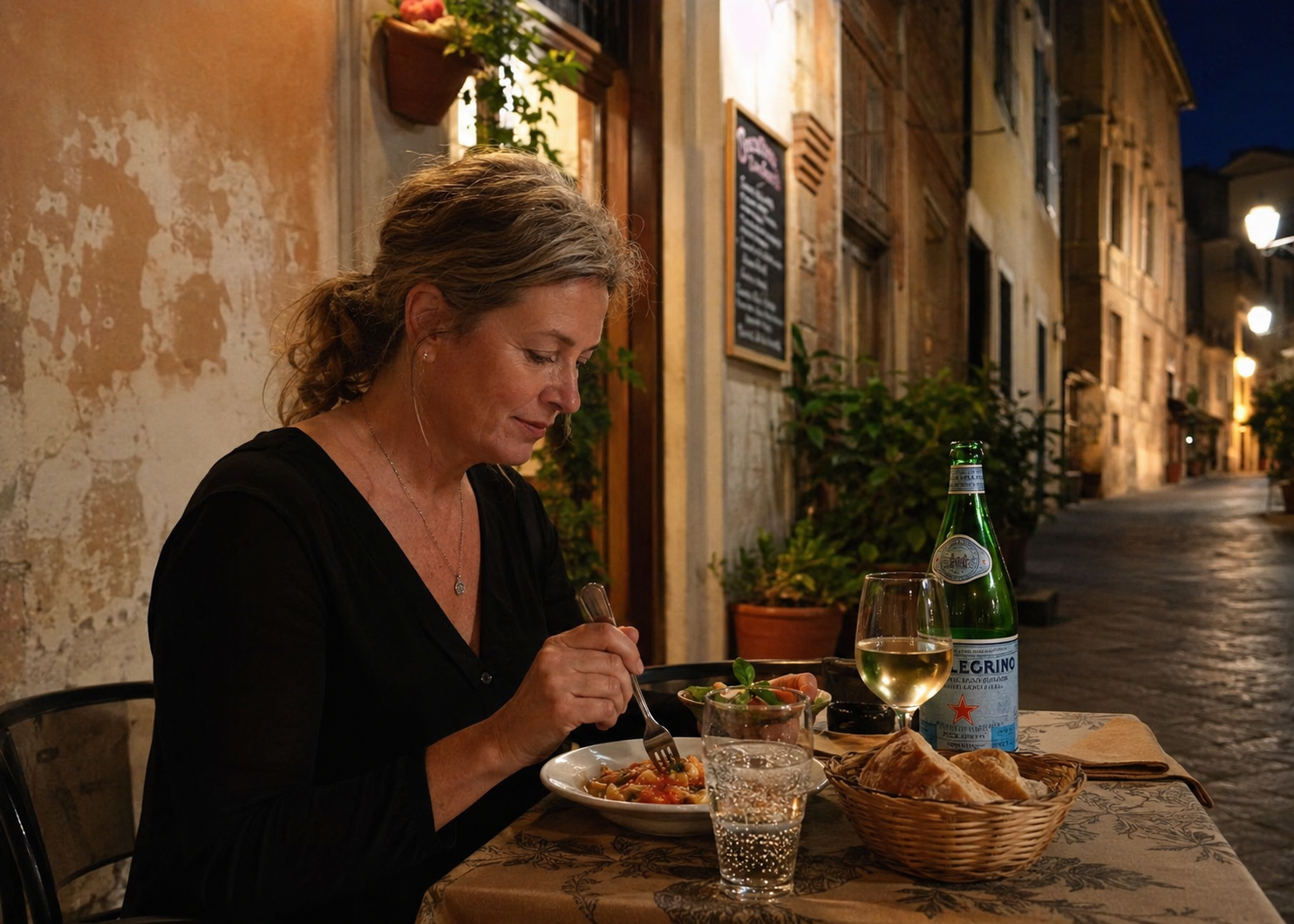
The Italian relationship with dinner has specific features that distinguish it from the American dinner.
Dinner is small. The Italian dinner is typically the lightest substantial meal of the day. A soup, a simple pasta, a piece of fish with vegetables, some bread, a small portion. The dinner is not the day’s caloric centerpiece. It is a light close to the day’s eating.
Dinner follows a large lunch. The Italian lunch, eaten at midday, is the day’s largest meal. By the time dinner arrives, the body’s main caloric needs have been met. The late dinner sits atop a day that has already done its substantial eating. The dinner adds modestly rather than dominating.
Dinner is eaten slowly and socially. The Italian dinner develops across an extended period with family or friends. The slow social eating produces satiety signaling that prevents overconsumption. The meal is an event rather than a rapid refueling.
Dinner is followed by minimal additional eating. The Italian who eats dinner at 9:00pm does not then consume evening snacks across the following hours. The dinner is the close of the eating day. The American pattern of dinner followed by hours of snacking does not have an Italian equivalent.
Dinner is composed of whole foods. The Italian dinner is real food: vegetables, fish, modest pasta, olive oil, bread. The whole food composition produces satiety and good metabolic response. The processed convenience foods common in American dinners are less present.
Dinner is bounded by the daily rhythm. The Italian day has shape: light breakfast, substantial lunch, light dinner, minimal snacking. The late dinner fits this rhythm rather than disrupting it. The timing works because the surrounding pattern supports it.
The combined Italian dinner pattern is a small, whole-food, slowly eaten, socially shared meal that follows a substantial lunch and closes the eating day without subsequent snacking. The late timing is almost incidental to these features. The pattern would produce good weight outcomes at most reasonable dinner times.
What The Science Says About Meal Timing And Weight
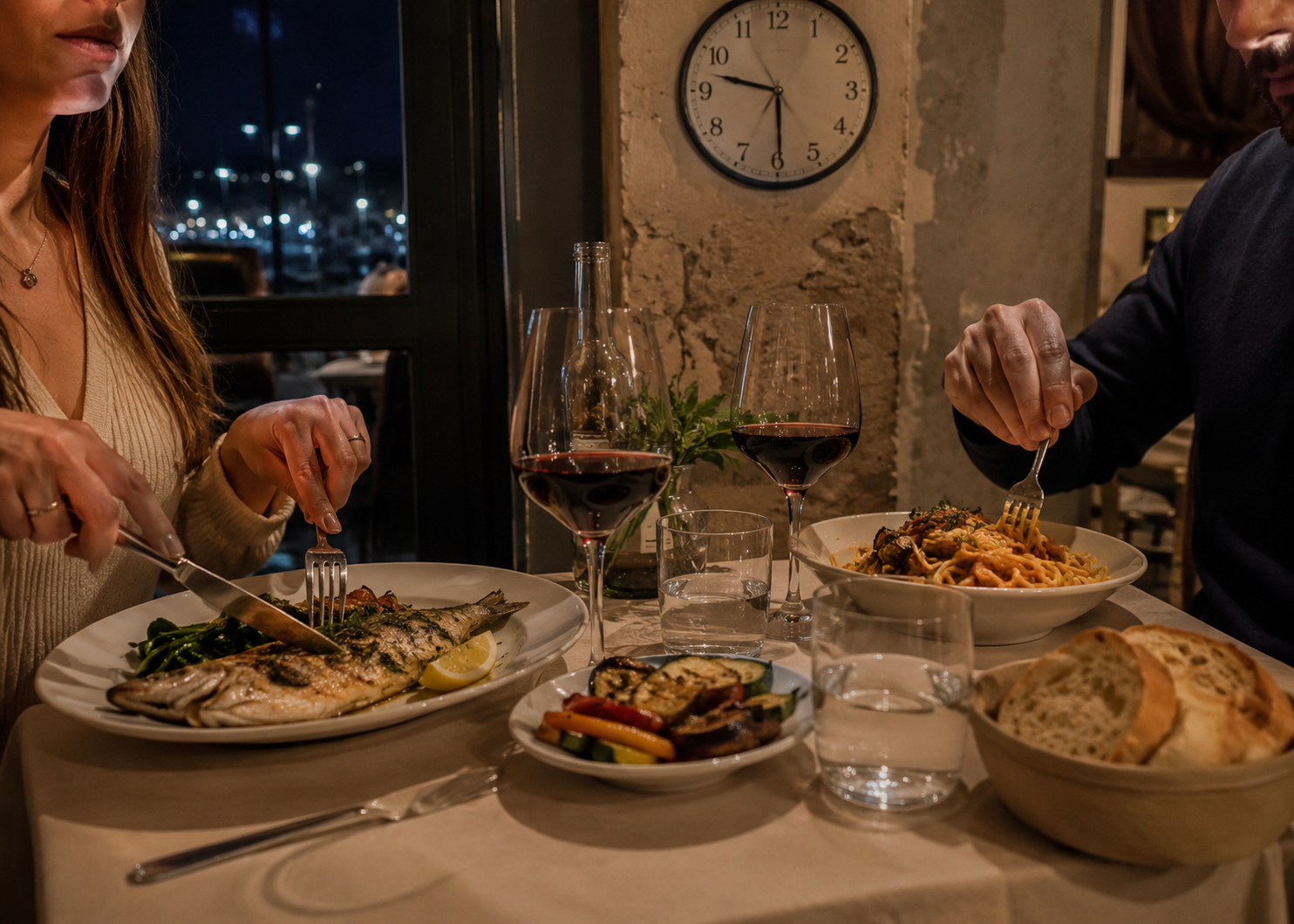
The research on meal timing and weight has produced a more nuanced picture than the American eat-early gospel suggests.
Total daily calories matter more than timing. The fundamental driver of weight is the relationship between calories consumed and calories expended across the day. The timing of those calories matters less than the total. A person eating the same total calories at different times shows smaller weight differences than the timing emphasis suggests.
Meal composition matters more than timing. What is eaten affects weight more than when it is eaten. A small whole-food dinner at 9:00pm affects weight differently than a large processed dinner at 6:00pm, in favor of the late small meal.
There is some evidence for circadian effects, but the picture is complex. Some research suggests the body handles calories somewhat differently at different times of day, with late-night eating potentially less favorable for some people. But this effect is modest compared to total calories and composition, and it primarily concerns very late eating combined with poor sleep, not the Italian 9:00pm dinner followed by good sleep.
Front-loading calories toward earlier in the day may have modest benefits. Eating more at breakfast and lunch and less at dinner aligns with some metabolic research. The Italian pattern does exactly this, with the large lunch and small dinner, even though the dinner timing is late. The front-loading, not the dinner timing, is the relevant feature.
Evening snacking is a major driver of American weight gain. The calories consumed in the hours after dinner, often processed snack foods eaten while watching television, contribute substantially to American caloric excess. The Italian pattern of no post-dinner snacking eliminates this source. The American early dinner often followed by hours of snacking does not.
Sleep quality interacts with eating patterns. Eating large meals immediately before sleep can disrupt sleep, which affects weight regulation. The Italian dinner at 9:00pm with sleep at 11:30pm or midnight leaves a digestion window. The pattern matters more than the clock time.
The science does not support the simple American claim that late eating causes weight gain. It supports a more nuanced picture in which total calories, meal composition, the daily distribution of calories, and post-dinner snacking matter far more than the clock time of dinner. The Italian late dinner produces good outcomes because of these features, not despite the late timing.
What The American Early Dinner Does Differently
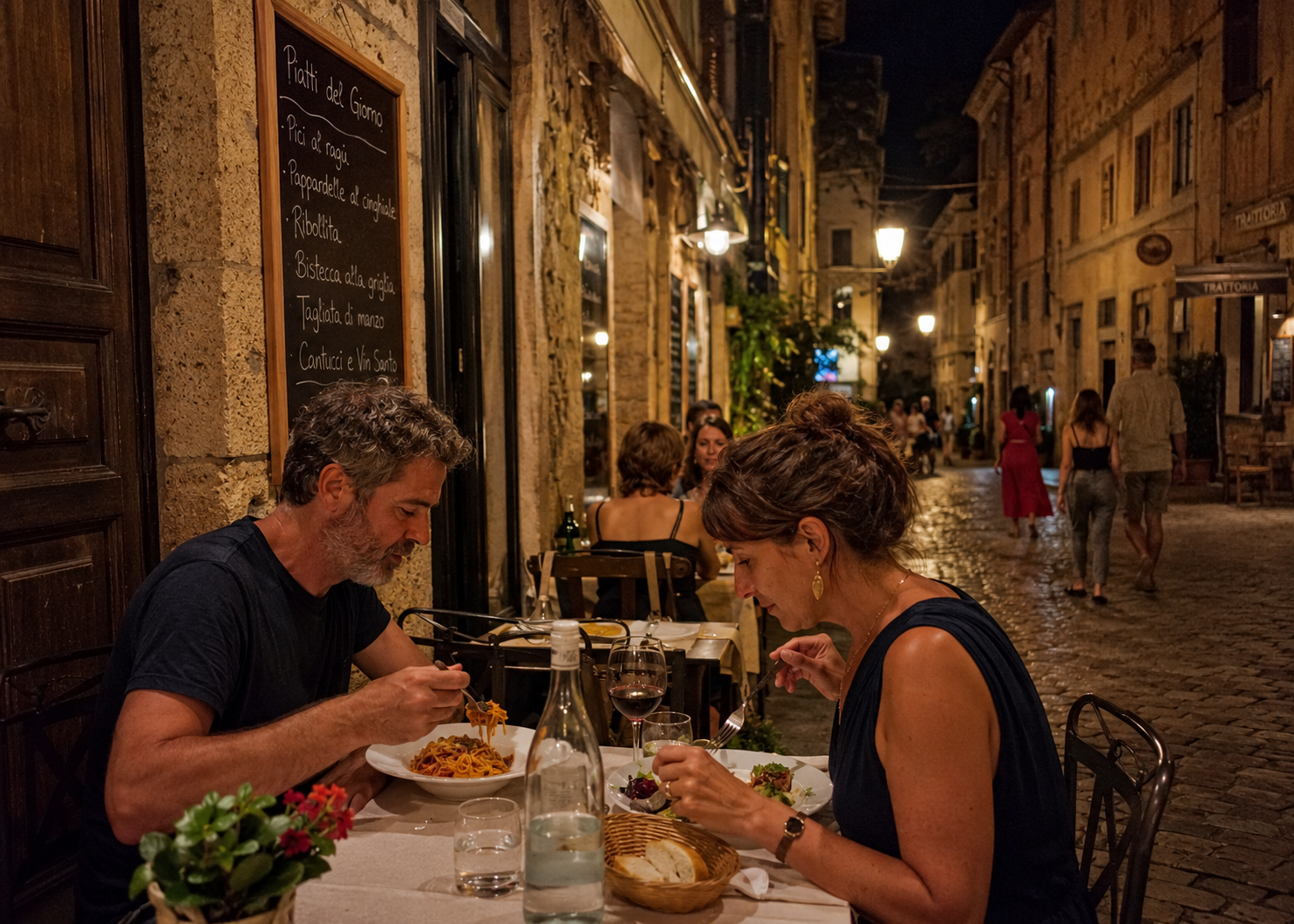
The American early dinner differs from the Italian late dinner in the features that actually matter for weight.
Dinner is the largest meal. The American dinner is frequently the day’s caloric centerpiece. The large evening meal delivers the bulk of the day’s calories at the end of the day. The Italian pattern of small dinner after large lunch is reversed.
Dinner follows a small lunch. The American lunch is often light, a sandwich or salad eaten fast at the desk. The body arrives at dinner under-fed and then consumes a large meal. The caloric distribution is back-loaded rather than front-loaded.
Dinner is eaten fast. The American dinner is often consumed quickly. The fast eating bypasses satiety signaling and promotes overconsumption.
Dinner is followed by extensive snacking. The American pattern of dinner followed by hours of evening snacking. The post-dinner calories add substantially to the daily total. This is arguably the single largest difference from the Italian pattern.
Dinner is often processed food. Convenience foods, takeout, processed products. The processed composition produces less satiety and worse metabolic response than whole foods.
Dinner sits within a grazing pattern. Many Americans eat across the entire day, with snacks between meals, large portions, and continuous availability of food. The grazing pattern produces caloric excess regardless of dinner timing.
The combined American early dinner pattern produces weight gain not because of the early timing but because of the large size, the back-loaded daily distribution, the fast eating, the post-dinner snacking, the processed composition, and the surrounding grazing pattern. The early timing that American nutrition culture prescribes does nothing to address any of these actual drivers.
What Individual Adults Can Adopt
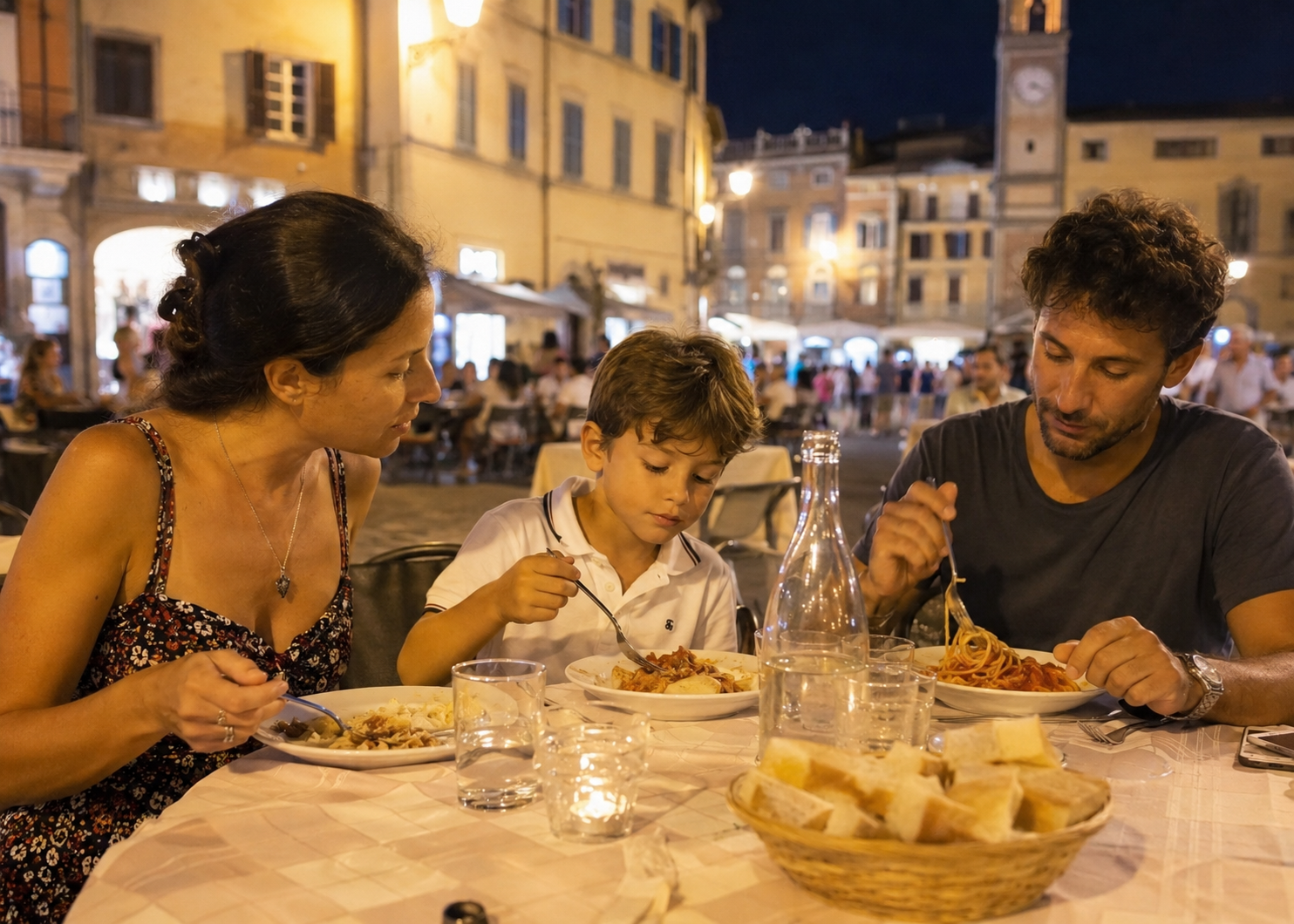
For adults who want better weight outcomes, the Italian pattern offers specific adoptable features that matter more than dinner timing.
Make lunch the largest meal and dinner the smallest. Front-load the day’s calories toward midday. The redistribution aligns with metabolic research and models the Italian pattern. The dinner timing matters far less than this redistribution.
Eat a small dinner. Regardless of timing, reduce the size of the evening meal. The small dinner addresses the actual driver more than shifting the timing earlier would.
Eliminate post-dinner snacking. Close the eating day with dinner. No snacks afterward. This single change addresses one of the largest sources of American caloric excess.
Eat dinner slowly. Take time, eat socially when possible, allow satiety signaling to work. The slow eating prevents overconsumption.
Eat whole foods at dinner. Vegetables, fish, modest portions of whole grains, olive oil. The whole food composition produces satiety and good metabolic response.
Stop grazing across the day. Structured meals rather than continuous eating. The structured pattern reduces total daily calories.
Do not obsess over dinner timing. A small whole-food dinner at 8:00pm is better than a large processed dinner at 6:00pm. The timing is the least important variable. Focus on size, composition, and the surrounding pattern instead.
For adults with metabolic conditions, these patterns can support weight management, but should be implemented in coordination with the managing physician.
What The Italian Late Dinner Reveals
The Italians eat dinner late and maintain lower obesity rates than Americans who eat dinner early. The difference is not the timing. The difference is everything around the dinner.
The Italian pattern is a small whole-food dinner that follows a large lunch, is eaten slowly, and closes the eating day without subsequent snacking. The American pattern is a large processed dinner that follows a small lunch, is eaten fast, and is followed by hours of snacking. The Italian timing is later, and the Italian outcomes are better, which proves that the timing is not the driver.
For American adults, the recognition is that the eat-early gospel has been focused on the least important variable. The size, composition, daily distribution, and post-dinner snacking matter enormously. The clock time of dinner matters little. The American who shifts dinner earlier while maintaining the large size, the back-loaded distribution, and the post-dinner snacking will see little benefit. The American who adopts the Italian pattern of small dinner, large lunch, slow eating, and no post-dinner snacking will see real benefit, even if dinner stays late.
The Italian family eating dinner at 9:00pm is not defying nutritional science. They are demonstrating it. The late dinner works because of the pattern around it. The same pattern is available to American adults willing to adopt the features that actually matter rather than the timing that does not.

About the Author: Ruben, co-founder of Gamintraveler.com since 2014, is a seasoned traveler from Spain who has explored over 100 countries since 2009. Known for his extensive travel adventures across South America, Europe, the US, Australia, New Zealand, Asia, and Africa, Ruben combines his passion for adventurous yet sustainable living with his love for cycling, highlighted by his remarkable 5-month bicycle journey from Spain to Norway. He currently resides in Spain, where he continues sharing his travel experiences with his partner, Rachel, and their son, Han.