
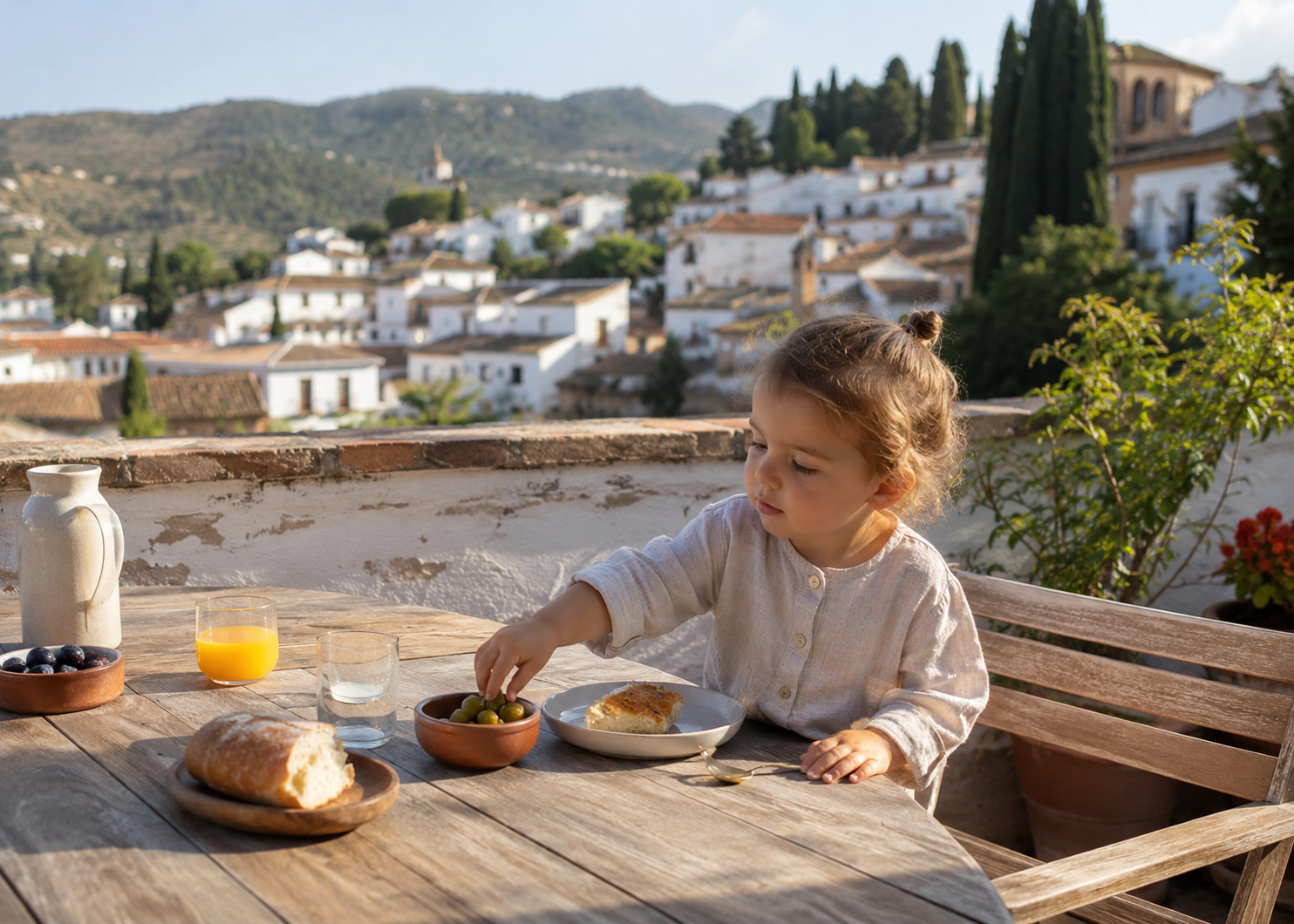
A Spanish family in a small town outside Sevilla sits down to lunch on a Sunday in October. The grandmother brings out a plate of olives — fat Manzanillas, smaller Arbequinas, briny black olives from the local producer. The three-year-old grandson reaches for the plate first. He picks up a Manzanilla, removes the pit with practiced fingers, eats it, and reaches for another. He will eat six olives across the lunch before moving on to the main course.
An American family at a comparable Sunday lunch in suburban Atlanta would not see this. The American twelve-year-old at the table does not eat olives. Olives have not been part of his diet. His parents do not push olives because they have learned that he refuses anything with strong flavor. The olives on the antipasto plate at the Italian restaurant they visited last week were ignored by all three children at the table.
The difference is not genetic. American children and Spanish children have the same taste buds, the same physiological responses to bitter and salty flavors, the same developmental capacity to expand their palates. The difference is what their food cultures teach them about how to eat. Spanish children eat olives at three because Spanish food culture introduces olives at one. American children do not eat olives at twelve because American food culture has not introduced olives at all.
This piece walks through what Spanish food culture actually does with children’s palates, why the introduction patterns produce dramatically different outcomes by school age, what American food culture has institutionalized that produces the opposite outcomes, and what American parents can adopt if they want to produce different palates in their children.
What Spanish Food Culture Does With Young Children
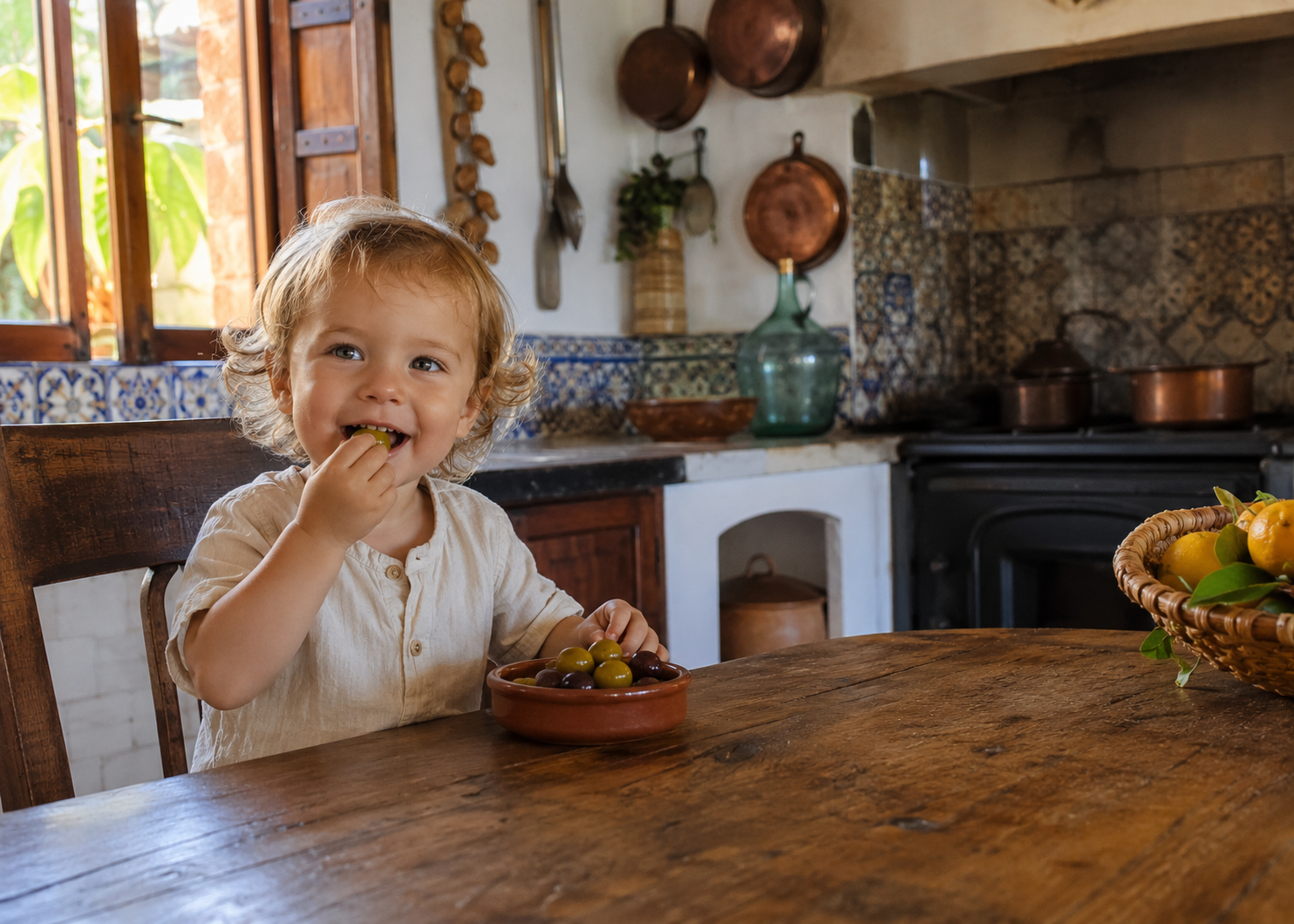
Spanish food culture operates on several specific principles regarding children’s food that differ substantially from American practices.
Children eat what adults eat. From the time Spanish children can chew solid food, typically around 8 to 12 months, they begin eating versions of the foods the adults at the table are eating. There is no separate children’s menu. There are no chicken nuggets, no plain pasta with butter, no grilled cheese as the default child option. The Spanish child eating in a restaurant orders from the regular menu, often a smaller portion of what the adults are having.
Flavor exposure starts immediately. Spanish baby food is not bland. The traditional purées include garlic, onion, tomato, leek, parsley, and other aromatic vegetables that American baby food typically excludes. The Spanish infant develops palate familiarity with flavor complexity from the earliest weaning months. By age two, the Spanish child has experienced flavor patterns that American children of similar age have systematically avoided.
Bitter and salty flavors are introduced early. Olives at 18 months. Anchovies at age two. Cured meats, hard cheeses, vinegar-based dressings, the sherry vinegar in gazpacho. These flavors are not categorized as adult flavors. They are categorized as food. The Spanish toddler who eats an anchovy is not being asked to eat something the culture considers difficult. She is eating something the culture considers ordinary.
Children are expected to develop palates through exposure. The Spanish framework assumes that children’s preferences expand through repeated exposure to foods. A food refused at first attempt is offered again at second attempt, third attempt, fourth attempt. The exposure pattern continues until the child accepts the food, which in most cases happens within the first five to ten exposures. The framework does not interpret initial refusal as permanent rejection.
Family meals are mandatory and structured. Lunch happens at a specific time. Everyone sits down together. The food on the table is the food being eaten. The child eats with the family, not in front of a separate screen with separate food. The structural arrangement reinforces the assumption that the child is participating in the family’s eating culture rather than being catered to by it.
Restaurants accommodate children but do not produce children’s food. A Spanish restaurant welcomes children but does not offer kid-specific menus. The child orders something from the regular menu. The portion may be smaller. The food is the same food the adults are eating. The Spanish child grows up understanding that restaurants serve food, not children’s food specifically.
The combined effect across the first five years of life is that Spanish children develop expanded palates through systematic exposure to the full range of foods their culture produces. By age five, the typical Spanish child eats foods that the typical American twelve-year-old still refuses.
What American Food Culture Does Differently
American food culture operates on different principles that produce the opposite outcomes. The principles are not invisible if examined directly but are typically assumed rather than examined.
Children eat children’s food. American food culture has institutionalized a specific category of food designed for children. Chicken nuggets, plain pasta with butter, grilled cheese, mac and cheese, pizza, peanut butter sandwiches, hot dogs. This category exists as a parallel food culture that runs alongside adult food. American children typically learn to recognize the category and refuse foods outside it.
Flavor exposure is systematically reduced. American baby food emphasizes mild flavors. Rice cereal, plain vegetables, plain fruits, plain meats. The flavor complexity of adult food is presented as inappropriate for young children. Pediatricians often recommend introducing one flavor at a time across long intervals. The infant who would have been eating Spanish-style aromatic purées at 9 months instead encounters single-flavor American baby food across the first year.
Bitter and salty flavors are explicitly avoided. American food culture treats olives, anchovies, capers, strong cheeses, and bitter greens as adult foods that children would not accept. The treatment is preemptive. The parent who has not offered the food cannot know whether the child would have accepted it. The avoidance produces the predicted refusal, which then justifies continued avoidance.
Children’s preferences are treated as fixed. When an American child refuses a food at first attempt, the food is often removed from offered options. The refusal becomes the parent’s information about what the child will eat. The framework does not assume that exposure produces acceptance. The framework assumes that initial refusal indicates permanent preference.
Family meals are increasingly optional. The shared family dinner has eroded in American culture across the past several decades. Children eat at different times than adults. They eat different food than adults. They eat in front of screens that compete for their attention. The structural arrangement that supports the Spanish child’s palate development has been substantially dismantled in American daily life.
Restaurants institutionalize children’s menus. American restaurants offer specific menus for children with limited options. The menus reinforce the assumption that children eat different food than adults. The American child grows up understanding that restaurants serve food, but that children get a different category of food than adults.
Parents are encouraged to accommodate children’s preferences. American parenting advice frequently encourages making children’s meals separately when children refuse the family’s food, offering alternatives when children do not eat, and avoiding conflict around food. The accommodation removes the exposure that would produce palate expansion. The child whose refusal is accommodated does not develop the palate that exposure would have produced.
The combined effect across the first twelve years of life is that American children develop limited palates through systematic protection from the full range of foods their culture produces. By age twelve, the typical American child eats a substantially narrower range of foods than the typical Spanish five-year-old.
What The Difference Produces Beyond Childhood
The palate differences that emerge in childhood persist into adulthood in ways that affect health, social experience, and culinary participation.
Adult food preferences track childhood food exposure. The Spanish adult who ate olives at three eats olives at thirty. The American adult who refused olives at twelve typically still does not eat olives at thirty. The preferences set in childhood are unusually stable across adult life. Adult palate expansion is possible but requires deliberate effort against established preferences.
Vegetable consumption tracks childhood vegetable exposure. Spanish adults consume substantially more vegetables than American adults. The differential exists across all socioeconomic categories. The pattern is established before age five and continues across adult life. The vegetable consumption gap that produces health outcome differences between Spanish and American populations is partly the consequence of childhood food culture differences.
Cardiovascular outcomes track dietary patterns. Spanish adults have lower rates of cardiovascular disease than American adults. The Mediterranean diet that produces these outcomes is partly accessible because Spanish adults eat the foods the diet requires. The American adult attempting the Mediterranean diet often encounters difficulty because the foods feel unfamiliar and unappealing rather than ordinary. The childhood exposure that would have made the diet feel ordinary did not happen.
Social experience around food differs. Spanish adults navigate social meals comfortably across cuisines and contexts. American adults often have specific food preferences that constrain their social options. The dinner party with friends who serve unfamiliar food produces different experiences for the two populations.
Culinary participation in adult life differs. Spanish adults cook more from scratch than American adults. The familiarity with ingredients and flavors that childhood food culture produced supports adult cooking practice. The American adult who did not eat olives, anchovies, or strong cheeses as a child is less likely to cook with these ingredients as an adult, which limits the cuisine available to him.
The cumulative effect is meaningful. The Spanish child who ate olives at three has access to a substantially wider range of food experiences across her life than the American child who refused olives at twelve. The wider range produces measurable differences in health, social experience, and daily satisfaction across the decades that follow.
What American Parents Who Want Different Outcomes Can Do
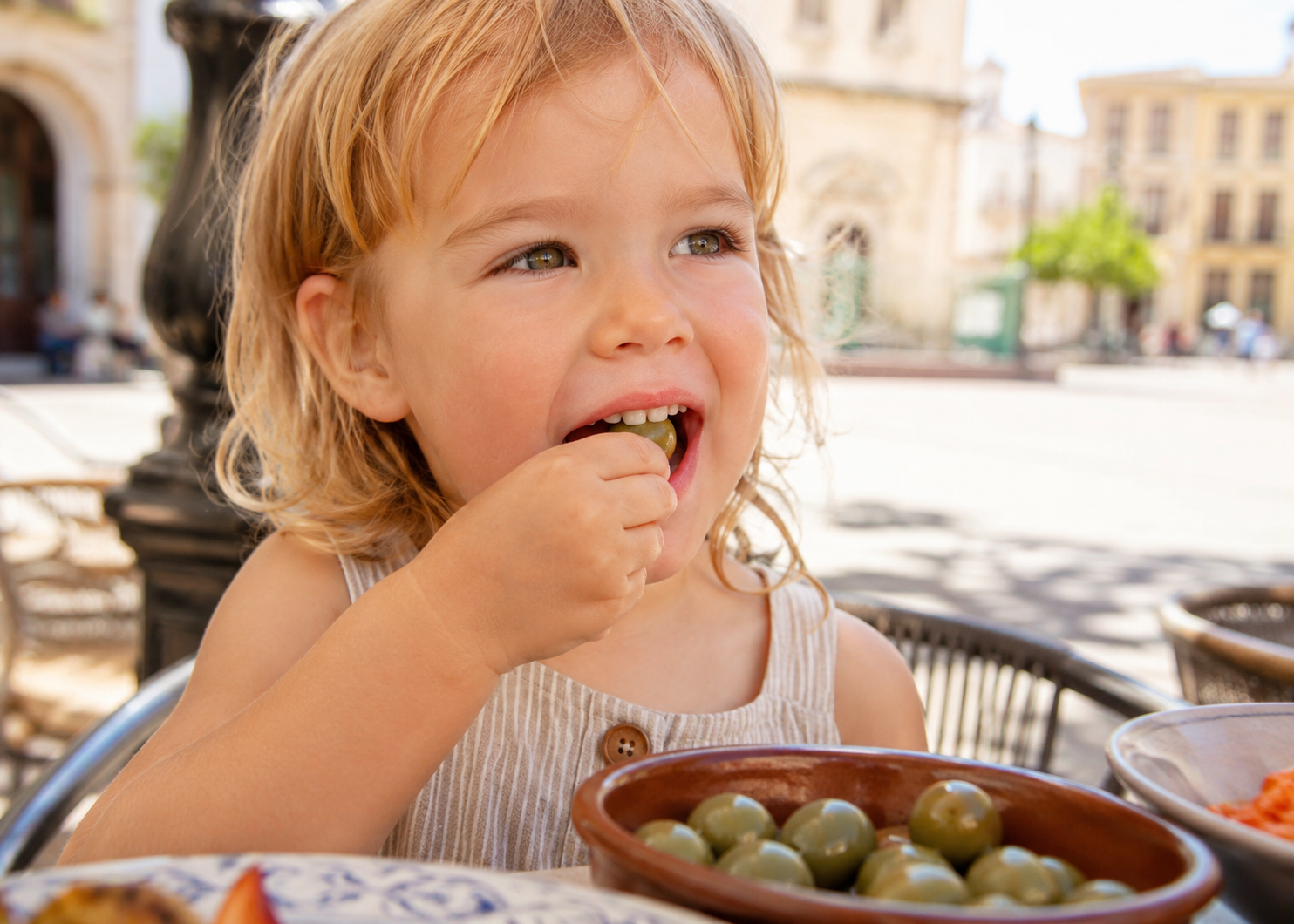
For American parents who recognize the pattern and want different outcomes for their children, the implementation requires deliberate work against American food culture defaults.
Start in infancy with flavor complexity. The Spanish approach of introducing aromatic vegetables, garlic, herbs, and varied flavors in the first year of solid food can be adopted in American households. Make your own baby food from the foods you eat as adults rather than buying the bland commercial versions. The infant exposed to flavor complexity develops the palate that infants exposed to bland food do not develop.
Eat what you want your child to eat. Children eat what they see their parents eat. If you want your child to eat olives, eat olives in front of them, offer them olives, do not eliminate olives from family meals because the child has refused them once. The exposure pattern continues across the first five years of childhood.
Eliminate the children’s menu category from your household. Do not stock kid-specific foods. Do not prepare separate meals for children. The food that is being eaten by adults is the food that is being eaten by children. The categorical distinction between adult food and child food is the foundation of the limited-palate pattern. Removing the distinction is the foundation of the expanded-palate alternative.
Maintain family meals at consistent times. Everyone sits down together. No screens. The food on the table is the food being eaten. The structural arrangement supports the palate development that catering to individual children does not support.
Treat initial refusal as information, not verdict. A food refused at first attempt is offered again at second attempt, fifth attempt, tenth attempt. The exposure pattern produces eventual acceptance in most cases. The parent who removes the food after first refusal forecloses the acceptance that would have followed.
Order from regular restaurant menus rather than children’s menus. The child can have a smaller portion of the adult food. The expansion of restaurant experience matches the expansion of home food experience. Restaurants follow the household pattern. If the household has eliminated the children’s-food category, restaurants become extensions of the household pattern rather than reinforcements of the children’s-food alternative.
Be patient across years rather than weeks. Palate expansion through exposure happens across childhood, not across single meals. The five-year-old who ate olives at three had two years of exposure leading up to the comfortable olive consumption. The American child whose parents start the exposure pattern at age six can reach similar comfort by age eight, but the years of exposure are required.
Recognize that the pattern works against cultural defaults. Other American parents will accommodate their children’s narrow preferences. Restaurants will offer children’s menus. Schools will provide kid-specific foods. The exposure pattern requires deliberate work against the cultural defaults that are constantly available. Parents who do not have the energy or commitment for this work will produce the limited-palate outcomes that the cultural defaults reliably produce.
Accept that the work has limits at older ages. The exposure pattern works most effectively in the first five years of life. Starting at age eight produces some palate expansion but less complete than starting at age two. Starting at age twelve produces very limited expansion against established preferences. The window for systematic intervention narrows substantially across childhood.
What This Pattern Reveals About Food Culture More Broadly
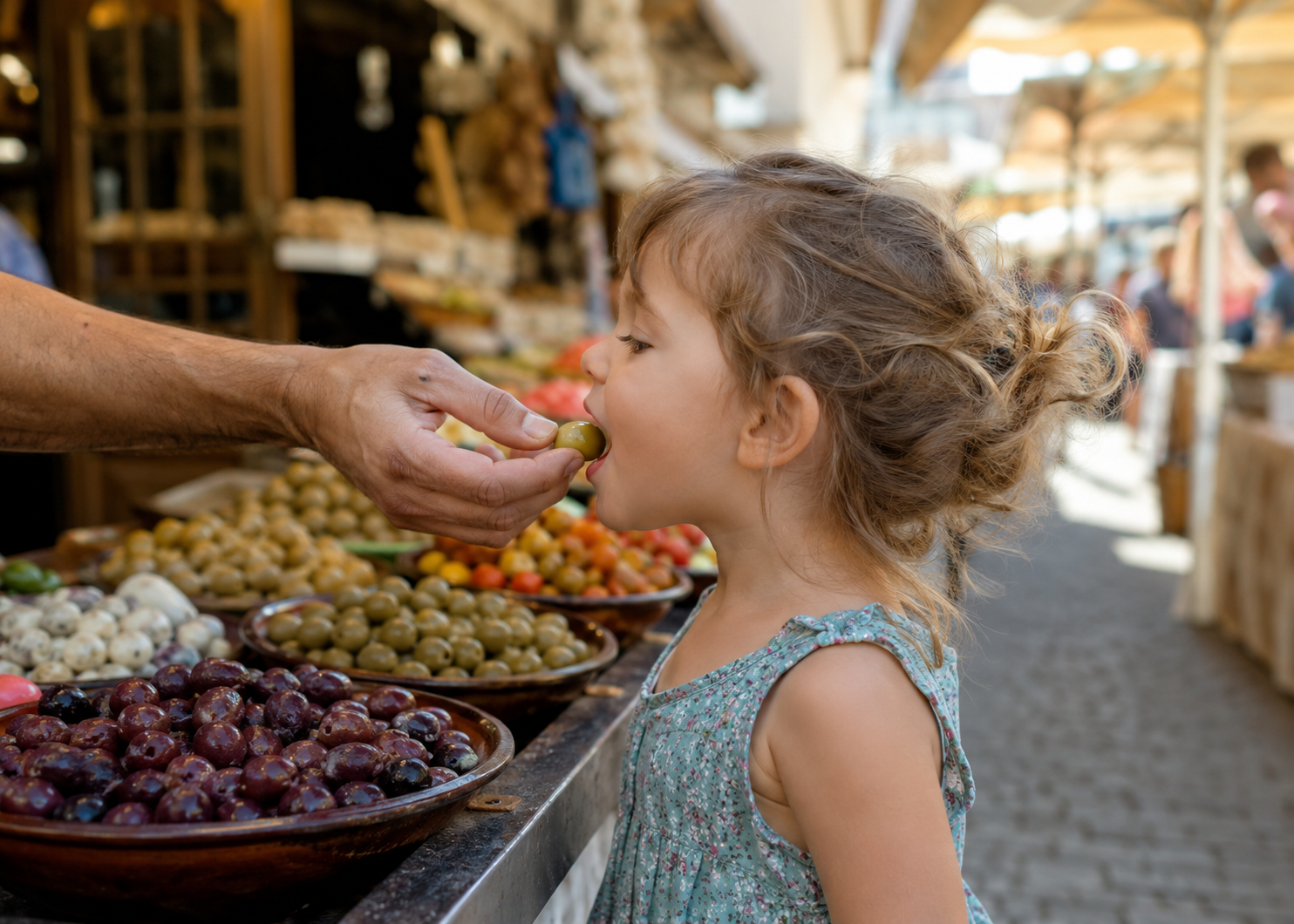
The Spanish-American difference in children’s olive consumption is one specific example of a broader pattern in how food cultures perpetuate themselves across generations.
The Spanish food culture that produces three-year-olds eating olives also produces adults who eat olives, adults who cook with olives, adults who pass olive consumption to the next generation. The pattern is self-perpetuating. The cultural transmission happens across thousands of small daily moments across childhood that establish what food is and what eating looks like.
The American food culture that produces twelve-year-olds refusing olives also produces adults who do not eat olives, adults who do not cook with olives, adults who pass non-olive consumption to the next generation. The pattern is similarly self-perpetuating but produces opposite outcomes. The cultural transmission happens across the same thousands of small daily moments but with different content.
For Americans concerned about the food culture they are transmitting to their children, the recognition is that the transmission is happening continuously whether or not it is intentional. Every meal is a transmission moment. Every restaurant order is a transmission moment. Every snack offered is a transmission moment. The cumulative effect of the moments determines what the child’s food culture becomes.
The American food culture defaults can be modified at the household level. Parents who want different outcomes can produce different outcomes within their own families even when the broader culture continues to produce the standard pattern. The work is real. The work is also achievable. The Spanish child eating olives at three is not unusual in Spain. The American child eating olives at three is unusual in America but possible in American households where the parents have done the work.
For American parents currently making the choices that will determine their children’s adult relationships with food, the pattern is worth understanding. The choices about whether to offer olives at 18 months, whether to eliminate the children’s menu, whether to maintain family meals, whether to continue exposure across initial refusal. These choices accumulate into the food culture the child inherits.
The Spanish grandmother bringing out the plate of olives on Sunday in Sevilla is not doing anything unusual. She is following the pattern her grandmother followed. The pattern produces the three-year-old reaching for the olives. The American grandmother bringing out a plate of olives at Sunday lunch in Atlanta would face different outcomes because the pattern that preceded the olives in her grandchild’s life was different.
The patterns are alterable. The Spanish pattern is available for American families willing to adopt it. The adoption requires deliberate work against American cultural defaults. The work produces measurable results across years. The Spanish three-year-old eating olives demonstrates what is possible at the early end of childhood. The American twelve-year-old refusing olives demonstrates what the alternative pattern reliably produces. The choice between these outcomes is available to American parents in the present moment, in every meal they are about to serve.

About the Author: Ruben, co-founder of Gamintraveler.com since 2014, is a seasoned traveler from Spain who has explored over 100 countries since 2009. Known for his extensive travel adventures across South America, Europe, the US, Australia, New Zealand, Asia, and Africa, Ruben combines his passion for adventurous yet sustainable living with his love for cycling, highlighted by his remarkable 5-month bicycle journey from Spain to Norway. He currently resides in Spain, where he continues sharing his travel experiences with his partner, Rachel, and their son, Han.