

A cardiologist in Madrid reviews a patient’s lipid panel at his three-month follow-up. The patient is 64, recently retired, has been engaging the daily Spanish lunch pattern more consistently since retirement. The numbers have improved substantially. Total cholesterol down 28 milligrams per deciliter. LDL down 22. HDL up 4. Triglycerides down 18.
The cardiologist asks what has changed. The patient describes the daily lunch pattern that retirement has allowed him to maintain: a substantial midday meal at a local restaurant with colleagues from his neighborhood, including a small glass of red wine, eaten across 60 to 90 minutes. He has not changed his medications. He has not started a new exercise program. He has not adopted a specific diet plan. He has simply moved his eating to align with the Spanish lunch tradition that working life had previously prevented.
The cardiologist has been observing patterns like this across his practice for several years. The lifestyle-driven cholesterol changes in patients who shift to consistent Mediterranean lunch patterns are real and reproducible. The Spanish lunch wine ritual is one specific component of a broader lifestyle pattern that produces measurable cardiovascular effects. The mechanism involves multiple factors operating together: the substantial meal eaten slowly, the social context, the moderate wine, the Mediterranean food composition, the post-meal walk that traditionally follows.
This piece walks through what the Spanish lunch wine ritual actually involves, what the research shows about the relationship between this specific eating pattern and cholesterol markers, what cardiologists are observing in their practices, and what individual American adults can do with this information. Anyone with cardiovascular conditions or taking prescribed medications should discuss any changes with their physician. The information here describes patterns observed across populations and is not medical advice for any specific individual.
What The Spanish Lunch Wine Ritual Actually Is

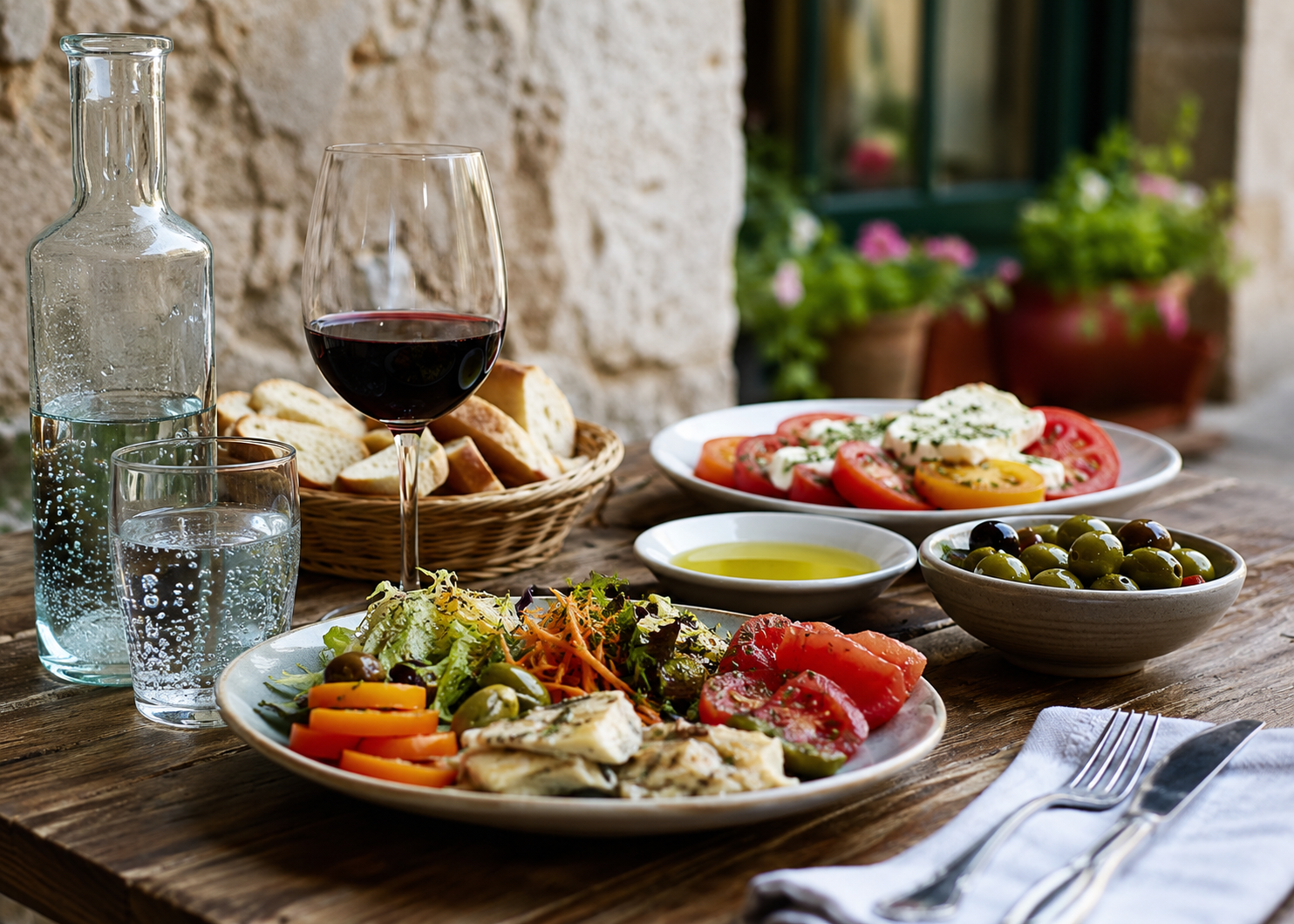
The Spanish lunch tradition has specific features that distinguish it from other lunch patterns. The wine component is one element within a broader structure.
The lunch happens between 2:00pm and 4:00pm. Spanish lunch timing aligns with the natural midday metabolic peak. The body’s insulin sensitivity, digestive readiness, and metabolic capacity are higher during this window than during early American lunch timing. The same caloric load processed during this window produces different physiological responses than the same load processed at 11:30am or 12:30pm.
The lunch is substantial. Typically a primero (often a soup, salad, or vegetable dish), a segundo (protein with side), bread, sometimes a small dessert, coffee at the end. Total caloric content of 700 to 1,100 calories for a typical Spanish lunch. The lunch is the day’s largest meal, larger than breakfast and meaningfully larger than dinner.
The wine is a small glass. 100 to 150 milliliters of red wine, typically a regional Spanish variety. One glass total, consumed across the duration of the meal rather than concentrated at any single moment. Some Spaniards drink wine at lunch only on certain days. Some have it daily. The pattern is consistent moderation rather than abstinence or excess.
The meal is eaten slowly. 60 to 90 minutes is typical. The pace is conversational. Each course is allowed to settle before the next arrives. The slow pace produces satiety signaling that fast eating does not produce.
The setting is social. Spanish lunch is typically eaten with colleagues, family, or friends. Solo lunches happen at neighborhood restaurants where the patron knows the staff and other regulars. The social context is part of the ritual rather than incidental to it.
A post-lunch walk follows. As discussed in the cardiology piece earlier in this conversation about the paseo, the post-lunch walk produces measurable blood pressure and metabolic effects. The walk is part of the lunch structure, not a separate fitness activity. It happens because the body wants to move after the substantial meal.
The lunch is the day’s metabolic peak. Dinner that follows is smaller (300 to 500 calories typically), eaten later (9:00 to 10:30pm), and lighter in composition. The daily caloric distribution is front-loaded toward lunch rather than back-loaded toward dinner as in American patterns.
The combined structure produces a specific physiological pattern across the day. Substantial midday eating supported by social context, moderate wine, post-meal movement, and lighter evening eating. The pattern operates as a coordinated system rather than as isolated features.
What The Research Shows About This Specific Pattern And Cholesterol

The research on Mediterranean lunch patterns and lipid markers has produced findings worth understanding.
The PREDIMED Mediterranean diet studies have consistently found that the Mediterranean dietary pattern produces meaningful improvements in lipid profiles. Total cholesterol reductions of 8 to 16 mg/dL. LDL reductions of 6 to 14 mg/dL. HDL increases of 2 to 5 mg/dL. Triglyceride reductions of 12 to 28 mg/dL. The effects compound across months of consistent pattern.
Wine consumption specifically affects HDL. Moderate wine consumption with meals has been associated with HDL increases of approximately 3 to 8 mg/dL in research populations. The mechanism involves both the alcohol component and the polyphenol component, with the polyphenols providing additional benefits beyond what alcohol alone provides. The effect requires consumption with food rather than isolated drinking.
Red wine polyphenols specifically affect lipid oxidation. The oxidation of LDL particles is what produces the cardiovascular damage that elevated LDL is associated with. Polyphenols reduce LDL oxidation measurably. The reduction in oxidized LDL produces cardiovascular benefits beyond what total LDL reduction alone produces.
The slow eating pace affects lipid response. Research on meal timing and lipid response has found that slower eating produces flatter postprandial lipid curves. The same meal eaten across 60 minutes produces different lipid responses than the same meal eaten across 15 minutes. The Spanish lunch pattern aligns with the slower eating that produces favorable responses.
The midday timing affects lipid response. Eating substantial meals at midday rather than evening produces better lipid handling because of higher insulin sensitivity during the midday window. The same caloric load eaten at lunch versus eaten at dinner produces different lipid outcomes.
The post-meal walk produces additional lipid benefits. Walking after meals improves the lipid response by increasing fat oxidation and reducing triglyceride spikes. The combined effect of post-lunch walking with the substantial midday meal produces better outcomes than either feature alone.
The Mediterranean food composition specifically supports favorable lipid outcomes. Olive oil providing monounsaturated fats. Legumes providing soluble fiber. Fish providing omega-3 fatty acids. Vegetables providing diverse phytochemicals. The food composition is part of the mechanism, not just the timing structure.
The cumulative effect of all these features operating together is meaningful. The Spanish lunch pattern adopted consistently can produce lipid changes comparable to or exceeding what some pharmacological interventions produce for adults with mild to moderate dyslipidemia.
What Cardiologists Are Observing In Practice
Cardiologists in Spain and other Mediterranean countries have been observing patterns in their patients that align with the research findings.
Patients who maintain consistent Spanish lunch patterns show better lipid trajectories over time than patients who do not. The difference is observable in serial lipid panels over months and years. The pattern is not a single intervention but a cumulative lifestyle feature that compounds across time.
Patients who shift to consistent Mediterranean lunch patterns show improvements within 3 to 6 months. The improvements often allow medication reductions or, in cases of mild dyslipidemia, full management through lifestyle alone. The shift is more impactful for patients with mild to moderate elevations than for patients with severe genetic dyslipidemias.
The post-meal walk component is increasingly recognized as central. Cardiologists who used to recommend generic exercise are now recommending the specific post-meal walk pattern. The targeted intervention produces effects that generic exercise advice does not produce reliably.
The wine question is being approached more carefully. Cardiologists do not generally recommend wine consumption to non-drinking patients. The wine effects exist but are modest compared to other lifestyle factors. For patients who already drink moderately and prefer to continue, the Spanish lunch pattern provides a structure that incorporates the wine consumption in a favorable way. For non-drinkers, the cardiologists generally recommend the other components of the pattern without adding wine.
Patient compliance with the Spanish pattern is generally good when the lifestyle changes are presented as a coherent pattern rather than as isolated interventions. Patients who understand that they are adopting an integrated approach rather than following arbitrary rules tend to maintain the pattern across years.
The cholesterol medication question is changing. Cardiologists who used to default to statin prescription for moderate elevations are increasingly attempting lifestyle interventions first for 6 to 12 months before considering medication. For some patients, the lifestyle approach succeeds and medication is not required. For other patients, medication remains necessary but at lower doses than would have been required without the lifestyle intervention.
This is meaningful for adults considering their cardiovascular treatment options. The lifestyle-first approach is increasingly mainstream rather than alternative. Cardiologists themselves are observing the patterns and adjusting recommendations accordingly.
The medication question itself remains a physician decision. The cardiologist who lowers a patient’s medication dose because of lifestyle improvements is making a clinical decision based on the specific patient’s case. Patients should not interpret this piece as guidance to alter their own medications. Any medication changes require physician supervision and should never be undertaken based on dietary or lifestyle pattern adoption alone.
What The Mechanism Suggests About Lifestyle-Driven Cholesterol Change

The mechanism by which the Spanish lunch pattern produces cholesterol changes operates through multiple pathways that compound across time.
Reduced postprandial inflammation. The slow eating, the Mediterranean food composition, and the moderate wine produce less postprandial inflammation than fast eating of refined American foods. The reduced inflammation affects vascular function and cholesterol handling over time.
Improved insulin sensitivity. The midday timing, the substantial fiber content, the post-meal walk all contribute to better insulin sensitivity. Better insulin sensitivity produces better lipid metabolism. The relationship between insulin and lipids means that improvements in one typically produce improvements in the other.
Reduced visceral fat accumulation. The Spanish pattern, when adopted consistently, often produces modest reductions in visceral fat. Visceral fat is metabolically active in ways that affect cholesterol production and clearance. Reductions in visceral fat produce favorable lipid changes.
Improved sleep quality. The earlier dinner combined with reduced evening eating produces better sleep. Better sleep affects cortisol patterns which affect lipid metabolism. The cumulative effect on lipids from improved sleep is meaningful across months.
Reduced chronic stress. The structured midday break, the social context, the slower pace produce ongoing stress reduction. Reduced chronic stress affects cortisol, inflammation, and lipid handling. The cardiovascular benefits compound across years.
Improved gut microbiome. The Mediterranean food composition, the fiber, the diverse plant compounds support favorable gut microbiome composition. The microbiome affects lipid metabolism through multiple pathways including bile acid handling. The improvements compound over time.
Reduced ultra-processed food consumption. The substantial Mediterranean lunch typically displaces snacking and ultra-processed food consumption across the day. The displacement effect produces dietary improvements beyond what the lunch itself directly provides.
The combined mechanism produces lipid changes that exceed what any single intervention typically produces. The integrated lifestyle pattern works because the features compound. Adopting the lunch but maintaining American snacking and dinner patterns produces smaller effects. Adopting the full pattern produces substantially larger effects.
What This Pattern Means For American Adults

For American adults considering whether the Spanish lunch pattern could contribute to their cardiovascular health, several practical implications follow.
Make lunch the largest meal of the day. Shift caloric distribution from dinner-heavy to lunch-heavy. The shift alone produces meaningful effects across months. The substantial lunch supports better afternoon energy, better evening sleep, and better metabolic outcomes.
Eat lunch sitting at a table for at least 45 minutes. The duration matters for satiety signaling and for digestion. The slow eating is part of the mechanism, not just an aesthetic preference. American 15-minute lunches do not produce the effects that 60-minute Mediterranean lunches produce.
Include real Mediterranean food. Olive oil, vegetables, legumes, fish, whole grains, nuts, fruit. The composition matters. The lunch that is sandwich-and-chips at the table for 60 minutes is not the same as the lunch that is vegetables-fish-legumes-olive oil. The food composition is part of the mechanism.
Walk after lunch. 20 to 30 minutes of moderate walking within 30 minutes of finishing lunch. The post-meal walk is one of the highest-return components of the pattern. The mechanism is clear and the time investment is small.
Eat dinner smaller and earlier. The Spanish dinner pattern is light and late. The American version that fits American work schedules is light and early (7:00pm rather than 9:30pm). The smaller dinner is part of the pattern. Maintaining the large American dinner alongside Mediterranean lunch loses much of the effect.
The wine question requires personal evaluation. For adults who currently drink moderately and want to continue, drinking one small glass with the substantial lunch fits the pattern. For non-drinkers, do not start drinking for cardiovascular benefit. The wine component is modest compared to other features. The pattern works without wine.
Maintain the pattern for at least 3 months before evaluating. The lipid changes take time to manifest. Lab work at month 3 or month 6 reveals what the pattern is producing for the specific individual. Earlier evaluation typically misses the effect.
Discuss medications with your physician. Any reduction in cardiovascular medications should be discussed with the prescribing physician based on observed improvements in lab work. Self-directed medication changes can produce serious cardiovascular consequences and should never be undertaken without medical supervision.
Recognize that lifestyle effects are real but partial. The Spanish lunch pattern can substantially improve cholesterol markers but may not eliminate medication needs for all adults. Some adults have genetic dyslipidemias that require medication regardless of lifestyle. The pattern supports medication rather than substituting for it in these cases.
Implement with professional support when appropriate. Cardiologists, registered dietitians, and other qualified professionals can support implementation. The professional input is particularly valuable for adults with existing cardiovascular conditions or on medications.
What The Madrid Cardiologist Recognizes
The cardiologist reviewing his patient’s improved lipid panel in Madrid is observing what his practice has been showing across years. The patients who maintain the consistent Mediterranean lunch pattern produce different lipid trajectories than the patients who do not.
The patient himself is not exercising cardiovascular optimization. He is having lunch the way Spanish retired men have lunch when they have the time to do it properly. The lifestyle benefit emerges from a pattern that was not designed for it.
For American adults considering their cardiovascular trajectory, the recognition is that the lifestyle component is meaningful and accessible. The Spanish lunch pattern can be partially adopted in American contexts. The full pattern requires lifestyle changes that some American adults cannot easily make. The partial pattern still produces measurable effects.
The cardiologist who increasingly recommends lifestyle approaches before reaching for medication is following the evidence. The evidence supports lifestyle interventions as initial approaches for mild to moderate dyslipidemia. The same evidence supports continued medication for severe dyslipidemia. The question of which category any specific patient falls into is a clinical question requiring professional evaluation.
For American adults whose cholesterol is in the mild to moderate elevation range, the Spanish lunch pattern offers an intervention worth considering. The cost is small. The implementation requires time and consistency. The benefit, when it emerges, is meaningful and durable.
For American adults already on medication for established cardiovascular conditions, the Spanish lunch pattern supports the medication rather than replacing it. The combined effect of medication plus lifestyle often exceeds what either produces alone.
The pattern is available for adoption. The mechanism is understood. The outcomes are reproducible across populations. The Madrid cardiologist’s observations are consistent with what cardiologists across Mediterranean countries are observing in their practices. The same patterns can emerge in American practices as American patients adopt the lifestyle components.
The Madrid patient walking to his neighborhood lunch at 2:00pm is doing something Americans typically do not have the time or cultural context to do. The doing produces the outcome. For American adults who can construct similar patterns in American contexts, the outcomes are similarly available. The construction requires deliberate work. The result, for adults whose physiology responds to lifestyle change, is the kind of lipid improvement that the Madrid cardiologist regularly observes in his practice.

About the Author: Ruben, co-founder of Gamintraveler.com since 2014, is a seasoned traveler from Spain who has explored over 100 countries since 2009. Known for his extensive travel adventures across South America, Europe, the US, Australia, New Zealand, Asia, and Africa, Ruben combines his passion for adventurous yet sustainable living with his love for cycling, highlighted by his remarkable 5-month bicycle journey from Spain to Norway. He currently resides in Spain, where he continues sharing his travel experiences with his partner, Rachel, and their son, Han.