
Granada can make a modest retirement feel calmer, but only when the savings account is treated like a guardrail, not the engine.
At 59, the move looked reckless from the outside.
A couple with $185,000 in savings does not sound like the obvious candidate for a European retirement. Not to Americans trained to believe retirement starts at seven figures and ends in a medical billing office.
Seven years later, the Granada version that actually works leaves the account around $140,000, give or take the exchange rate, a bad roof year, and how often family in the U.S. needs a visit.
That number is not magic.
It is what happens when rent stays modest, the car disappears, meals become local, and the savings account stops paying for an American life.

The $185,000 Was Never The Retirement
The first thing to understand is that $185,000 alone did not carry seven years.
That would be a different story, and mostly a much sadder one.
The money worked because it was backup money. It sat behind monthly income from pensions, later Social Security timing, or a mix of retirement income that kept normal bills from chewing through the account every month.
That is the part many Americans skip when they see a headline like this.
They ask whether $185,000 is enough to retire in Spain.
The better question is: enough for what?
Enough to support two people from 59 to 66 with no other income? Usually no.
Enough to help a couple with reliable monthly income relocate, survive setup costs, absorb currency swings, handle private insurance, pay for flights home, and avoid panic when a landlord raises the rent? That is a very different question.
Granada makes that second version possible because the city still has a lower-cost rhythm than Madrid, Barcelona, Málaga, or the Costa del Sol. It is not cheap in the old internet-forum way. That Granada has been mugged by reality, tourism, students, digital workers, and everyone else who discovered that beautiful cities are not secret forever.
But Granada still gives a careful retired couple something valuable: a normal daily life that does not require constant spending.
A coffee does not have to become brunch. A walk can be the afternoon. A bus card can replace a car. A menu del día can still feel like a proper outing instead of a budget compromise.
The $185,000 lasted because the couple stopped asking money to entertain them.
Granada did some of that work.
Granada Worked Because Rent Did Not Eat The Plan
The whole budget lives or dies with rent.
A couple can make heroic grocery choices, skip wine, walk everywhere, and still ruin the plan with the wrong apartment. Rent is the quiet monster in every relocation story.
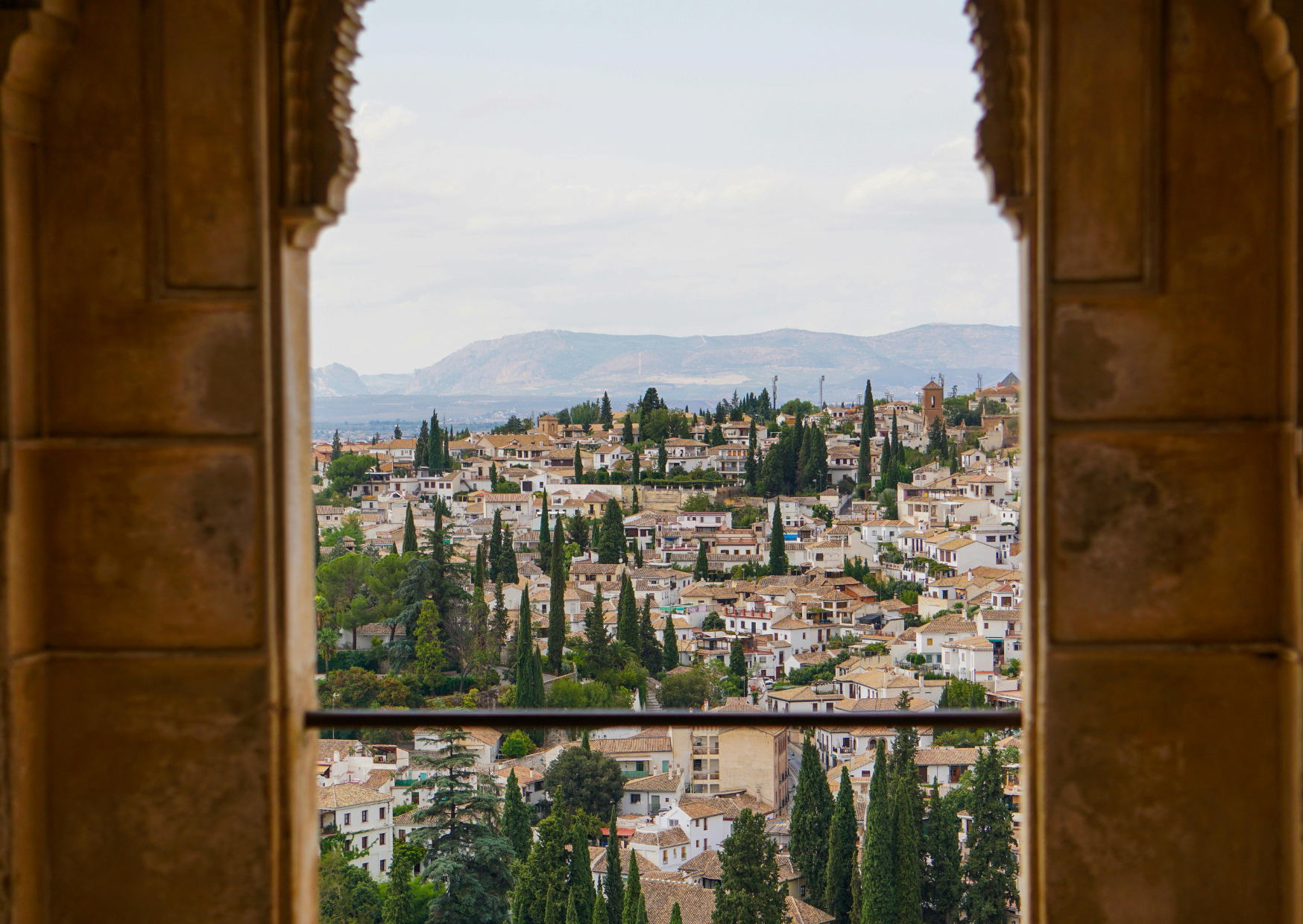
The Granada version that works does not start in the Albaicín with a postcard terrace and daily views of the Alhambra.
That is vacation thinking.
It starts in a practical apartment with an elevator, decent heating, air conditioning, a real kitchen, a landlord who wants a long-term tenant, and a location that does not make every grocery run feel like training for a mountain stage of the Vuelta.
A workable retired couple looks for €650 to €950 a month, depending on size, neighborhood, condition, and timing. A very small one-bedroom can come in lower. A better two-bedroom with light, lift, and heating can climb higher. Anything central, charming, renovated, and easy will attract other people with the same idea.
The apartment matters more than the neighborhood fantasy.
Granada’s steep historic areas are beautiful, but beauty is less useful when knees hurt, groceries are heavy, and August heat sits in stone walls until midnight. A romantic staircase becomes less romantic the third time someone carries water bottles up it.
Better areas often include parts of Realejo, Zaidín, Camino de Ronda, Genil, Centro edges, and quieter residential pockets where daily life works without turning every errand into a tourist procession.
The couple does not need the most atmospheric street.
They need the street where they can buy eggs, see a pharmacist, catch a bus, and sleep.
That is why their balance at 66 still has life in it. They avoided the apartment that would have made Granada feel like a permanent holiday rental.
The rent decision did more than any investment decision.
The First Year Cost More Than The Monthly Budget Suggested
The first year in Spain is never as cheap as the spreadsheet says.
It has deposits, furniture, visa costs, translations, appointments, insurance, flights, replacement kitchen items, winter clothes nobody thought about, and the occasional “how does this office work?” fee paid to someone who knows.
The couple may have expected Granada to cost €2,000 to €2,300 a month once settled.
That can be reasonable.
But the first year might easily behave more like €2,800 to €3,400 a month after setup costs, especially if they arrive without a furnished long-term rental that actually works.
That gap is where savings start to move.
Not catastrophically. Just steadily.
A practical first-year cash plan might look like this:
- apartment deposit and agency friction: €1,500 to €3,000
- furniture, linens, kitchen basics, repairs: €1,500 to €4,000
- private health insurance for two: €2,400 to €5,000
- visa documents, translations, apostilles, professional help: €800 to €2,500
- flights and luggage: €1,500 to €3,000
- mistakes, taxis, bad purchases, duplicate items: €1,000 to €2,000
That is how a couple can arrive with $185,000 and feel poorer before anything has gone wrong.
The first-year drop is not failure.
It is entry cost.
The mistake is pretending the entry cost is the normal cost. A couple that panics after year one may think Granada is not working. Often the truth is simpler: the move itself was expensive, and the second year looks calmer.
By year two, the couple knows which supermarket is worth the walk. They stop buying the wrong household items. They know the bus routes. They have the right doctor. They stop treating every free afternoon like a chance to “see Spain.”
That is when Granada starts saving money.
Not immediately.
After the chaos burns off.
Their Normal Month Was Boring In The Best Way
The budget that keeps savings alive is not cinematic.
It is routine.
Rent gets paid. The couple shops at Mercadona, Carrefour, local fruterías, bakeries, and the municipal market when the prices make sense. They cook most meals at home. They eat out enough to enjoy Spain, not enough to turn retirement into a restaurant subscription.
A settled monthly budget for two can land around €2,050 to €2,650, excluding large travel, major medical surprises, and U.S. family emergencies.
A realistic Granada month might look like this:
- rent: €700 to €950
- utilities and internet: €150 to €260
- groceries and household basics: €420 to €650
- eating out and cafés: €180 to €350
- transport: €40 to €120
- private health insurance or medical costs: €220 to €500
- phones, subscriptions, banking, small admin: €80 to €160
- clothing, gifts, pharmacy, repairs: €150 to €300
- local travel and entertainment: €120 to €300
That is not poverty.
It is also not luxury.
The couple can still have coffee out. They can take buses. They can buy good fruit. They can eat a proper lunch. They can visit the Alhambra when guests come. They can take the train to Málaga or Córdoba now and then.
But they cannot live as if Spain is one long vacation.
That line decides everything.
The couple who keeps the account healthy has house meals, not constant tapas tourism. They use cafés as a pleasure, not as office rent. They learn which restaurants are for residents and which are for people pointing at menus in the center.
A normal Wednesday might cost very little.
Coffee at home. A walk. Groceries. Lunch from leftovers. A bus ride. A pharmacy stop. Dinner with lentils, salad, bread, and fruit. Maybe a glass of wine on the balcony.
That is where the savings stay intact.
Not in deprivation.
In repetition.
The Car Disappeared, And So Did A Whole Category Of Bleeding
One of the most underrated Granada wins is the ability to live without a car.
Not everyone can. Mobility, neighborhood choice, medical needs, and family patterns matter. But for many retired couples, a car in Granada is more liability than freedom.
Parking is awkward. Historic streets are unforgiving. Insurance, maintenance, ITV inspections, fuel, repairs, toll roads, and the occasional scrape in a narrow street all eat money. A car also encourages a style of life that becomes more expensive: bigger supermarket runs, out-of-town shopping, weekend driving, and the belief that every nearby village needs to be visited this month.
Granada’s public transport makes a smaller life easier.
The city buses cover daily movement. The metro helps with longer urban routes and suburban edges. Walking handles more than Americans expect, though the hills should be respected rather than romanticized.
The couple’s transport costs can fall to less than €100 a month when they build life around buses, walking, occasional taxis, and the odd train.
That number would be almost comic in many American suburbs.
It matters because car costs are sneaky. A retired American couple may not think of the car as a major retirement expense because it has always been there. In Spain, especially in a compact city, removing the car changes the whole monthly shape.
There are trade-offs.
A car-free Granada life requires choosing housing carefully. A cheap apartment far from useful transit is not cheap if it makes taxis necessary. A steep apartment is not cheap if it traps someone at home during hot afternoons or sore-knee weeks.
The best version is not anti-car as a personality.
It is car-free by design.
Live near buses. Live near groceries. Live near a pharmacy. Live near enough ordinary life that the city supports retirement instead of challenging it.
That one decision can preserve thousands over seven years.
Healthcare Was Cheaper, But Not Free And Not Simple
American retirees often hear “Spain has great healthcare” and mentally remove the line item.
That is dangerous.
For non-EU Americans arriving through private residence routes, the first phase usually requires private health insurance. It has to satisfy visa requirements, and for older applicants it gets more expensive and more complicated. Pre-existing conditions can matter. Age can matter. Renewal can matter.
For a couple arriving at 59, private insurance may be manageable.
By 66, the numbers can look different.
The monthly range can easily sit around €200 to €500 for two, depending on age, plan, underwriting, coverage, and whether they are using private insurance, public access through eligibility, or a later convenio arrangement if available after meeting conditions.
The key is that healthcare is not one simple bill.
There are also dental cleanings, glasses, prescriptions, specialist visits, tests done privately to avoid waiting, and the administrative cost of understanding a new system in a second language.
Still, compared with the U.S., Granada can feel like oxygen.
A private doctor visit may not produce the same financial dread. A prescription may be affordable enough that nobody has to make a small moral crisis out of picking it up. A pharmacy can solve ordinary problems quickly. Specialists can be reachable in the private system without the surreal pricing Americans know too well.
But the couple does not treat healthcare savings as permission to underbudget.
They keep a medical buffer.
They also keep enough cash for flights home if a family crisis, second opinion, or complicated treatment decision makes the U.S. part of the plan again.
This is where the $185,000 matters.
It is not there for daily groceries.
It is there for the year that does not behave.
A dental implant. A family emergency. A rent jump. A medical policy change. A tax surprise. A bad exchange-rate year. A month when everything annoying happens together.
Granada lowers the background noise.
It does not remove adulthood.
The Visa Math Was As Important As The Retirement Math
For many Americans, Spain begins with the non-lucrative visa.
That route is useful for retirees because it is built around people who can support themselves without working in Spain. It is also strict in exactly the ways that matter here: the visa does not allow work, and it requires proof of sufficient financial means and qualifying health insurance.
The couple cannot arrive at 59 with $185,000 and assume that is the whole conversation.
The consulate wants to see income, savings, insurance, lodging, documents, and jurisdiction-specific requirements. After arrival, the foreigner identity card process has its own deadline.
That is why the first year is so paperwork-heavy.
A couple may feel financially comfortable in Granada but still be administratively fragile if they misunderstand the visa sequence. Residence is not just living somewhere. It is living somewhere with the correct permission, renewal path, documents, and proof that the lifestyle is legal.
The practical rule is ugly but helpful: eligibility is not the same as approval, and approval is not the same as long-term stability.
At renewal, the couple needs to show that they still meet requirements. They need to watch days in Spain. They need to understand tax residence. They need to keep health insurance or healthcare access clean. They need to keep documents organized instead of treating the first approval as the finish line.
Spain’s tax-residence rule is also not decorative. Spending more than 183 days in Spain during the calendar year can make a person tax resident, with consequences for worldwide income reporting and planning.
That is not a reason to panic.
It is a reason to hire a serious cross-border tax professional before the move, not after the first confusing letter arrives.
The couple that still has $140,000 at 66 did not get there by ignoring bureaucracy.
They got there by treating paperwork as part of the budget.
Granada Gave Them A Rich Life Without Rich-Person Spending
Granada’s advantage is not just low rent.
A cheap city with nothing to do becomes depressing. A beautiful city that charges for every pleasure becomes expensive. Granada sits in the useful middle if the couple knows how to live there.
The best parts are often low-cost or free.
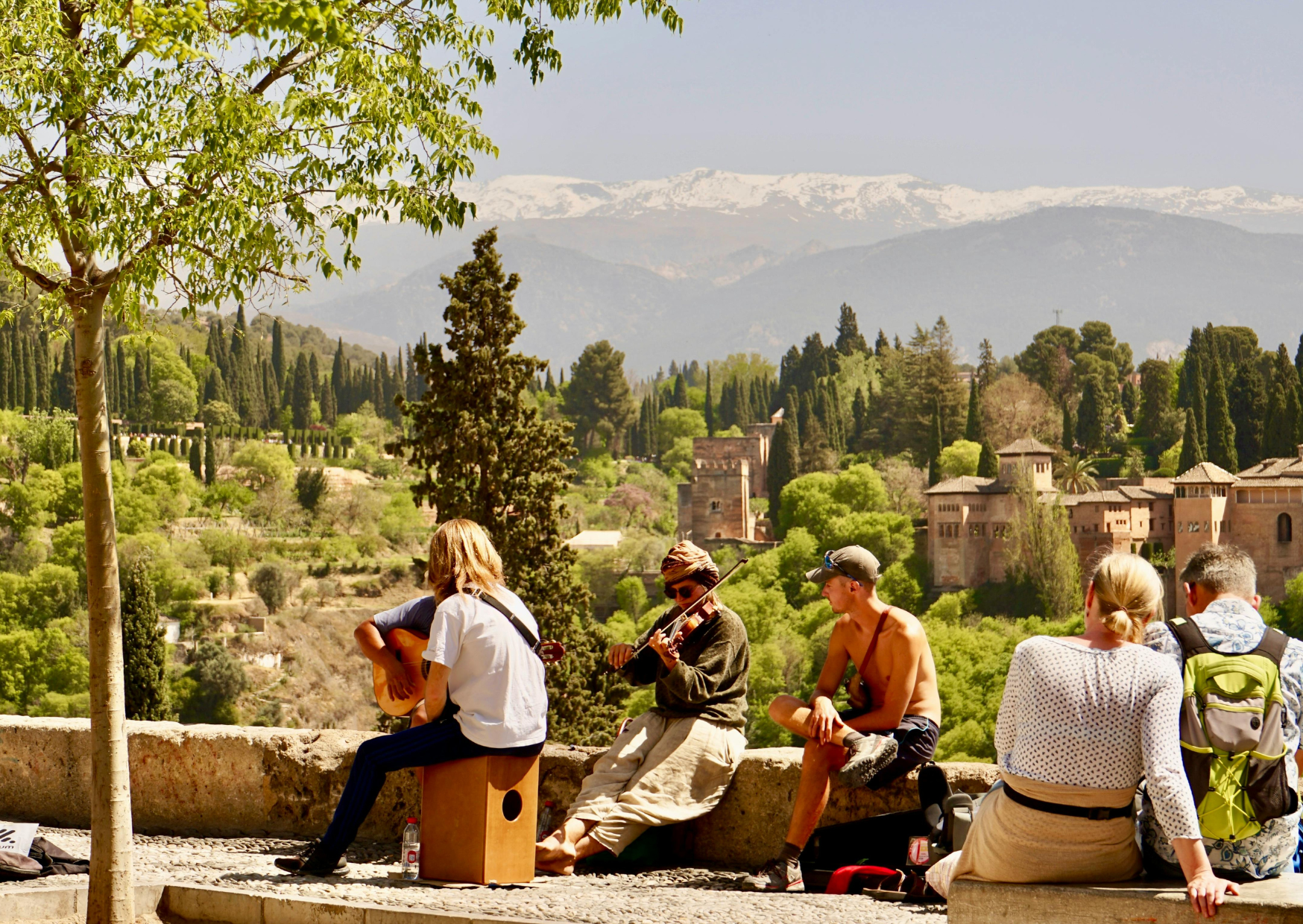
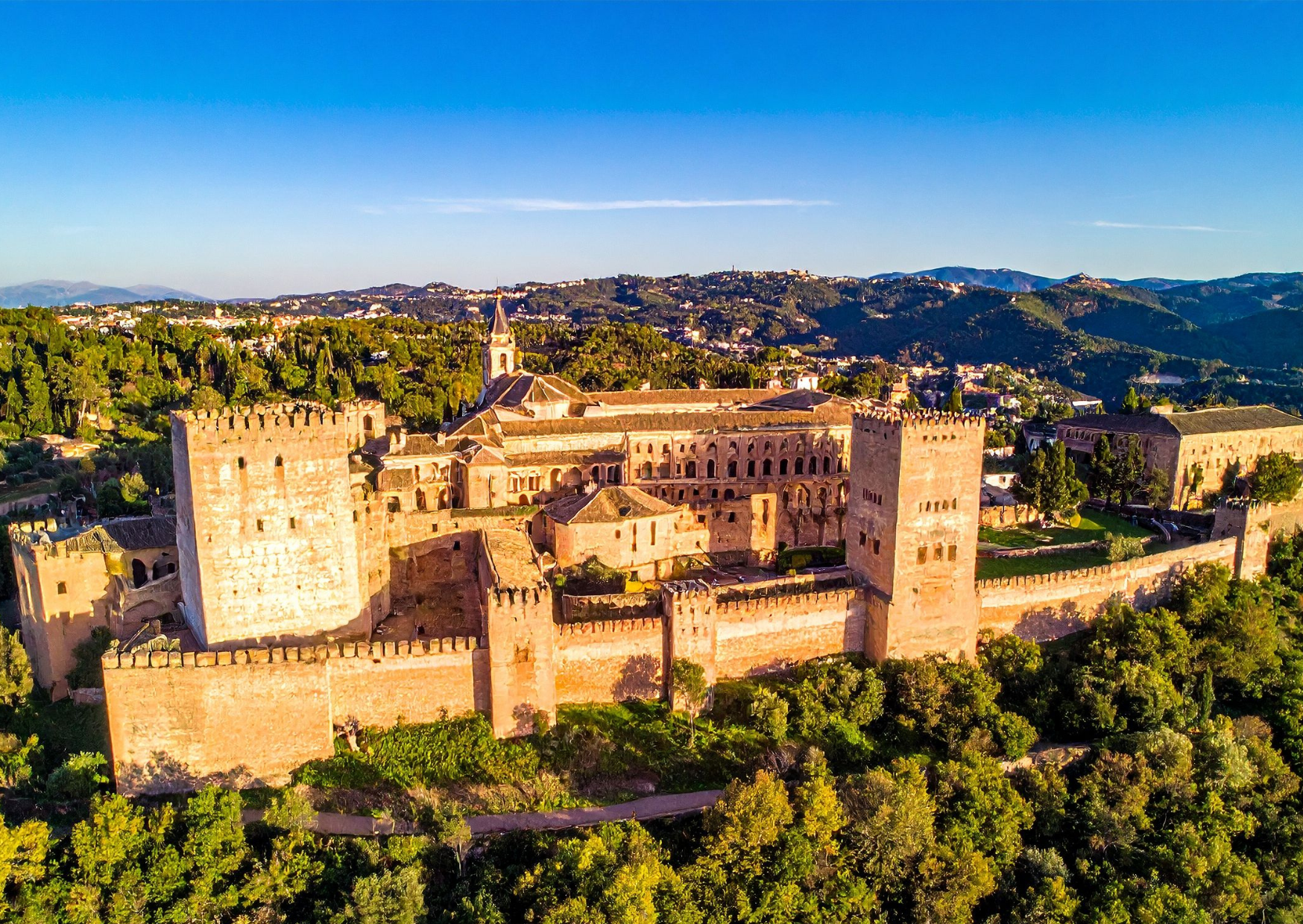
Walking through Realejo. Sitting in a small plaza. Watching the light change over the Alhambra. Taking a bus to a different neighborhood. Buying cherries in season. Having coffee that does not require a financial decision. Meeting someone for a simple lunch. Hearing guitar from somewhere that is not a ticketed show. Taking visitors to viewpoints before the crowds thicken.
The city rewards residents who stop rushing.
That matters because boredom is expensive in retirement. People spend when daily life feels empty. They book trips, buy things, eat out, drink more, upgrade rooms, and mistake novelty for well-being.
Granada reduces that pressure.
There is enough beauty to make an ordinary walk feel like part of the retirement. There is enough city life to avoid isolation. There are students, older locals, immigrants, tourists, musicians, shopkeepers, and neighbors who create movement without requiring the couple to purchase an experience.
That is the personal part of the math.
A couple can protect money when life feels full at €12, not €120.
Not every day is charming. Summer heat can be rough. Winter apartments can feel colder than Americans expect. Bureaucracy can make intelligent people feel briefly illiterate. Noise travels. Tourism presses hard into the Albaicín and the center. Spanish is not optional if the couple wants a full life instead of an expat bubble with better tapas.
But the daily cost of contentment is lower.
That is why the account survives.
The Balance At 66 Was Built By Refusing The Expat Traps
The balance did not stay near $140,000 because Granada is secretly free.
It stayed there because the couple refused several expensive habits.
They did not rent the apartment that looked best online.
They did not buy a car to recreate American convenience.
They did not treat every visiting relative like a two-week luxury tour.
They did not fly back to the U.S. three times a year unless there was a real reason.
They did not eat every meal in the part of town where menus explain sangria in English.
They did not assume cheap wine meant cheap living.
They did not keep upgrading the lifestyle each time the account looked stable.
That last one is the danger.
A couple arrives careful. The first year goes fine. The account is still healthy. Granada feels cheaper than the U.S. Then the upgrades begin.
A better apartment. More restaurants. More weekend trips. More taxis. More flights. More visitors subsidized. More “we came all this way, we should enjoy it.”
Enjoyment is not the problem.
Lifestyle creep is.
The couple that makes it to 66 with a strong balance keeps one boring rule: regular life stays regular. Special spending stays special.
They still travel. They still eat out. They still buy good shoes. They still visit the Alhambra when people come. They still take a train to Seville, Córdoba, or Málaga when the mood and budget allow.
But they do not turn location into permission.
That discipline feels less harsh in Granada because the regular life is already good.
What The Seven-Year Math Looks Like
The cleanest version of the math is not perfect. It is useful.
Start with $185,000 at age 59.
Assume the couple has reliable monthly retirement income that covers most normal expenses but not every setup cost, flight, medical surprise, tax bill, or bad month.
The first year takes the biggest bite. Between relocation, deposits, furniture, insurance, paperwork, flights, and early mistakes, savings might drop by $18,000 to $28,000.
That hurts.
But it also settles the life.
Years two through four are where the budget becomes real. If monthly income covers most of the €2,050 to €2,650 lifestyle, savings may only cover bigger items: travel home, insurance jumps, replacement appliances, dental work, tax help, or family emergencies. Maybe the account falls another $5,000 to $9,000 per year.
By age 62, if Social Security or another income source starts, the drawdown may slow. That timing matters. It may not be ideal for every American household, but it can stop the savings account from becoming the monthly paycheck.
Years five through seven are not free. Rent rises. Insurance changes. Family issues appear. A new laptop dies at the wrong time. Someone needs dental work. The U.S. still exists and still occasionally demands expensive travel.
By 66, the account may land around $130,000 to $150,000 if nothing catastrophic happens and the couple stays disciplined.
A working middle number is about $140,000.
That is not a financial miracle. It is controlled leakage.
The account went down, but not violently. It bought the move, protected the early years, covered mistakes, and remained large enough to keep the couple from feeling trapped.
That is the win.
Not getting rich.
Not beating the market.
Not proving Spain is cheap.
Keeping enough money to still have choices at 66.
The Week Before Moving Needs More Honesty Than Romance

Anyone trying to copy this needs one uncomfortable week with the numbers before buying the dream.
Day one: price the visa path.
Check the consulate that covers the applicant’s U.S. address, not a random blog. Confirm income requirements, savings evidence, insurance rules, lodging proof, and document timing.
Day two: build two budgets.
One budget uses the hoped-for rent. The second uses rent €250 higher. If the second budget breaks the plan, the plan is too fragile.
Day three: price the first year separately.
Deposits, furniture, documents, insurance, flights, translations, tax advice, Spanish lessons, and mistakes belong in year one. Do not hide them in monthly averages.
Day four: choose neighborhoods for life, not Instagram.
Look for buses, supermarkets, pharmacies, clinics, shade, elevators, heating, noise, and the slope of the walk home. A beautiful street can be a bad retirement decision.
Day five: model the account at 66.
Use a conservative drawdown. Add one bad year. Add one flight emergency. Add one medical or dental surprise. See what remains.
Day six: speak to tax and healthcare professionals.
Spain is not a tax-free retirement hack. The U.S. does not vanish either. Cross-border tax planning belongs before the move.
Day seven: rent before buying anything.
Granada can feel perfect in April. Try August. Try January. Try the neighborhood when the tourists thicken and when the apartment is cold. A month on the ground is cheaper than a romantic mistake.
The couple who succeeds does not move because the numbers look cute.
They move because the numbers survive being made ugly.
The Part That Makes Granada Work Is Also The Part People Resist
Granada works for modest retirement because it asks for a smaller life in the best sense.
Smaller apartment. Fewer possessions. No car by default. More walking. More routine. Fewer restaurant performances. More local habits. Less purchasing as entertainment. More patience with bureaucracy. More humility about language.
That can sound like loss from the American side.
For the right couple, it feels like relief.
The savings account at 66 is not the only balance that matters. The other balance is harder to measure: less driving, less medical dread, less background spending, more ordinary beauty, more time outside, more meals that do not require a chain restaurant, more city life without the monthly bill of a major capital.
Granada does not make $185,000 into a fortune.
It makes a disciplined couple less dependent on burning through it.
That is the honest version.
A couple can arrive at 59 with modest savings and still be standing at 66, but only if the move is built around a real monthly income, a realistic apartment, healthcare planning, tax advice, and a life that does not need to be constantly upgraded.
The old account balance matters.
The new daily rhythm matters more.
That is where Granada earns its keep.

About the Author: Ruben, co-founder of Gamintraveler.com since 2014, is a seasoned traveler from Spain who has explored over 100 countries since 2009. Known for his extensive travel adventures across South America, Europe, the US, Australia, New Zealand, Asia, and Africa, Ruben combines his passion for adventurous yet sustainable living with his love for cycling, highlighted by his remarkable 5-month bicycle journey from Spain to Norway. He currently resides in Spain, where he continues sharing his travel experiences with his partner, Rachel, and their son, Han.