
Greece can still work on a fixed retirement income, but not if the trip is built like a greatest-hits cruise brochure with hotel breakfasts, Santorini sunsets, and a ferry schedule held together by optimism.
Two Americans on a pension can do Greece for 14 days without turning the trip into punishment.
They just cannot do every famous thing.
The workable version starts by cutting the expensive noise: Santorini in high season, island hopping every three days, sea-view hotels, private transfers, and restaurants picked because they sit under a bougainvillea arch.
The better trip keeps the parts that make Greece feel like Greece: Athens, one good island, ferries with enough breathing room, simple tavernas, real beaches, air conditioning, and enough cash left to avoid becoming miserable over €9.
The Budget Works Only After Santorini Leaves The Room
The first cut is the one people resist because it feels like cutting Greece itself.
It is not.
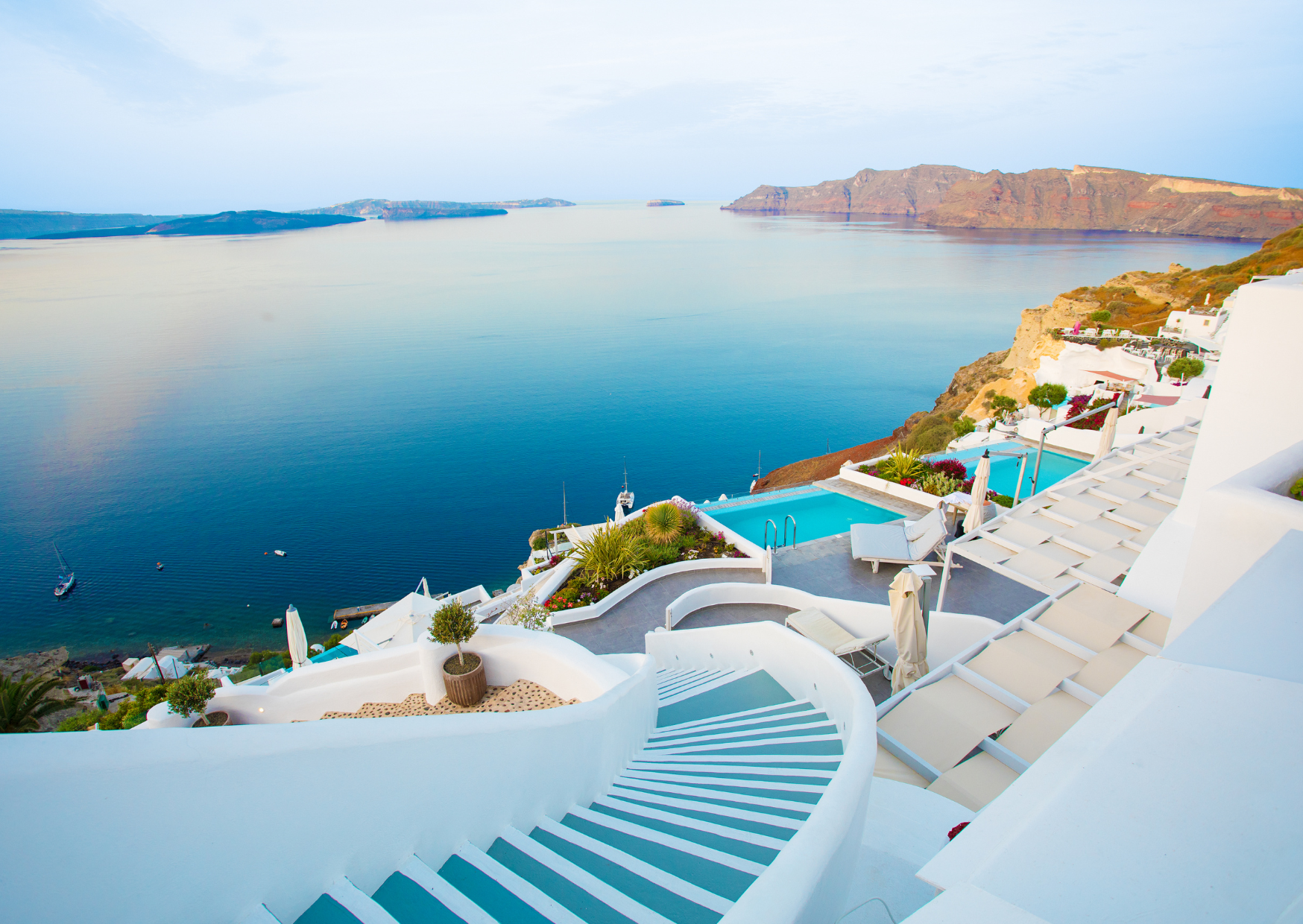
Santorini is beautiful, but for two Americans living on a pension, it can eat the trip before the trip starts. A modest room can price like a special occasion. A caldera-view room can behave like financial vandalism. Restaurants with the famous view do not charge only for food. They charge for the proof that the traveler was there.
This itinerary cuts Santorini and Mykonos completely.
That single decision changes the trip from fragile to realistic.
The replacement is not second-best Greece. It is a different kind of Greece: Athens for history and food, Naxos for beaches and village life, and Syros or Paros only if the budget can take one small extra move. For most pension travelers, Athens plus Naxos is cleaner, cheaper, and less exhausting than trying to turn 14 days into a ferry sampler.
The route looks like this:
- 4 nights in Athens
- 7 nights in Naxos
- 2 nights back in Athens or Piraeus before departure
- 1 built-in buffer night, used where flights and ferries make the most sense
That is not glamorous on paper.
It is pleasant in real life.
It gives the couple time to unpack, learn the local supermarket, find a taverna that does not punish them, and stop performing travel productivity. Fewer moves save money, but they also save joints, sleep, patience, and the quiet dignity of not dragging luggage across port pavement in full sun.
The budget goal is not poverty tourism.
For two people, a reasonable fixed-income version lands around €2,900 to €4,200 on the ground, not including transatlantic flights. That range depends heavily on season, lodging, ferry class, eating habits, and whether they choose May, early June, late September, or the more expensive middle of summer.
July and August can still be done.
They just make every mistake cost more.
Athens Stayed Because Skipping It Is False Economy
Some travelers try to save money by treating Athens as an airport inconvenience.
That is a mistake.
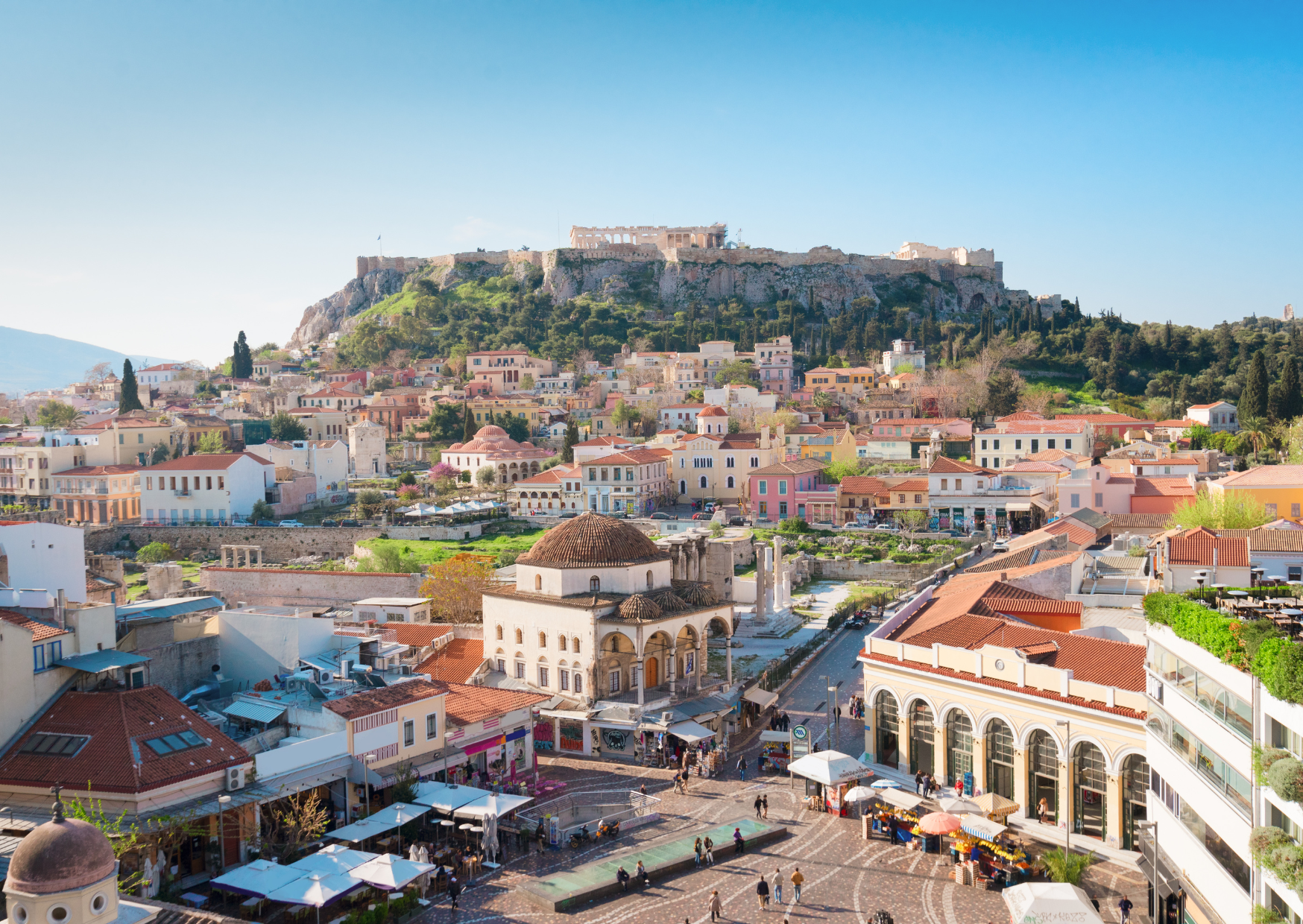
Athens is one of the few places in Greece where a pension traveler can get major history, excellent cheap food, public transport, museums, long walks, and neighborhood life without renting a car or paying island premiums.
The Acropolis ticket is not cheap at €30 per adult, but it stays in the budget because it is the thing people flew across the Atlantic to understand. Cutting it to save €60 for two people while spending hundreds on ferry mistakes would be absurd.
What gets cut is the expensive Athens version.
No hotel directly on Syntagma Square just because it looked convenient. No rooftop cocktail ritual every evening. No taxi habit. No breakfast buffet that adds €18 per person for eggs, bread, and a tiny yogurt trying to look important.
The better base is Koukaki, Pangrati, Petralona, Neos Kosmos, or a practical edge of Monastiraki if the price is right. The room needs air conditioning, a lift if stairs are an issue, reliable reviews, and easy access to metro or buses.
It does not need a view of the Parthenon from the pillow.
For four nights, the Athens lodging target is €85 to €135 per night in shoulder season for a clean apartment or simple hotel. In summer, that can climb fast, so the couple should book early or accept a less famous neighborhood.
The transport win is obvious. The metro from the airport costs €9 per person one way, or the airport express bus costs less. Inside Athens, buses, metro, and walking handle most movement.
A taxi from the airport may feel easier after a long flight, and for some older travelers it may be worth it. But once inside the city, public transport is the money saver.
Athens also gives the food budget room to breathe. A couple can eat well without behaving like every meal needs to be a waterfront event. Bakery breakfast, souvlaki lunch, a proper taverna dinner, supermarket fruit, and bottles of water from a kiosk can make a day feel full without expensive decision fatigue.
The cut is not Athens.
The cut is treating Athens like a luxury city break.
Naxos Became The Island Because It Lets People Live Normally
Naxos is not cheap in the old backpacker sense.
That version of Greece has mostly retired itself.
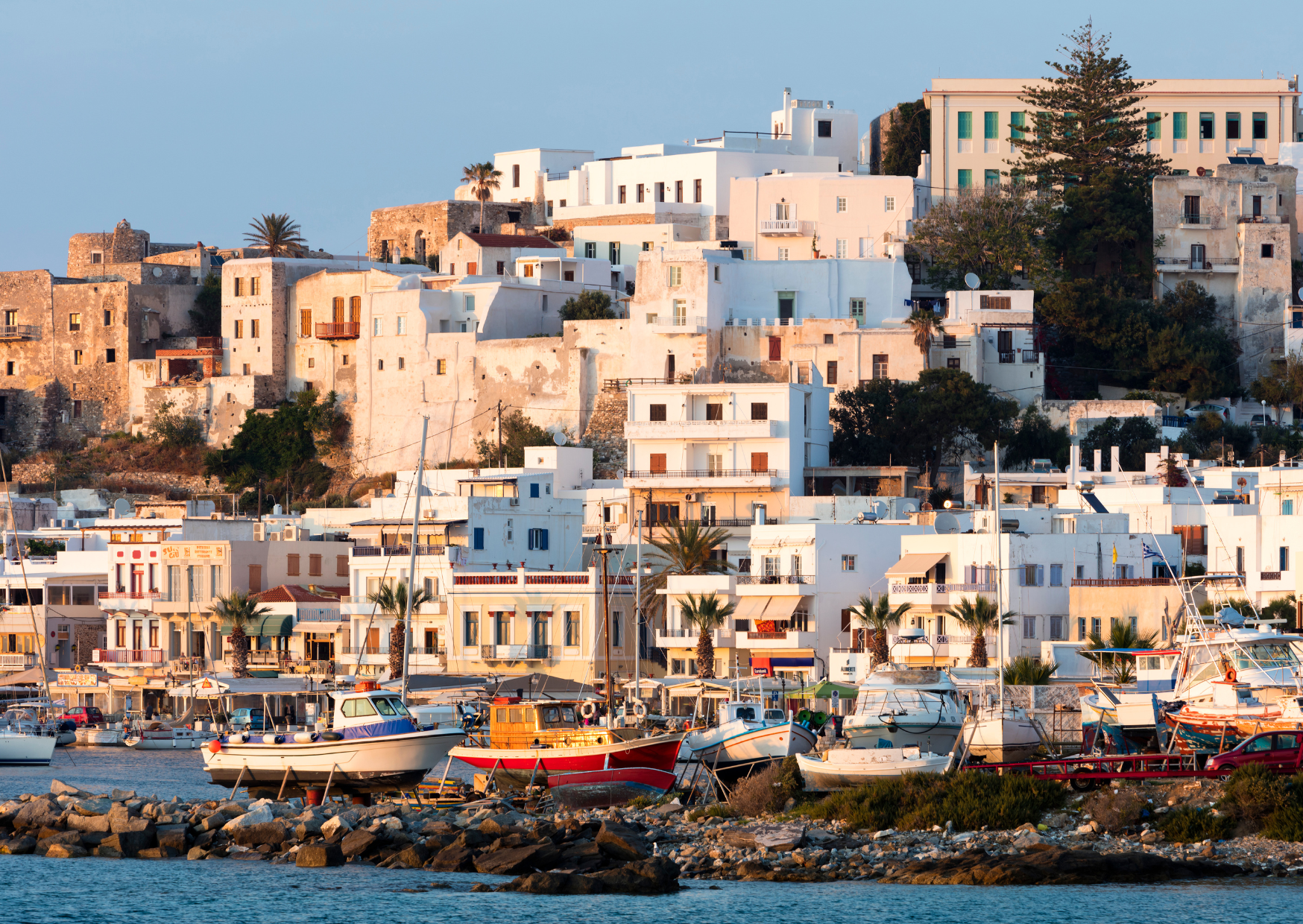
But Naxos still gives two pension travelers something Santorini and Mykonos rarely do in summer: a chance to feel like they are on an island without paying constantly for the privilege of standing there.
The beaches are real. The old town is interesting. The port has enough services. The buses help. The food is good. The island produces potatoes, cheese, meat, and local products, which means meals can feel grounded instead of imported for tourist theater.
Most importantly, Naxos works for a slower stay.
Seven nights is the sweet spot. The couple can choose a room in Naxos Town, Agios Georgios, Agios Prokopios, or Agia Anna, depending on how much walking, beach access, and evening life they want.
Naxos Town is practical. Agios Georgios is easy for people who want beach access without feeling stranded. Agios Prokopios and Agia Anna are better for sand and swimming, but the couple needs to check bus access and evening options before assuming convenience.
The lodging target is €90 to €160 per night for a simple room or apartment in shoulder season, with July and August pushing higher. A kitchenette matters more than a view. A balcony is nice. Air conditioning is non-negotiable.
That last part is not indulgence.
For older travelers, air conditioning is health planning, especially in Greece after several summers of serious heat. Saving €12 a night on a room that turns sleep into a sweat lodge is not frugal. It is a false economy with bad pillows.
On Naxos, the couple cuts the rental car for most or all of the stay. A car for one or two days can be useful for villages and inland drives, but seven days of car rental, fuel, parking, and stress is rarely necessary if they choose the base correctly.
The island bus system, walking, and an occasional taxi can cover a lot.
The other smart cut is constant waterfront dining. One or two meals with the view are fine. The rest can happen slightly inland, at grill houses, family tavernas, bakeries, and supermarkets.
A good Greek salad, beans, fish when priced clearly, potatoes, chicken, vegetables, yogurt, and fruit can carry a couple beautifully.
No one needs to eat “light” in Greece.
They need to stop buying every meal from the street with the most linen shirts.
The Ferry Plan Has One Rule. Do Not Get Clever
The ferry plan is where pension trips often go wrong.
People see the map and suddenly become shipping strategists. Athens to Mykonos to Naxos to Santorini to Milos to Crete looks possible because the internet sells tickets and the lines connect.
Possible is not the same as pleasant.
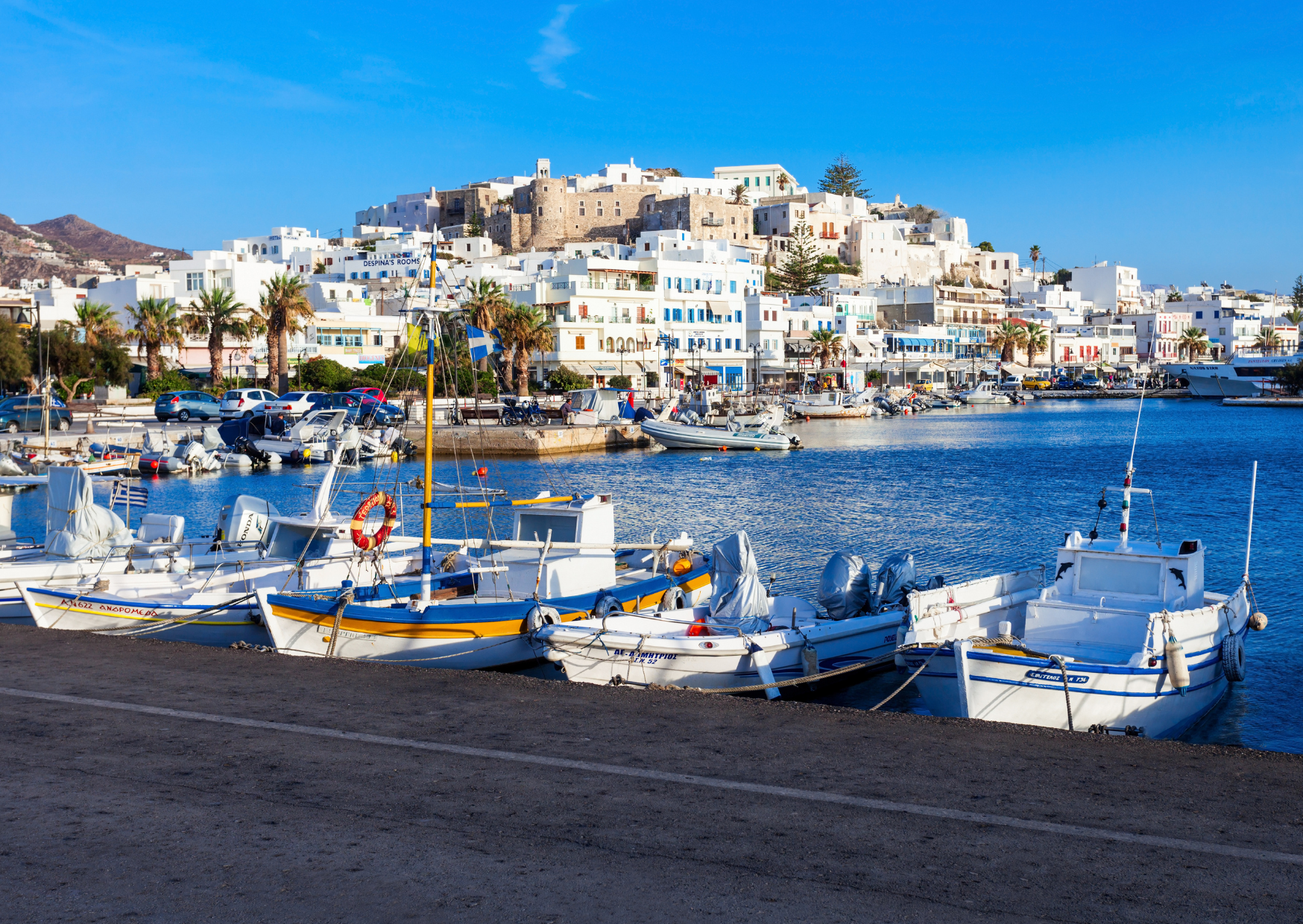
For this trip, the ferry plan is boring on purpose: Piraeus to Naxos and Naxos back to Piraeus.
That is it.
A conventional ferry usually costs less than a high-speed ferry and feels calmer for travelers who are not trying to win a race against the Aegean. The slower boat can also be easier with luggage, seating, and seasickness, though schedules and vessel types matter.
The couple should budget roughly €50 to €80 per person each way for ordinary ferry travel on common Cyclades routes, with prices changing by company, vessel, season, and seat type. For two people round trip, that puts ferries around €200 to €320, before any upgrades or booking fees.
High-speed ferries can save time but cost more and can feel harsher in rough seas.
That is a bad trade for a couple whose trip improves when the travel day is not a punishment.
The other refusal is the buffer night. This itinerary does not put the ferry back to Athens on the same day as the transatlantic flight home. Weather, strikes, mechanical delays, schedule changes, and port logistics are all boring until they are expensive.
A pension traveler should not gamble a long-haul flight on one ferry behaving perfectly.
The return night near Piraeus or central Athens stays in the budget. It may feel less exciting than another island sunset, but it protects the whole trip.
This is the kind of thing experienced travelers learn the expensive way.
The good version learns it from someone else’s bad day.
Food Was Where They Cut Softly, Not Brutally

Food is not where this trip should become joyless.
Greece is generous to travelers who know how to eat simply. The danger is not the taverna. The danger is eating every meal in the most obvious place, ordering like each night is the final night, and pretending wine, starters, grilled fish, dessert, and a view are normal daily spending.
The pension version keeps one proper meal out per day and makes the rest flexible.
A workable daily pattern looks like this:
- Breakfast from a bakery, supermarket, or room kitchen
- Lunch as gyros, salad, spinach pie, yogurt, fruit, or leftovers
- Dinner at a simple taverna or grill house
- Coffee and water bought like normal people, not like hotel captives
Two people can often manage breakfast and lunch for €18 to €30 total if they use bakeries and supermarkets. Dinner can run €35 to €65 for two at simple places, depending on wine, seafood, location, and appetite.
The expensive trap is fish by weight.
Fresh fish can be wonderful in Greece. It can also surprise Americans who assume “Greek island” means casually affordable seafood. If a menu prices fish per kilo, ask clearly before ordering. This is not being cheap. This is being awake.
The couple refuses to cut meals that feel local and satisfying.
They cut view-based dining as a daily habit.
They cut hotel breakfast unless it is included at a sane price.
They cut cocktails as a routine.
They cut the idea that vacation requires three restaurant events every day.
Instead, they buy peaches, yogurt, bread, cheese, tomatoes, olives, cucumbers, and bottled water. They eat breakfast on a balcony. They share starters. They order house wine instead of cocktails. They walk to the second or third street behind the waterfront.
That does not make the trip smaller.
It often makes it better.
The most memorable meal may not be the sunset table. It may be grilled meat, fried potatoes, salad, and cold water after a beach day when nobody had to check the bank app under the table.
What Got Cut Without Regret

The cuts are not moral statements.
They are pressure valves.
The first cut is island hopping. Two islands in 14 days is enough for most fixed-income travelers. One island plus Athens is even better. The goal is to experience Greece, not prove that the ferry system has been conquered.
The second cut is Santorini and Mykonos in summer. They can be wonderful in the right circumstances. This is not that trip.
The third cut is sea-view accommodation. A clean room within a short walk of water beats a view that forces dinner to become crackers and resentment.
The fourth cut is rental cars by default. On some islands, cars are useful. On this itinerary, a car is occasional, not automatic. One or two days on Naxos can be enough.
The fifth cut is hotel breakfast. Unless included, it usually loses to a bakery and a supermarket.
The sixth cut is private transfers. There are exceptions, especially after long flights or for mobility issues, but taxis should be chosen deliberately, not used because nobody studied the bus or metro.
The seventh cut is luggage.
This one sounds small until a 68-year-old tries to drag a heavy suitcase from a ferry ramp through port heat while a scooter, a taxi driver, and four confused tourists all occupy the same square meter.
Each person gets one manageable suitcase and one personal bag.
That is not minimalism.
That is self-respect.
The final cut is peak-day sightseeing. No Acropolis at midday in July. No old town wandering in full heat just because the schedule says so. Mornings and evenings become the active hours. Afternoons are for shade, museums, ferries, naps, and cold drinks that do not cost €14.
Greece rewards people who stop fighting the climate.
What Stayed Because Cheap Trips Still Need Comfort
The trip refuses to cut air conditioning.
It refuses to cut location so far that every outing becomes a transport project.
It refuses to cut travel insurance, especially for older Americans dealing with long flights, heat, ferries, medications, and prepaid accommodation.
It refuses to cut the Acropolis, though it does cut the expensive private guide unless the couple truly wants one.
It refuses to cut a buffer night before the flight home.
It refuses to cut one or two meals that feel special. Not every dinner needs to be optimized. One island dinner with the view, priced clearly and chosen calmly, can belong in the trip.
It refuses to cut shade.
This sounds ridiculous until someone has been in Athens in July. Shade, hydration, hats, comfortable shoes, and a room that cools properly are part of the budget. They are not accessories.
The trip also keeps enough slack money for ordinary annoyances.
A pension itinerary with no buffer becomes mean. One taxi after a rough ferry. One pharmacy visit. One laundry service. One extra museum because it is too hot outside. One better dinner after a long day.
Those are not failures.
They are the difference between a budget trip and a brittle trip.
For two Americans, the emergency and comfort cushion should be at least €300 to €500 on top of the planned daily spending. If that makes the trip too expensive, the fix is not to remove the cushion. The fix is to travel in May or September, stay longer in fewer places, or choose a cheaper island base.
The worst budget is the one that only works if nothing human happens.
The 14 Days That Actually Make Sense

Here is the clean version.
Days 1 to 4: Athens.
Arrive, take the metro or a pre-decided taxi, and do not schedule anything heroic on day one. Jet lag is not a personality flaw. It is a physical fact with luggage.
Day two is the Acropolis early, then lunch somewhere simple and a slower afternoon. Day three can be the Acropolis Museum, Ancient Agora, or a neighborhood food walk done independently. Day four is for markets, cafés, laundry if needed, and getting ready for the ferry.
Days 5 to 11: Naxos.
Take the ferry from Piraeus and make the travel day easy. Do not stack a major activity after arrival. Check in, buy water and breakfast food, walk the port, eat dinner, sleep.
The first island day should be lazy on purpose. Beach, old town, supermarket, bus information, and a simple dinner. The couple should learn the local rhythm before booking anything.
Over the week, they can spend three or four beach days, one inland village day, one boat or car day if the budget allows, and one fully unstructured day.
That unstructured day is important.
A pension trip should not feel like employment with ruins.
Days 12 to 14: Athens or Piraeus return.
Take the ferry back with a buffer. Sleep near Piraeus if the ferry arrives late or in Athens if they want one last city evening. Use the final full day for a museum, shopping, and packing without panic.
The last night should be boring in the right way: confirmed airport route, bags ready, receipts sorted, medications packed in carry-on, and no plan that depends on waking up heroic.
The rough ground budget for two looks like this:
- Athens lodging, 6 nights: €510 to €810
- Naxos lodging, 7 nights: €630 to €1,120
- Ferries for two round trip: €200 to €320
- Athens airport and city transport: €60 to €140
- Food and drinks, 14 days: €850 to €1,250
- Acropolis and selected paid sights: €120 to €240
- Occasional taxis, laundry, pharmacy, beach chairs, extras: €250 to €450
- Cushion: €300 to €500
That puts the practical total around €2,920 to €4,830, before flights.
The lower end requires shoulder season, simple rooms, disciplined restaurant choices, and no car rental. The upper end includes more comfort, higher lodging, a few taxis, better dinners, and fewer compromises.
For Americans living on a pension, that range is not tiny.
But it is honest.
The Booking Window Matters More Than People Think
Greece punishes late planners in summer.
Not always with impossibility. Often with mediocrity.
The best-value rooms go first. The convenient ferry times become more awkward. The well-located apartments with lifts and air conditioning disappear. What remains may still be available, but it often costs more while solving less.
For a June or September trip, start serious booking five to eight months ahead if the budget is tight. For July or August, earlier is better, especially for Naxos rooms that are close to the beach or town without being overpriced.
Flights from the U.S. are their own separate animal, but the ground trip should not wait for perfect inspiration.
The order should be:
- Choose travel month.
- Price flights into Athens.
- Hold or book Athens lodging with cancellation flexibility.
- Choose Naxos dates.
- Book island lodging.
- Book ferries once schedules and confidence are clear.
- Book Acropolis timed entry.
- Leave some days alone.
That last step is underrated.
Every day does not need a reservation.
A couple on a pension should reserve the things that punish delay and leave space around the things that are better decided on the ground. Beaches, neighborhood walks, bakeries, simple dinners, and rest do not need a spreadsheet.
The trip also needs weather humility.
May and late September are easier for walking. Early June can be lovely but more expensive than May. July and August bring heat, crowds, and higher prices. October can still work for Athens and some islands, but ferry schedules and beach expectations need checking.
The cheapest trip is not always the best one.
A slightly more expensive trip in a kinder month may deliver more actual pleasure.
The Greece Trip That Does Not Try To Prove Anything
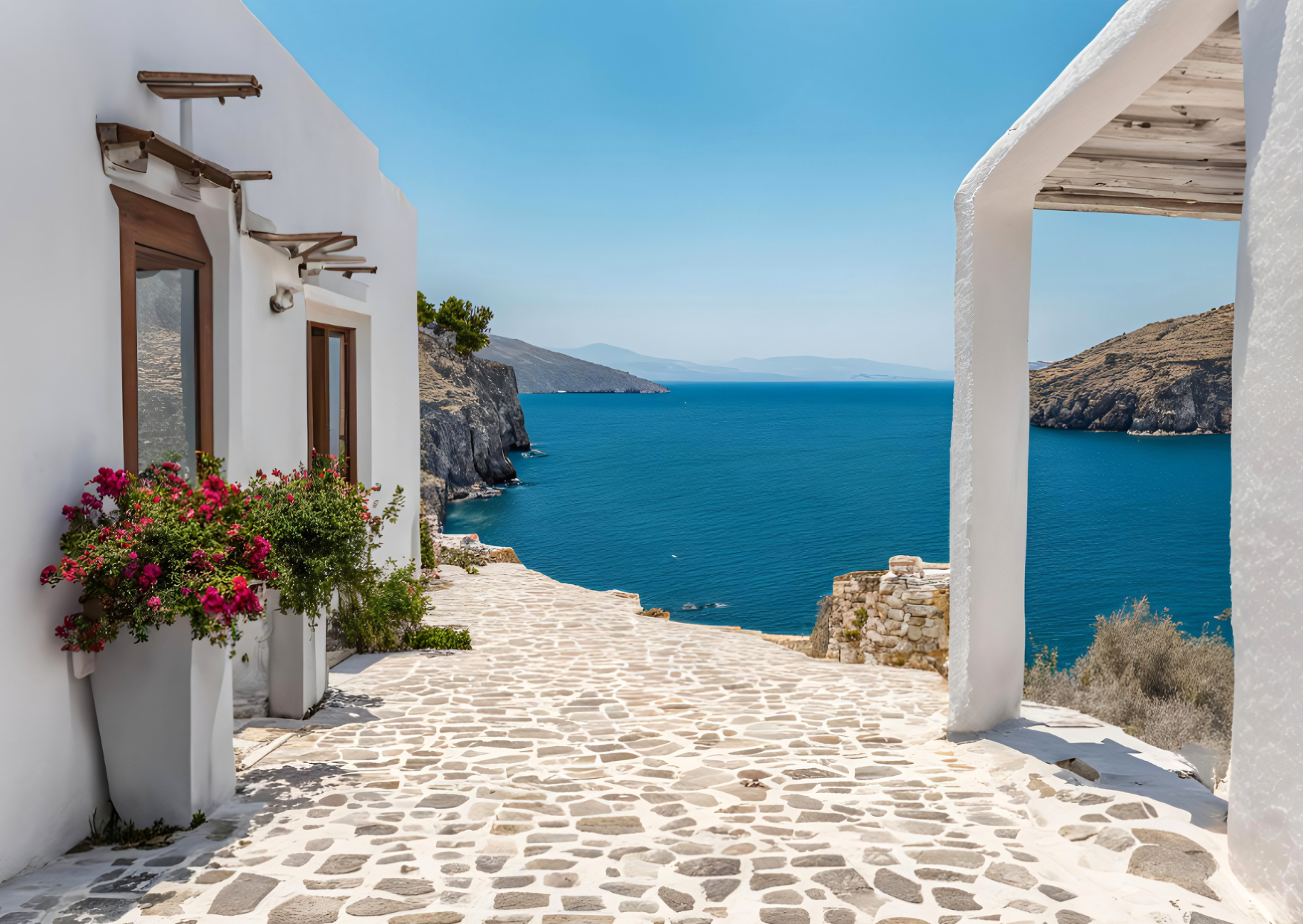
The pension-friendly Greece trip works when it stops auditioning for other people.
It does not need Santorini to be legitimate.
It does not need five islands to be impressive.
It does not need caldera breakfasts, private transfers, cliffside cocktails, or a room that photographs better than it sleeps.
It needs clean lodging, good timing, public transport where practical, ferries with slack, simple food, one strong island, and enough comfort to keep the trip from turning sour.
For two Americans on a fixed income, the best Greece trip is not the cheapest possible version.
It is the version where money is spent on the things that protect the experience: air conditioning, location, timing, food that satisfies, and fewer travel days.
Cut the famous expensive parts that do not serve the trip.
Keep the parts that make the body and the mood hold up for 14 days.
That is how Greece stays generous.
Not cheap exactly.
Generous.

About the Author: Ruben, co-founder of Gamintraveler.com since 2014, is a seasoned traveler from Spain who has explored over 100 countries since 2009. Known for his extensive travel adventures across South America, Europe, the US, Australia, New Zealand, Asia, and Africa, Ruben combines his passion for adventurous yet sustainable living with his love for cycling, highlighted by his remarkable 5-month bicycle journey from Spain to Norway. He currently resides in Spain, where he continues sharing his travel experiences with his partner, Rachel, and their son, Han.