
The list used to be empty. As of May 2026, it is six countries long.
Portugal’s citizenship doubling has reset the European competitive map for Americans seeking EU citizenship through residency or other pathways. The Portuguese 5-year path was, until May 3, 2026, the shortest residency-based citizenship route in Western Europe for non-EU nationals without ancestry connections. It was the reason the comparison generally ran in only one direction. Other European countries had longer timelines, more demanding integration requirements, or both.
The new Portuguese 10-year requirement (with realistic 13-year actual timeline) places Portugal in the middle of the European pack rather than at the front. Several countries now offer faster paths, either through shorter residency requirements, ancestry pathways that bypass residency entirely, or special programs available to specific applicant categories. For Americans currently planning relocations or considering switches from Portugal, these alternatives are now worth serious examination.
The six countries below are the ones with realistic faster paths to EU citizenship for Americans as of mid-May 2026. The list focuses on residency-based naturalization where possible and includes ancestry pathways where they are accessible to typical American applicants. Some entries describe pathways that require specific qualifications. Others are open to anyone willing to commit to the residency.
Germany: 8 Years Standard, 6 With Integration, Or Citizenship By Descent For Qualifying Americans

Germany reformed its citizenship law in 2024 with two changes that matter for Americans.
The standard residency requirement was reduced from 8 years to 5 years, with the option to reduce further to 3 years for applicants who demonstrate “special integration achievements” (advanced German language proficiency, civic engagement, exceptional professional contribution). The reduction to 5 years from 8 years is meaningful, though most observers note that the 3-year option is rarely granted in practice and most applicants face 5 years.
The 2024 reform also opened citizenship by descent for thousands of Americans whose ancestors were stripped of German citizenship under discriminatory pre-1953 marriage rules or under Nazi-era denaturalization. This pathway is administrative rather than discretionary, has no residency requirement, and produces German citizenship typically within 12 to 24 months for applicants with documentable qualifying ancestry.
For Americans with the right family history, the descent pathway is the fastest legitimate path to EU citizenship currently available. No residency in Germany is required. The applicant submits documentation proving the qualifying ancestor’s German citizenship and the chain of descent, and the German Federal Office of Administration recognizes the citizenship that was, under the legal interpretation, never properly lost.
For Americans without qualifying ancestry, the 5-year residency path is still meaningfully shorter than Portugal’s new 10-year requirement. The integration requirements are more demanding (B1 German language proficiency rather than A2, plus civic knowledge tests) but achievable for committed applicants.
The German citizenship pathway is the strongest alternative to Portugal for Americans who can either qualify by descent or are willing to invest in B1 German language acquisition.
Ireland: 5 Years Standard Or Foreign Births Register For Qualifying Americans

Ireland offers two distinct fast pathways for Americans, and the second is among the most accessible heritage pathways in Europe.
The standard residency-based citizenship pathway requires 5 years of legal residence in Ireland, with the additional requirement that the applicant has been physically present in Ireland for at least 4 of the 5 years. The integration requirements are minimal compared to other European countries: there is no language test, no civic knowledge test, and no formal integration assessment. The residency is the requirement.
The Foreign Births Register pathway is the heritage option. Americans with at least one Irish-born grandparent are eligible to register as Irish citizens, regardless of whether the parent through whom the claim flows ever registered. The application is administrative, no residency in Ireland is required, and the processing time has been running 12 to 18 months under current Foreign Births Register operations.
Americans with an Irish-born great-grandparent may also qualify if the parent through whom the claim flows registered before the applicant’s birth. This pathway is more complex but available to a meaningful share of Irish-American families.
The Irish heritage pathway is among the most accessible European citizenship routes for Americans. Roughly 30 to 40 million Americans claim some Irish ancestry, and a substantial share of those have Irish-born grandparents who would qualify their American descendants for the Foreign Births Register pathway. The actual qualifying population has not been precisely measured, but the cohort is large.
For Americans considering European citizenship and willing to investigate their Irish ancestry, the Foreign Births Register is often the fastest path available, with no residency requirement and a relatively straightforward documentation process.
France: 5 Years Standard With Stricter Integration

France maintains a 5-year residency-based naturalization pathway that is shorter than the new Portuguese requirement, with specific characteristics that are worth understanding.
The 5-year residency must be continuous and the applicant must demonstrate “intent to make France the center of one’s interests,” which generally means actually living in France rather than visiting briefly. The integration requirements are more demanding than Portugal’s: the applicant must demonstrate B1 French language proficiency, pass a civic knowledge assessment, and demonstrate “assimilation to the French community,” which is interpreted variably by different prefectures.
The naturalization process in France is also more discretionary than in Portugal. The prefecture conducts an interview, reviews the applicant’s “republican values,” and can deny the application on grounds that include insufficient assimilation. The denial rate for naturalization applications in France is meaningfully higher than the denial rate in Portugal under either old or new rules.
For Americans willing to invest in B1 French and demonstrate genuine integration, the 5-year French pathway is faster than the Portuguese 10-year pathway. The integration burden is real, but for Americans who specifically want to live in France long-term, the integration is the point of the move rather than an obstacle.
France also has specific pathways for spouses of French citizens (4 years of marriage if living in France, 5 years if living abroad), and reduced timelines for applicants who have completed higher education in French institutions or contributed to French scientific, cultural, or sporting achievements.
The French pathway is competitive with Germany’s standard pathway and shorter than the new Portuguese pathway, with the caveat that the integration requirements are more demanding.
Italy: Citizenship By Descent For Qualifying Americans, Or Standard 10-Year Path
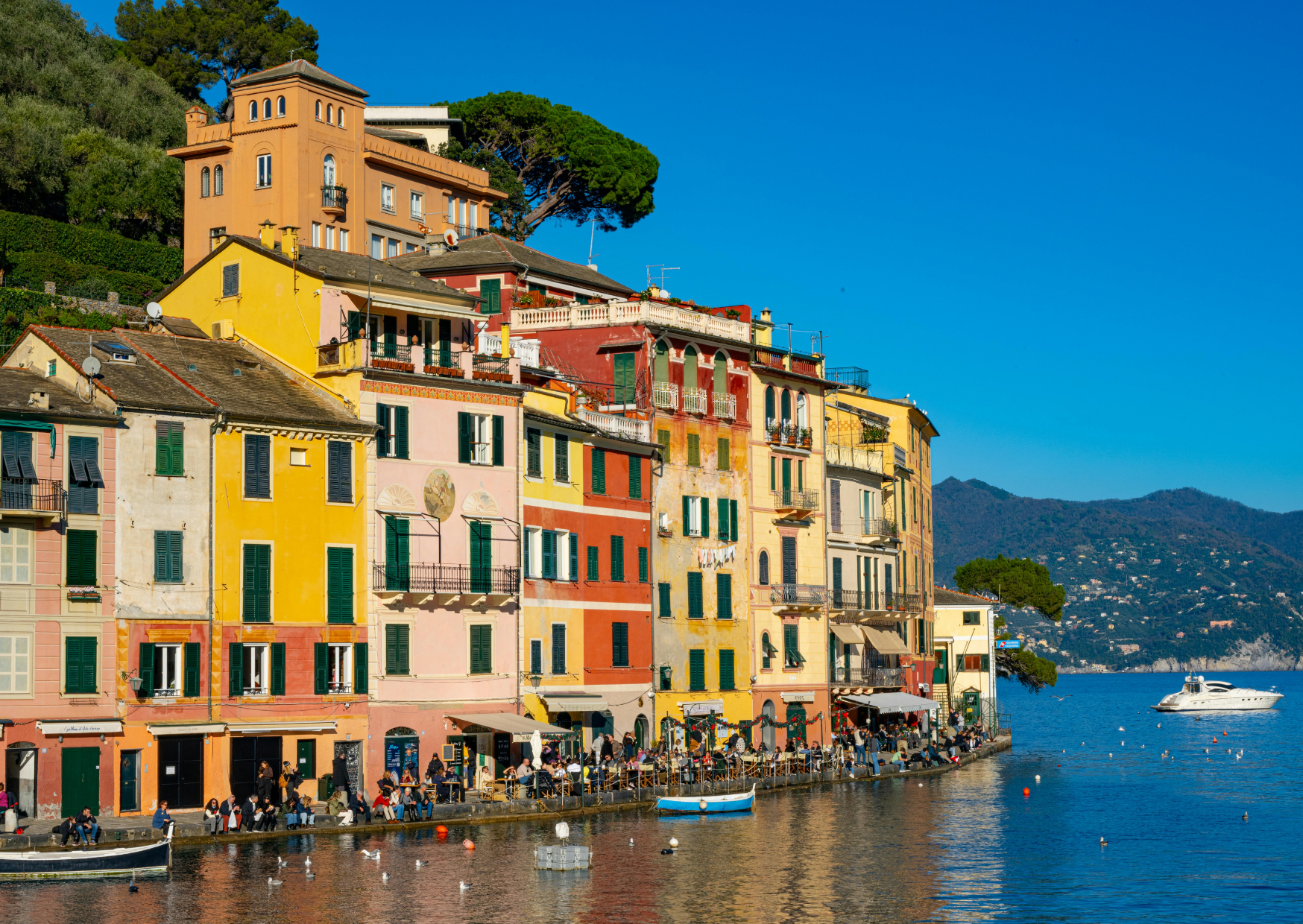
Italy’s residency-based citizenship pathway requires 10 years for non-EU nationals, which matches the new Portuguese requirement and does not represent an advantage. Italy makes this list because of its descent pathway, which despite tightening in 2025 remains accessible to many Americans.
Italian citizenship by descent (jure sanguinis) was, until April 2025, one of the most generous heritage pathways in Europe. The previous interpretation allowed Americans with Italian ancestry through any unbroken male line, regardless of how many generations back, to claim Italian citizenship without residency requirements. The 2025 reform tightened the eligibility to direct descendants up to the great-grandparent generation, with stricter documentation requirements.
The reform did not eliminate the descent pathway. It restricted it. Americans with an Italian-born great-grandparent or closer ancestor still qualify, with proper documentation. The pathway remains administrative, has no residency requirement, and produces Italian citizenship typically within 24 to 48 months under current Italian consular processing.
The Italian descent application requires extensive documentation including Italian birth certificates from the qualifying ancestor’s town of origin, marriage certificates for each generation in the chain, US naturalization records (which can be problematic if the qualifying ancestor naturalized as American before the next-generation child was born), and various supporting documents. The process is more demanding than the Irish or German descent processes but remains accessible.
For Americans with Italian-born grandparents or great-grandparents and proper documentation, Italian descent citizenship is competitive with the Irish and German descent pathways. The total time from initial application to Italian passport is typically 3 to 5 years including consular wait times, which is faster than the Portuguese 13-year practical timeline.
For Americans considering European citizenship, Italian ancestry is worth investigating even if other European countries are also options. The Italian descent pathway, despite the 2025 tightening, remains one of the more generous routes available.
Spain: Standard 10-Year With Ibero-American Treaty Exceptions

Spain’s residency-based naturalization requires 10 years, matching the new Portuguese requirement. Spain makes this list because of two specific exceptions that meaningfully shorten the path for some Americans.
The Ibero-American treaty exception reduces the residency requirement to 2 years for nationals of Latin American countries, the Philippines, Andorra, Equatorial Guinea, and Portugal. Americans with dual Latin American citizenship, including Americans who have already obtained Mexican, Argentine, Brazilian, or other Latin American citizenship through ancestry or naturalization, can use the Ibero-American treaty to reduce their Spanish residency requirement to 2 years.
For Americans without Latin American citizenship, this pathway is not directly accessible. But for Americans considering a multi-step strategy, acquiring Latin American citizenship first and then using the Ibero-American treaty for accelerated Spanish citizenship is a recognized pathway with several years of established precedent.
The most accessible Latin American citizenship for Americans is Mexican naturalization, which requires 5 years of Mexican residency. The combined timeline of Mexican naturalization plus Spanish naturalization through the Ibero-American treaty is approximately 7 to 8 years total, which is faster than the new Portuguese 10-year requirement.
This is a complex multi-country strategy, not a simple alternative. It works for Americans who are genuinely willing to live in Mexico for 5 years, who have the financial resources to manage two relocations, and who specifically want Spanish citizenship at the end. For most Americans, this pathway is more theoretical than practical, but it is documented and used by a small but real cohort.
The second Spanish exception is the Sephardic Jewish ancestry pathway. The 2015 Spanish law that opened citizenship to descendants of Spanish Jews expelled in 1492 was tightened in 2019 and is no longer accepting new applications under the original program. However, descendants who applied before the deadline are still being processed, and a smaller successor program for direct descendants exists with stricter documentation requirements.
For Americans with documented Sephardic ancestry and proper records, the Spanish Sephardic pathway is essentially closed but not entirely. Specific cases may still qualify under transitional rules.
Greece: 7 Years Standard With Specific Reductions
Greece offers a 7-year residency-based citizenship pathway, which is shorter than the new Portuguese 10-year requirement but with several caveats worth understanding.
The standard requirement is 7 years of continuous legal residence with several integration requirements: B1 Greek language proficiency, civic knowledge testing, and a formal integration interview. The Greek language requirement is more demanding than Portuguese A2 because Greek is a less commonly studied language for American adults and the alphabet alone presents a significant initial barrier.
Greece offers reductions to 3 years for specific categories: spouses of Greek citizens, parents of Greek-citizen children, applicants of Greek descent who can document the connection. The 3-year pathway through Greek descent is the most accessible reduction for Americans with relevant ancestry.
Greek citizenship by descent through a Greek-born grandparent is also available without any residency requirement, though the process is more complex than the Italian or Irish descent pathways and requires specific documentation including Greek municipal birth records, family registration documents, and certified translations.
For Americans with Greek ancestry, the descent pathway can be the fastest option. For Americans without, the 7-year residency pathway is shorter than the Portuguese 10-year requirement but with a more demanding language requirement.
Greece also has citizenship-by-investment programs that have been tightened since 2024 but remain available. The Golden Visa investment threshold rose from 250,000 euros to 800,000 euros in most popular regions in 2024, making the program less accessible than it was previously. The investment pathway leads to permanent residency rather than directly to citizenship, with citizenship still requiring the standard residency timeline.
For Americans considering Greece specifically, the 7-year pathway is competitive with German and French timelines and shorter than the new Portuguese requirement. The language requirement is the main differentiator.
Poland: Continuous Descent Without Generational Limit
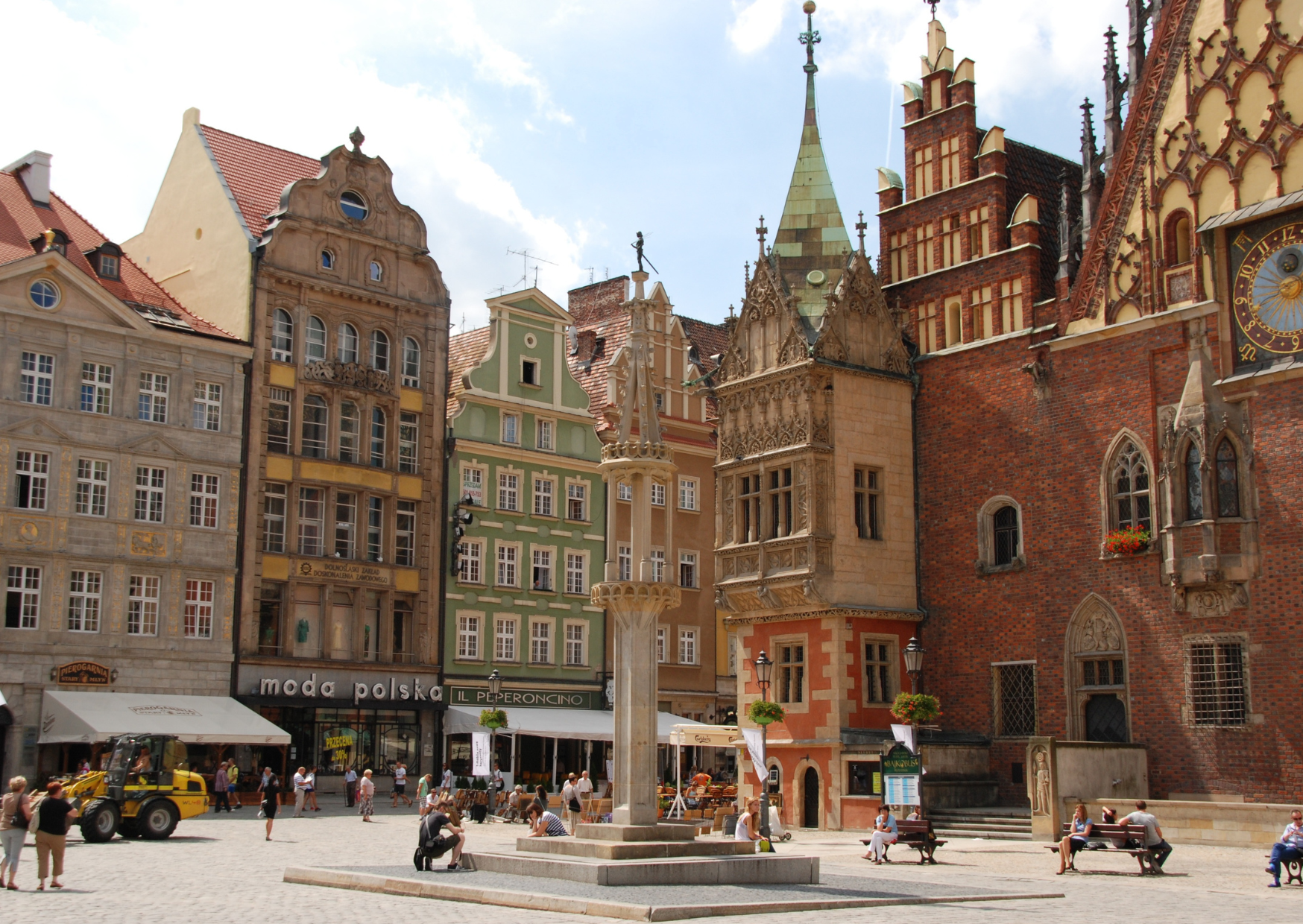
Poland offers a citizenship pathway that is technically not a separate route but produces results similar to the descent pathways of Ireland, Germany, and Italy.
Polish nationality law recognizes citizenship through unbroken descent from a Polish citizen, with no generational limit. An American whose family emigrated from Poland in the early 20th century is potentially Polish by descent, regardless of how many intervening generations have not lived in Poland.
The challenge is documentation rather than eligibility. The applicant must prove that the original Polish ancestor was a Polish citizen at the time of the qualifying event in the descent chain, that no one in the chain lost citizenship through one of the various 20th-century events that affected Polish nationality (military service in foreign armies before 1951, certain naturalizations as foreign citizens, the territorial changes of 1939 and 1945), and that the chain of descent itself is fully documented.
The documentation challenge is significant. Polish records from the early 20th century are often held in archives across Poland and adjacent countries, with some records destroyed during World War II and others held in former Polish territories now in Ukraine, Belarus, Lithuania, or other countries. The research and document gathering for a Polish descent claim typically takes 12 to 24 months and may require specialized genealogical assistance.
Once the documentation is assembled, the application processing through the Polish consulate or directly through Polish authorities runs 12 to 24 months. The total timeline from initial research to Polish citizenship is typically 24 to 48 months, which is faster than the new Portuguese 13-year practical timeline.
For Americans with Polish ancestry willing to invest in the documentation effort, this pathway is one of the fastest available. The eligibility is broader than the Italian, Irish, or German descent pathways because of the lack of generational limit. The complexity is higher because of the documentation challenge.
For the millions of Americans with Polish ancestry, this pathway is worth investigating, particularly for those whose family records are reasonably intact or who have access to Polish genealogical resources.
What This List Does Not Include
Several European countries are missing from this list and the reasons are worth naming.
The Netherlands has a 5-year residency requirement but with strict dual citizenship rules that generally require renunciation of US citizenship for naturalized Americans. The Dutch dual citizenship policy is more strictly enforced than the Spanish equivalent, which makes the pathway less practically accessible for most Americans.
The United Kingdom is no longer in the EU. UK citizenship does not provide EU citizenship rights. While the UK has a 6-year residency pathway, the citizenship outcome is different from EU citizenship and is not equivalent for Americans seeking EU mobility.
Belgium, Luxembourg, Austria, and Switzerland all have residency pathways but with longer timelines, more demanding requirements, or specific complications. None offer pathways shorter than the Portuguese 10-year requirement for typical Americans.
Malta and Cyprus have offered citizenship-by-investment programs but both have been substantially restricted since 2020. The remaining investment pathways require very large investments (1 million euros minimum) and produce citizenship after additional residency requirements.
Eastern European countries (Hungary, Czech Republic, Slovakia, Romania, Bulgaria) have various residency and descent pathways. Hungarian descent is accessible to Americans with Hungarian ancestry. Romanian descent is accessible to Americans with Romanian ancestry. Most other Eastern European descent pathways are narrower than the Polish or Italian pathways. Residency-based pathways in these countries typically require 8 to 10 years.
The six countries on the list above represent the most accessible faster pathways for Americans as of mid-May 2026. Other pathways exist but tend to be either more restrictive, more expensive, or applicable to smaller cohorts.
What This List Means For The Decision
For Americans considering European citizenship who would have chosen Portugal under the previous regime, the new comparative landscape produces several practical considerations.
Investigate ancestry first. Americans with German, Irish, Italian, or Polish ancestry should investigate descent pathways before committing to a residency-based plan. The descent pathways are typically faster, cheaper, and do not require relocation. For Americans whose family history qualifies them, descent is almost always the better option.
Consider Germany and Ireland for residency-based pathways. Both offer shorter timelines than Portugal with reasonable integration requirements. Germany requires more demanding language acquisition. Ireland requires relatively long physical presence in country.
Consider France for committed integrators. The 5-year French pathway is shorter than Portugal’s new 10-year pathway but the integration burden is real. Americans who genuinely want to live in France long-term will find the integration requirements aligned with what they wanted to do anyway.
Consider Italy for descent pathway. Despite the 2025 tightening, the Italian descent pathway remains accessible to Americans with grandparent or great-grandparent connections.
Consider Greece for the right ancestry or for committed Greek learners. The 7-year residency pathway with descent reductions can produce faster outcomes than Portugal for the right applicants.
Consider Poland for those with documentable ancestry. The descent pathway has no generational limit and produces some of the fastest outcomes for applicants who can document their family chain.
Continue with Portugal if the country itself is the goal. For Americans whose primary motivation is to live in Portugal rather than to acquire EU citizenship as a planning outcome, the 13-year timeline is acceptable because the citizenship is the bonus rather than the point.
The cohort of Americans who specifically wanted Portugal because of the 5-year path now has six legitimate alternatives that produce faster outcomes. The cohort that wanted Portugal because of the country has no comparable substitute and will continue with the longer timeline.
What The Reset Recognizes
The European competitive landscape for American citizenship aspirants has been reset by the May 2026 Portuguese law. The previous decade’s assumption that Portugal was the obvious choice no longer holds. The new comparison runs across multiple countries with multiple pathways, and the right choice depends on individual circumstances rather than a single objectively correct answer.
For Americans who have not yet committed to a European destination, this is actually good news. The choice is broader. The pathways are more varied. The competitive pressure may, over time, push other countries to streamline their processes in response.
For Americans already in Portugal, the reset is harder to navigate. Some will switch to Spain or other countries. Some will pursue ancestry pathways that bypass the residency question entirely. Some will continue with Portugal because the country itself is what they came for.
For Americans considering Europe in 2026 and beyond, the practical advice is to investigate ancestry first, then consider the residency-based options on their actual merits rather than on the assumption that Portugal is the leader. Portugal is now one option among several, and the right choice depends on what the specific American actually wants from the move.
The list of European countries with shorter citizenship timelines than Portugal used to be empty. As of May 2026, it has six entries, with realistic faster pathways for any American willing to investigate their options seriously. The European citizenship landscape is more open than it was last month, and the cohort of Americans most affected by the Portuguese change is the cohort with the most to gain by examining the alternatives carefully.

About the Author: Ruben, co-founder of Gamintraveler.com since 2014, is a seasoned traveler from Spain who has explored over 100 countries since 2009. Known for his extensive travel adventures across South America, Europe, the US, Australia, New Zealand, Asia, and Africa, Ruben combines his passion for adventurous yet sustainable living with his love for cycling, highlighted by his remarkable 5-month bicycle journey from Spain to Norway. He currently resides in Spain, where he continues sharing his travel experiences with his partner, Rachel, and their son, Han.