
Citizenship decisions are rarely made twice. In Portugal right now, thousands of Americans are making them again.
The May 2026 Portuguese Nationality Law doubled the residency-to-citizenship requirement from five years to ten, and the cohort caught in the middle of the previous five-year path is now openly comparing Spain as an alternative.
This is a recent shift. As recently as 2023, the standard expat planning conversation among Americans in Europe ran in the other direction. Spaniards and Spain-bound Americans were comparing themselves unfavorably to the Portuguese pathway. Portugal had the shorter citizenship timeline, the lighter language requirement, the more flexible Golden Visa, the better tax incentives through the Non-Habitual Resident program. Spain was the longer, slower, more bureaucratic alternative.
The May 2026 Portuguese Nationality Law inverted the comparison. Portugal still has the lighter language requirement and the more flexible visa categories. Spain now has the equivalent ten-year citizenship timeline, with several specific advantages that the previously slower Spanish path had been masking. For Americans now facing the Portuguese ten-year clock, Spain is no longer the worse option. It is, depending on the specific situation, the better one.
The reconsideration is happening across multiple cohorts. The D7 retirees who arrived between 2022 and 2024. The Golden Visa investors who entered in 2023 or 2024. The D8 digital nomads who arrived in the past two years. The pattern is consistent enough that Portuguese immigration attorneys are reporting their American clients asking about Spanish alternatives, and Spanish immigration attorneys are reporting a meaningful uptick in inquiries from Americans currently resident in Portugal.
This piece walks through why the comparison has shifted, what Spain actually offers in 2026, and what the practical move from Portugal to Spain mid-residency actually involves.

What Changed In The Comparison
The previous Portugal-Spain comparison ran on three main dimensions: citizenship timeline, integration requirements, and tax treatment.
Portugal won on citizenship timeline (5 years versus Spain’s 10 years for most non-EU nationals). Portugal won on integration requirements (A2 Portuguese versus Spain’s A2 Spanish plus the CCSE civic exam). Portugal won on tax treatment for the first decade of residency, through the Non-Habitual Resident program that offered a flat 20 percent rate on Portuguese-source income and various exemptions on foreign-source income.
The May 2026 law eliminated the citizenship advantage. Portugal now requires 10 years for most non-EU nationals, matching Spain. The integration requirements have also tightened, with a new civic knowledge test added on top of the A2 Portuguese requirement. The NHR tax program closed to new applicants in 2024, and the replacement program (Tax Incentive for Scientific Research and Innovation) is much narrower in scope.
The Portuguese advantages that drove the late-2010s and early-2020s shift toward Portugal have been substantially neutralized. The country still has real advantages in cost of living, daily life quality, and certain visa categories, but the structural advantages over Spain are gone.
Spain, meanwhile, has been improving its position. The Spanish public health system continues to deliver high-quality care at minimal cost. The Digital Nomad Visa launched in 2023 has become a stable and well-regarded program. The Spanish cost of living, while higher than Portuguese cost of living in absolute terms, has not climbed as aggressively as Portuguese costs in major destination cities. Spain has not closed its NHR equivalent, the Beckham Law, which provides a flat 24 percent tax rate for new arrivals working in Spain.
The May 2026 comparison runs differently than the 2023 comparison. Spain now offers an equivalent or better path on most dimensions, with the specific exception of dual citizenship.
The Dual Citizenship Question

The single most important asterisk in the Spain-versus-Portugal comparison is the dual citizenship rule.
Spain generally does not permit dual citizenship for most non-EU nationals. Americans who naturalize as Spanish citizens are technically required to renounce US citizenship as part of the Spanish citizenship oath. The practical reality is more complicated than the technical rule. Spain does not actively verify renunciation, and the United States does not consider the Spanish oath alone to constitute renunciation under US law. Many Americans who have naturalized as Spanish citizens continue to hold US passports, and the situation is generally tolerated by both governments in practice.
The exception is Ibero-American countries (most of Latin America), the Philippines, Andorra, Equatorial Guinea, and Portugal, whose nationals can hold dual citizenship with Spain by treaty.
Portugal, by contrast, has had a permissive dual citizenship regime since the 1980s and the new law does not change this. Americans who naturalize as Portuguese citizens explicitly retain the right to hold US citizenship.
For Americans considering the Spain switch, the dual citizenship question is the key strategic decision. Three positions exist on this:
The first position holds that the Spanish renunciation requirement is a real legal obligation that Americans should not violate. Under this view, Spanish citizenship requires giving up US citizenship, and the Portuguese path remains preferable for Americans who want to retain US citizenship.
The second position holds that the Spanish renunciation requirement is technically required but practically unenforced. Under this view, an American can naturalize as Spanish and continue holding a US passport without realistic consequence, which makes the Spanish path effectively dual-citizenship-friendly in practice.
The third position holds that the situation is too uncertain to plan around, and that Americans should choose between Spain and Portugal based on whether they need legal certainty about dual citizenship status. This is the most cautious position and is the one most Spanish immigration attorneys actually recommend.
The cohort currently reconsidering Spain over Portugal is mixed across these three positions. Some are accepting the dual citizenship risk because the other Spanish advantages outweigh it. Some are concluding that Portugal still wins because of the dual citizenship clarity. Some are exploring whether they qualify for Ibero-American treaty exceptions that would resolve the dual citizenship question entirely.
What Spain Actually Offers In 2026

The Spanish residency-to-citizenship pathway in 2026 has several specific characteristics that make it competitive with the new Portuguese pathway.
The Non-Lucrative Visa remains the primary pathway for retirees and Americans with passive income. The 2026 income threshold is approximately 31,200 euros per year for a single applicant, with additional amounts for spouses and dependents. The visa is renewable annually for the first three years, then for two-year periods, and is convertible to permanent residency at five years.
The Digital Nomad Visa has become the primary pathway for remote workers since its 2023 launch. The income threshold is approximately 28,800 euros per year for a single applicant. The visa offers a path to residency that converts to long-term status at five years. The Beckham Law tax regime provides a 24 percent flat rate on Spanish-source income for the first six years for qualifying new arrivals.
The Golden Visa was eliminated in 2025. This is worth noting because Americans who would have considered the Spanish Golden Visa now must choose between the Non-Lucrative Visa and the Digital Nomad Visa, both of which require demonstrated income or remote work rather than investment.
The path to permanent residency is five years, the same as Portugal. The path to citizenship is ten years, matching the new Portuguese requirement. The integration requirements (A2 Spanish, CCSE civic exam) are slightly more demanding than the Portuguese requirements but the difference has narrowed with the new Portuguese civic test.
The Spanish public health system is comparable to or better than the Portuguese system, with shorter wait times for specialists in most regions and more developed regional care networks.
The cost of living is higher than Portugal in absolute terms, particularly in Madrid and Barcelona, but is meaningfully lower than equivalent US metropolitan areas. Smaller Spanish cities (Valencia, Granada, Málaga, Sevilla) deliver costs comparable to or below the more popular Portuguese destinations.
The cultural infrastructure is more developed than Portugal’s, particularly for Americans interested in flamenco, Spanish-language music, art (Madrid’s museums alone), and the deeper bench of mid-sized cities.
Why The Mid-Residency Switch Is Specifically Now
The cohort considering the Spain switch is doing so at a specific moment because the Portuguese residency time they have already accumulated does not transfer to the Spanish citizenship clock.
Years spent in Portugal do not count toward Spanish citizenship eligibility. An American who has been in Portugal for three years and switches to Spain will need ten years of Spanish residency to apply for Spanish citizenship. The total time from initial European arrival to Spanish citizenship is therefore 13 years, which is longer than the new 10-year Portuguese path on its own.
This makes the switch decision more complex than it might appear. The American who switches mid-residency is not gaining time on the citizenship clock. They are restarting it. The question is whether the Spanish path, despite restarting, produces a better overall outcome than continuing the Portuguese path.
For most of the cohort, the answer comes down to specific factors:
If the American has not yet completed the Portuguese A2 language certificate, the language sunk cost is small and the switch to Spanish is feasible. Spanish A2 is a comparable lift to Portuguese A2 for most American adults, and many Americans find Spanish slightly easier because of greater pre-existing exposure.
If the American has not yet bought property in Portugal, the asset transition is straightforward. Renters can simply relocate. Property owners face a more complex calculation involving Portuguese real estate market conditions, capital gains exposure, and timing.
If the American is on a D8 digital nomad visa, the switch to a Spanish Digital Nomad Visa is procedurally straightforward and can be done in roughly six months.
If the American is on a Golden Visa with significant investment lock-in, the switch is much more complex. Portuguese Golden Visa investments cannot be easily liquidated, and the legal challenges to the new law may produce different outcomes than a switch would. Most Golden Visa investors are advised to wait for the legal challenges to resolve before considering a switch.
The Americans actually making the switch in the spring and summer of 2026 are predominantly the D7, D8, and earlier-stage Golden Visa cohorts who can move with relatively low friction. The later-stage Golden Visa investors are mostly staying put, hoping the legal challenges produce some accommodation.
The Practical Switch Mechanics

For Americans deciding to make the switch, the practical sequence runs roughly as follows.
Phase one: Spanish visa application. The American applies for the relevant Spanish visa (Non-Lucrative or Digital Nomad) from outside Spain. This typically requires a return to the United States, since Spanish consulates generally process applications from the country of citizenship rather than from the country of current residency. The application takes 2 to 4 months for processing.
Phase two: Portuguese exit. The American closes Portuguese residency, which involves notifying AIMA, settling Portuguese tax obligations, closing Portuguese bank accounts if not retained, and in some cases negotiating early lease termination. The exit process takes 1 to 3 months.
Phase three: Spanish entry. The American moves to Spain on the new visa, registers with the local town hall (empadronamiento), obtains the residence card (TIE), registers with Social Security if applicable, and begins the new five-year Spanish residency clock. The setup takes 1 to 3 months.
Phase four: Five-year Spanish residency. Continuous Spanish residency, with the standard renewal process, until eligibility for permanent residency at year five.
Phase five: Citizenship application. At year ten, the citizenship application can be filed. Processing typically takes 2 to 3 years, slightly faster than current Portuguese processing times.
The total switch process from initial decision to Spanish citizenship is approximately 12 to 14 years, which is comparable to the new Portuguese 12 to 15 year timeline. The switch is therefore not a faster path. It is a different path, with different specific advantages.
What The Switch Costs
The financial cost of the switch is real but manageable for most cohorts.
Visa application fees and legal costs: 1,500 to 4,000 euros for the Spanish visa application, depending on whether legal assistance is used.
Travel costs: 2,000 to 4,000 dollars for the trips required to handle the visa application, the move, and any return trips during the transition.
Setup costs in Spain: 4,000 to 8,000 euros for new apartment setup, deposits, household goods, and initial expenses.
Portuguese exit costs: 500 to 2,500 euros for lease termination penalties, account closures, tax filings, and miscellaneous costs.
Total switch cost: approximately 8,000 to 18,500 euros for most cohorts. The Golden Visa cohort faces significantly higher costs because of the investment lock-in, and most Golden Visa investors are not financially able to make the switch even if they wanted to.
For comparison, staying in Portugal under the new 10-year regime has minimal additional cost beyond what the American was already spending. The switch cost is therefore the price of buying into the Spanish path despite the time restart.
What The Cohort That Stays Is Telling Themselves

The cohort that decides to stay in Portugal despite the new law has a specific set of justifications worth understanding.
The Portuguese life works. For Americans who came to Portugal for lifestyle reasons in addition to citizenship, the longer citizenship timeline does not invalidate the move. The country, the climate, the food, the healthcare system, and the cost of living are unchanged.
The five-year permanent residency is sufficient. Permanent residency at five years provides indefinite right to live in Portugal and access to the Portuguese healthcare system. For Americans whose primary goal was European stability rather than EU passport mobility, permanent residency achieves most of what citizenship was going to achieve.
The legal challenges may produce relief. Several lawsuits against the new law are active in Portuguese courts. While the residency timeline change is unlikely to be reversed, certain aspects of the law (particularly the residency-clock-from-permit-issuance provision) may be successfully challenged.
The Portuguese language investment has been made. Americans who have completed A2 Portuguese certification and integrated into Portuguese-language daily life face a substantial restart cost in switching to Spain.
The social fabric has been built. Portuguese friendships, neighborhood relationships, professional networks, and the ordinary infrastructure of a settled life cannot be transferred. Switching means rebuilding.
The financial situation does not support a switch. Some Americans are financially constrained enough that the 8,000 to 18,500 euro switch cost is genuinely prohibitive.
The stay-in-Portugal cohort is making a defensible decision. The switch-to-Spain cohort is making a different defensible decision. The right answer depends on individual circumstances rather than on a single objectively correct choice.
What Spain Looks Like For The Cohort That Switches
For Americans who do switch, the Spanish life that follows differs from the Portuguese life in specific ways.
The cities are bigger and more developed. Madrid is a meaningfully larger city than Lisbon. Barcelona is comparable to Lisbon in size but more international. Valencia, Málaga, and Sevilla are larger and more culturally developed than Porto, Coimbra, or Setúbal.
The food is different. Spanish cuisine is more varied regionally than Portuguese. Tapas culture is more developed than the equivalent Portuguese petisco culture. Wine culture is broader. Olive oil, while excellent in both countries, has more variation in Spain.
The pace is different. Spanish daily rhythms include the late lunch, the late dinner, and the late evening pattern that does not exist in Portugal. The siesta culture has weakened but not disappeared. Americans accustomed to the somewhat more European-standard Portuguese rhythm need to adjust to the more pronounced Spanish rhythm.
The cost is higher. Comparable apartments in Madrid and Barcelona run 30 to 50 percent more than equivalent Lisbon or Porto apartments. Even Valencia, Málaga, and Sevilla run 15 to 25 percent more than the Portuguese mid-sized cities. The cost differential is real but not transformative.
The healthcare is comparable. Spanish public healthcare is broadly equivalent to Portuguese public healthcare, with regional variation. Spanish wait times for non-urgent specialists are slightly shorter on average than Portuguese times.
The social fabric is harder to enter. Spanish social networks are notoriously dense and slow to open to outsiders. Most Americans report that the social integration in Spain takes longer than the equivalent in Portugal, though it is generally deeper once achieved.
For Americans who switch to Spain, the country delivers what it delivers, which is different from what Portugal delivers. The decision involves real trade-offs rather than a clean upgrade.
What The Reconsideration Recognizes
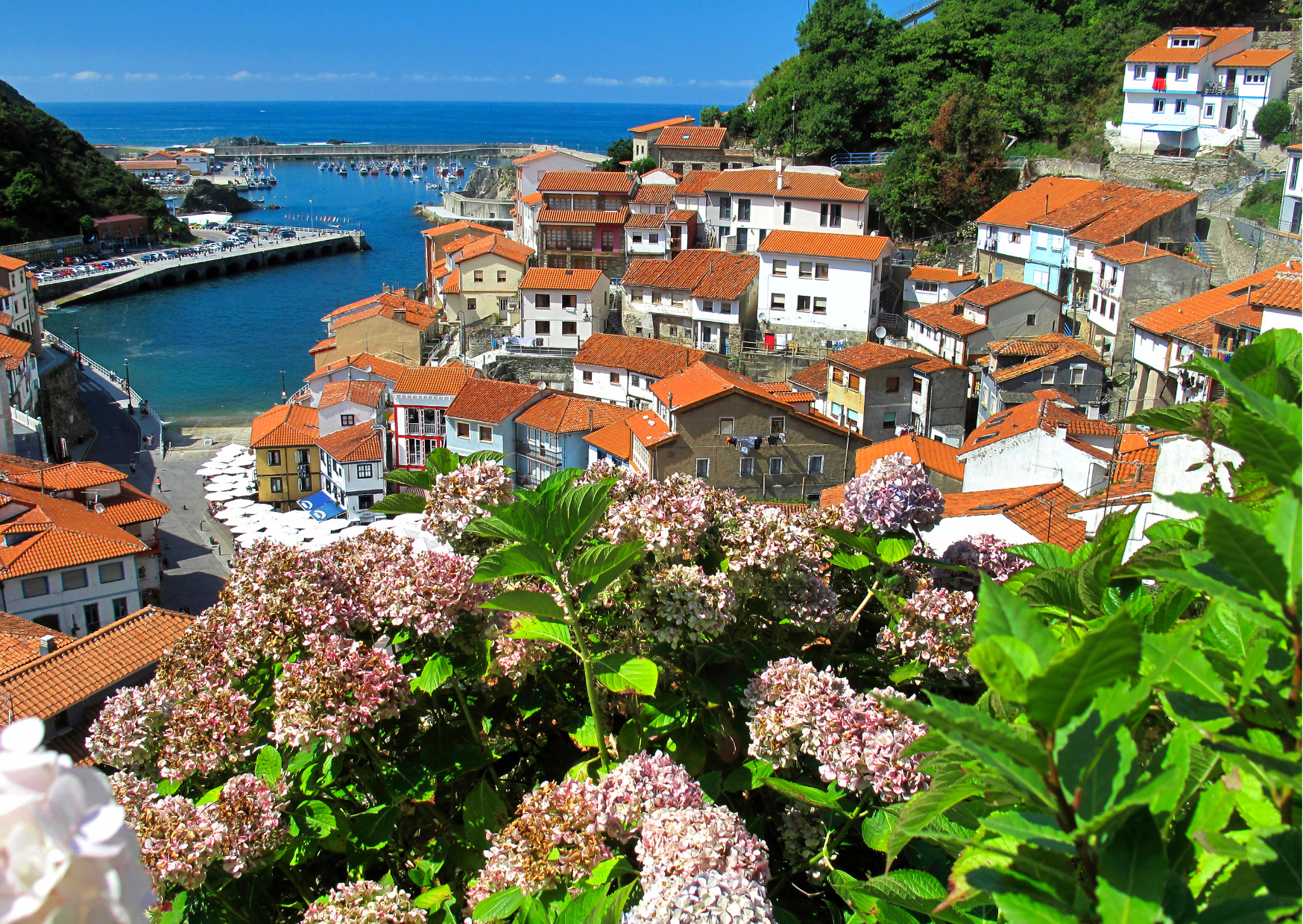
The cohort of Americans currently in Portuguese residency reconsidering Spain is not abandoning Portugal as a country. They are responding to a specific structural change in Portuguese citizenship policy that has eliminated the previous Portuguese advantage and forced a fresh comparison with the Spanish alternative.
The fresh comparison runs differently than the previous one. Spain is no longer the slower, more bureaucratic, less attractive option. Spain is the equivalent option on most dimensions, with specific advantages and specific disadvantages relative to the new Portuguese regime.
The Americans who switch are doing so on case-specific grounds, weighing language sunk cost, social fabric, financial constraints, dual citizenship preferences, and the specific cities they want to live in. The Americans who stay are doing so on different case-specific grounds, weighing the same factors with different weights.
For Americans considering European relocation in 2026 and beyond, the comparison between Portugal and Spain is now a meaningful one rather than the one-sided comparison it was three years ago. The Portuguese advantages that drove the previous American shift toward Portugal have been substantially eliminated, and Spain has emerged as a legitimate competitor on most dimensions.
The reconsideration is real, the cohort doing it is meaningful, and the comparison going forward will run on the actual specific factors rather than on the old assumption that Portugal is the obvious choice. The old assumption no longer applies. The new comparison is open.
For Americans currently in Portugal weighing the switch, the decision is genuinely difficult and depends on factors specific to each situation. For Americans not yet in Europe but considering the move, the comparison should be done fresh, with Spain as a serious option rather than as the slower alternative it used to be.
The previous decade favored Portugal. The next decade may not. The reconsideration is the cohort’s response to the new structural reality, and the cohort is right to be doing it.

About the Author: Ruben, co-founder of Gamintraveler.com since 2014, is a seasoned traveler from Spain who has explored over 100 countries since 2009. Known for his extensive travel adventures across South America, Europe, the US, Australia, New Zealand, Asia, and Africa, Ruben combines his passion for adventurous yet sustainable living with his love for cycling, highlighted by his remarkable 5-month bicycle journey from Spain to Norway. He currently resides in Spain, where he continues sharing his travel experiences with his partner, Rachel, and their son, Han.