
The Wisconsin couple in their mid-sixties, considering whether to retire to Florida or to the Algarve, is a small but documented pattern that has been gaining strength since 2022.
The math drives most of it. Florida real estate appreciated significantly between 2020 and 2024, and the property tax, insurance, and HOA fees that come with the Florida retirement model have climbed faster than Social Security adjustments. The Wisconsin retiree looking at a Florida condo in 2024 was looking at a different set of numbers than the same retiree looking at the same condo in 2018. The Algarve, by comparison, was looking like the better deal even with the relocation friction factored in.
The Wisconsin retirees who made this comparison and chose the Algarve in 2024 are now at the 18-month mark. The cost structure has stabilized. The decisions made early have been tested. The math has been tested against actual conditions, including the Algarve cost increases that have been pricing out lower-asset retirees. What follows is what the monthly costs actually look like for these couples after 18 months, in the Algarve towns they tend to choose.
The starting position for these couples is different from the lower-asset profiles covered in earlier pieces. They typically arrive with $400,000 to $700,000 in combined assets, both Social Security streams either already active or close to it, and often the proceeds of a Wisconsin home sale that adds another $200,000 to $400,000 in liquid capital. The total available capital is in the 600,000 to 1.1 million range. This is not the tight-budget end of the American retirement distribution. This is the comfortable middle, choosing between two reasonable options and picking the international one.
Why These Couples Chose Portugal Specifically

The Wisconsin-to-Florida pipeline is well established. Florida has been the snowbird and full-retirement destination for upper midwesterners for decades. The infrastructure, the social networks, the cultural familiarity all favor Florida for this kind of retiree.
The Wisconsin retirees who chose the Algarve over Florida did so for specific reasons that are worth naming, because the reasons predict who will continue making this choice in 2026 and 2027.
The Florida cost structure has compressed the value proposition. A Florida condo in The Villages, Sarasota, or Naples that ran 250,000 to 350,000 in 2018 now runs 400,000 to 600,000. Property taxes have climbed. HOA fees have climbed. Hurricane and flood insurance has climbed dramatically, with some condo associations facing assessment crises that have pushed monthly fees from 400 to 1,200 or higher. The Florida retirement that looked like a comfortable middle-class option in 2018 looks like an upper-middle-class option in 2026.
The healthcare cost differential is meaningful. A Wisconsin retiree on Medicare will have similar Medicare costs in Florida as in Wisconsin. But the supplemental insurance, the out-of-pocket costs, the prescription costs, and the dental and vision costs run high in Florida and have been rising. The same retiree in Portugal, accessing the public health system after qualifying, faces a meaningfully lower healthcare cost baseline.
The food and lifestyle quality is a real factor. Wisconsin retirees who like to cook, who like to walk, who like Mediterranean diet patterns, who want walkable towns rather than car-dependent suburbs, find Portugal delivers what Florida does not. The Florida retirement model is largely golf-and-condo. The Algarve retirement model is walking-and-cooking. People who prefer the second model have limited options in Florida and find the Algarve a better fit even at the relocation cost.
The political and cultural friction in some parts of Florida has become a factor that midwestern retirees mention more openly than they did five years ago. The couples moving to the Algarve are not exclusively driven by this, but it is a contributing factor for many of them.
These factors compound. The Wisconsin retiree who would have chosen Florida in 2015 increasingly chooses Portugal in 2024 and 2025, and the volume is large enough that real estate brokers in the Algarve report the Wisconsin and Minnesota midwesterner as a recognizable customer profile.
Where These Retirees Land In The Algarve

The Wisconsin couple at this asset level usually lands in the central or eastern Algarve. The western Algarve (Lagos, Sagres, Vila do Bispo) has gotten too expensive even at this asset level.
The current settlement pattern clusters in three areas. Tavira and the surrounding villages in the eastern Algarve, which retain some of the affordability the western Algarve has lost. Olhão, the working fishing town that has been gentrifying through the late 2010s and 2020s, where Wisconsin couples get ocean access and authentic Portuguese daily life at a meaningful discount. Smaller inland towns like São Brás de Alportel, where they get a 30 to 40 percent rent reduction in exchange for needing a car for beach access.
A few couples land in Faro, the regional capital, which offers more urban infrastructure but less of the small-town feel many of them moved for. A few choose Albufeira despite the tourist density, usually because of specific properties or family connections.
Couples who insist on the western Algarve at this asset level get squeezed. Lagos has moved into the 1,800 to 2,400 euro per month rental range for the kind of apartment most of them want. Olhão equivalent runs 950 to 1,300. Tavira runs 1,100 to 1,500. The eastern and central Algarve choices preserve the lifestyle and the budget. The western Algarve choices preserve the lifestyle and pressure the budget.
The Monthly Cost Structure At Month 18
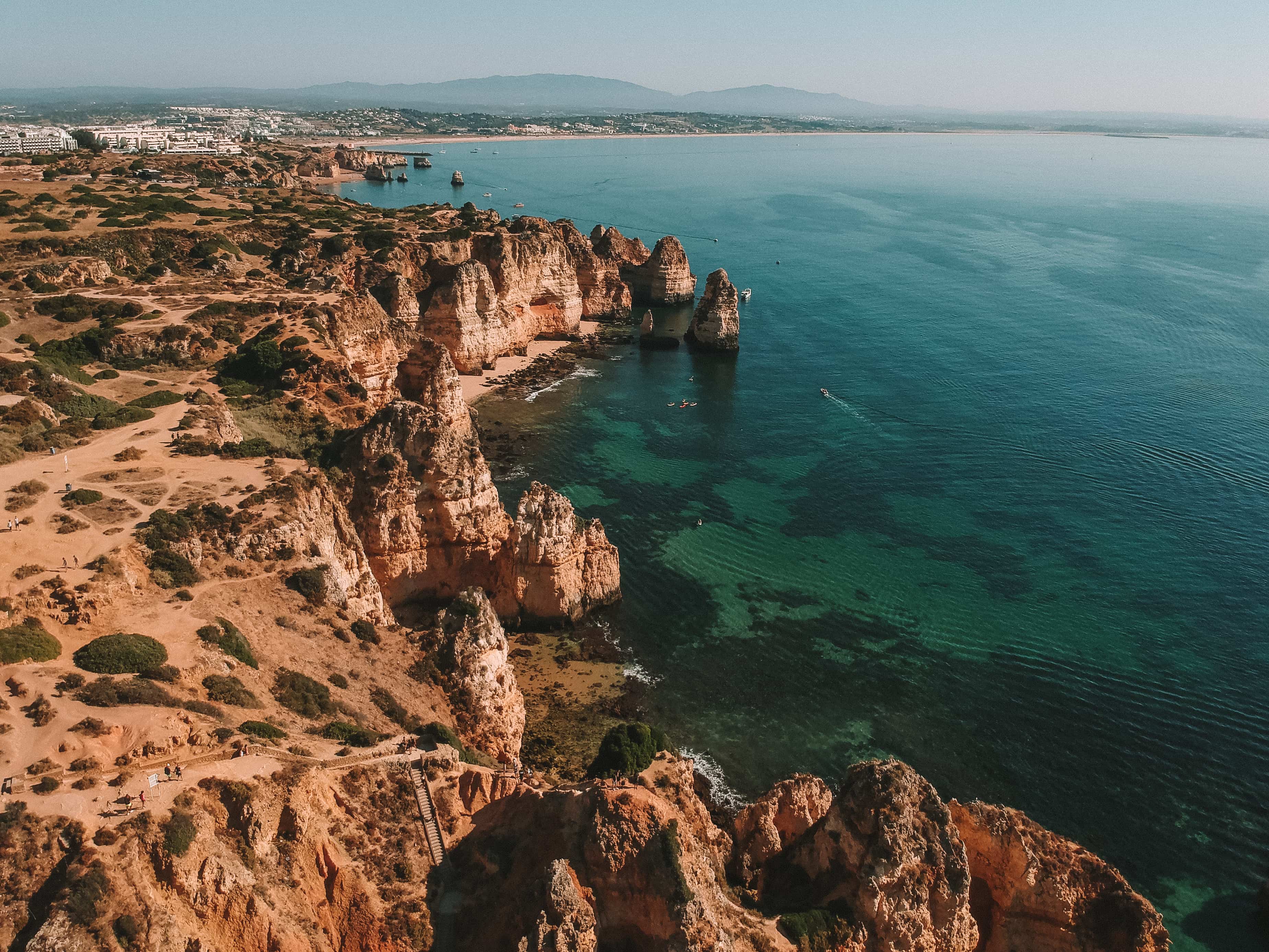
The numbers below are a working monthly budget for a Wisconsin couple in this kind of retirement, in Tavira, after 18 months. Olhão runs slightly lower. The smaller inland towns run 15 to 20 percent lower. Western Algarve equivalents run 25 to 35 percent higher.
Housing: 1,200 to 1,500 euros per month.
A two-bedroom apartment or small townhouse in central Tavira runs 1,100 to 1,400 euros. A nicer two-bedroom in a newer building or with a sea view runs 1,400 to 1,700. Most settle in the 1,200 to 1,500 range, in apartments or small houses that are comfortable, well-located, and adequate for two people without being notable. Utilities (electricity, water, gas) add 130 to 200 euros depending on the season. Air conditioning use in summer pushes summer months to the high end.
The couples who purchased rather than rented are in a different financial position. A purchase price for an equivalent property in Tavira runs 350,000 to 500,000 euros. Buying outright eliminates the rent line but adds property tax (modest in Portugal, 200 to 600 euros annually for typical properties), maintenance, and the opportunity cost of the capital. The rent-versus-buy math is genuinely close at this asset level, with rental usually winning for the first three to five years and purchase pulling ahead after that.
Health insurance: 180 to 280 euros per month.
For a couple in their mid-sixties, private supplemental insurance after public system qualification runs about this range. Most maintain private insurance throughout, even after qualifying for the public system, because it provides faster specialist access. Some couples on Medicare also maintain a US-side Medicare Advantage or Medigap plan for emergencies during US visits, adding another 200 to 400 monthly to the total.
Groceries: 500 to 700 euros per month.
Couple-level groceries in a Portuguese town run meaningfully below US levels for produce, fish, bread, and dairy. The standard pattern is shopping at a mix of the larger supermarkets, the local mercado, and the weekly outdoor market for fresh produce and fish. Wine adds 60 to 120 euros depending on consumption. Couples who cook Mediterranean-style find the grocery bill reasonable. Those who import American products find it less so.
Eating out: 250 to 450 euros per month.
Wisconsin couples eat out more than the lower-asset teacher pieces describe but less than the higher-asset Algarve retirees. Tavira restaurants run 12 to 18 euros for a casual lunch, 20 to 35 euros for a sit-down dinner, 40 to 65 euros per person for the better restaurants. The typical pattern is two to three casual lunches out per week, plus one or two evening meals out per week. The total comes to 250 to 450 euros depending on the restaurant choices.
Transportation: 200 to 400 euros per month.
Most own a car. A small used vehicle (8,000 to 15,000 euros) is the standard purchase. Annual costs (insurance, maintenance, fuel, occasional repairs) average 200 to 350 monthly. Some couples maintain a second car for additional flexibility, which doubles this. The few who go carless typically live in central Tavira or Olhão where walking handles most needs and the train to Faro covers the rest.
Phone, internet, subscriptions: 90 to 140 euros per month.
Two Portuguese mobile plans plus home internet plus streaming services. Solid coverage at modest cost compared to the US baseline.
Personal, household, miscellaneous: 200 to 350 euros per month.
Toiletries, cleaning supplies, household items, occasional clothing, gym memberships if applicable, pharmacy items not covered by insurance, hair and beauty services, the standard couple-level personal spending.
Travel and weekend trips: 400 to 700 euros per month averaged.
This is the category where Wisconsin couples spend meaningfully more than the lower-asset retirees described in earlier pieces. Weekend trips to Lisbon, Sevilla, Madrid. Multi-week trips to other European countries. Annual flights back to the US for family visits, typically 1,500 to 3,000 euros per person per round trip from the Algarve. The averaged monthly figure captures the bigger trips taken every few months and the annual US visits.
Entertainment, hobbies, classes: 100 to 250 euros per month.
Golf membership for those who golf. Portuguese language classes for the first year or two. Cultural events, concerts, museum memberships. Hobby supplies for those who paint, garden, or write.
Buffer and irregular expenses: 150 to 300 euros per month averaged.
Unexpected costs, occasional larger purchases, dental work, gifts, charitable giving for couples that maintain US-side donations.
The Total Monthly Picture
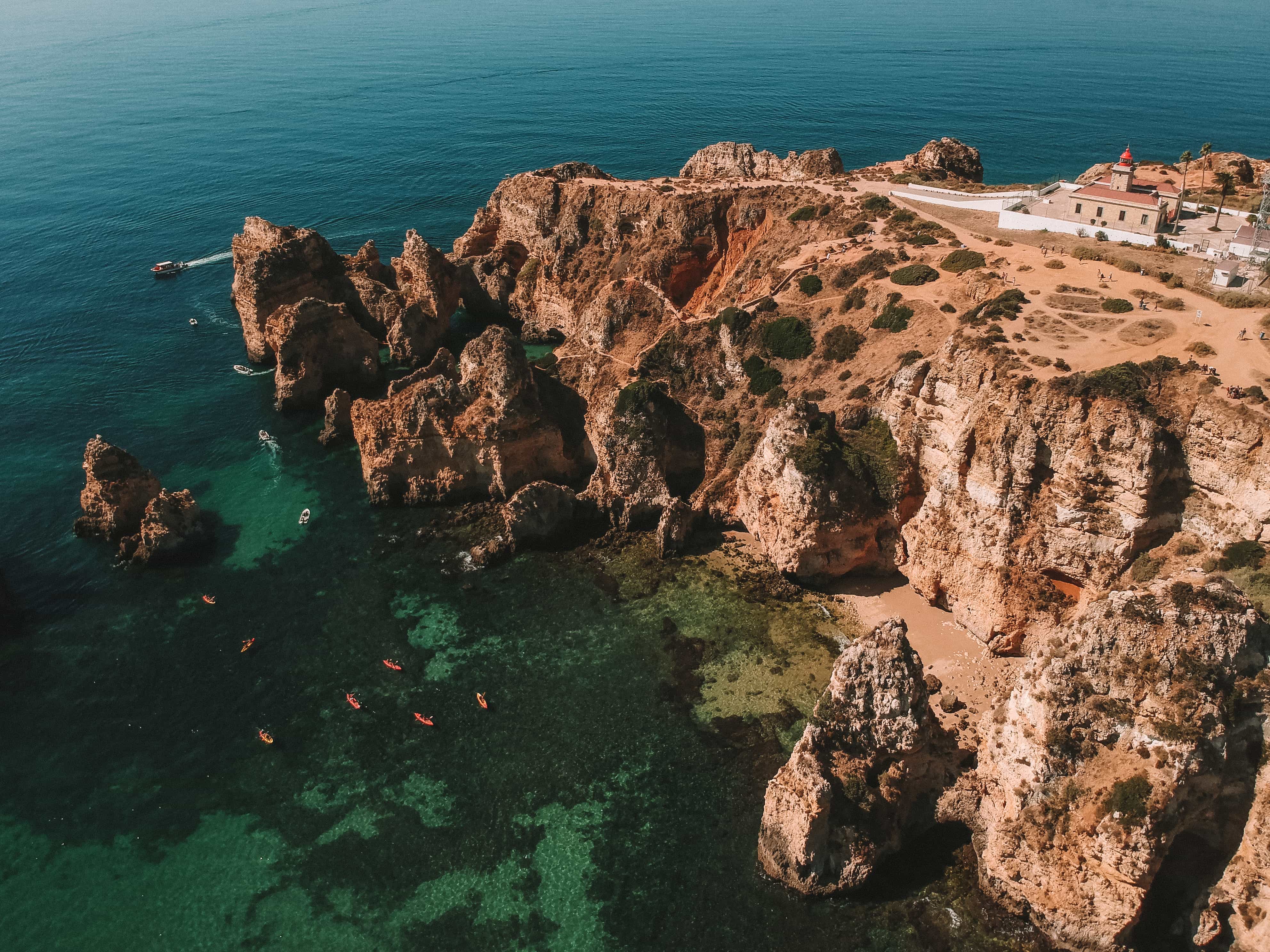
For Wisconsin couples in Tavira at the 18-month mark:
Lower end: roughly 3,300 to 3,600 euros per month. Middle: roughly 3,800 to 4,200 euros per month. Higher end: roughly 4,500 to 5,200 euros per month.
The monthly run-rate that typically settles by month 18 is 3,800 to 4,300 euros. At the current exchange rate, that is roughly $4,150 to $4,700 per month.
For comparison, the same couple’s projected Florida retirement budget for an equivalent lifestyle would have run $5,500 to $7,500 per month. The cost reduction is roughly 30 to 40 percent compared to Florida. The reduction compared to a Wisconsin retirement in place is smaller, around 15 to 25 percent, because Wisconsin is meaningfully cheaper than Florida already.
The Income Picture
The Wisconsin couple at this asset level typically arrives with stable monthly income that covers most or all of the budget without significant portfolio drawdown.
Combined Social Security: $3,500 to $5,200 per month, depending on individual earnings histories and claiming ages. Most claim Social Security between 65 and 67, which produces benefits in this range.
Pension income: variable. Some retirees at this profile have meaningful pension income from public sector or unionized private sector employment. Pensions can add $1,500 to $4,000 per month for those who have them. Many do not.
Portfolio drawdown: at 4 percent on $400,000 to $700,000, this produces $1,300 to $2,300 per month in supplemental income.
The combined income, with both Social Security streams active and modest pension income, runs $5,500 to $9,000 per month. This comfortably covers the 4,000 to 4,500 euro monthly budget, with meaningful savings or buffer remaining.
Couples bridging to Social Security at 65 (rather than 62 or 67) have a tighter early-year picture but stabilize once both streams activate. Those who delayed Social Security to 70 for the higher benefit have a tighter bridge period but end up in a stronger long-term position.
The First Year Setup Costs
The first-year setup is a one-time hit that Wisconsin couples plan for separately.
Apartment and household setup: 4,000 to 8,000 euros. Higher end than the lower-asset retirees in earlier pieces because the apartments are larger and more is needed. Two months rent as deposit. One month rent as agency fee. Furniture and household goods, often higher quality because the budget allows it.
Vehicle purchase: 8,000 to 18,000 euros. Small to mid-size used car. Some couples buy two cars, which doubles this.
Visa and immigration: 600 to 2,500 euros. D7 application for both partners, document apostilles, certified translations, immigration attorney fees if used. At this asset level, most use an attorney.
Health insurance setup year one: 2,000 to 3,500 euros. Required private insurance for both partners before public system eligibility.
Travel between US and Portugal during transition: 4,000 to 8,000 euros. Multiple flights for both partners during the year-long transition. US property closing trips, family visits during the move period, items shipped from the US.
Furniture, household goods, electronics: 3,000 to 7,000 euros. Beyond basic apartment setup.
Buffer for unexpected first-year costs: 5,000 to 12,000 euros. Higher than the lower-asset retirees because more is happening.
Total first-year setup: 26,000 to 59,000 euros. This is real money even at this asset level, and it draws from the available capital meaningfully. Most couples plan for 35,000 to 45,000 euros of setup spending in the first 12 to 14 months.
The Comparison To Florida At Month 18

Wisconsin couples who did the comparison and chose the Algarve over Florida are, by month 18, in a position to evaluate whether the choice paid off.
The financial comparison is the easier part. Florida monthly costs for an equivalent lifestyle in 2026 run $5,500 to $7,500 per month. The Algarve at month 18 is running $4,150 to $4,700. The monthly savings is $1,350 to $2,800, which over a 25-year retirement compounds to substantial sums.
The setup cost comparison is more complex. Florida requires a property purchase, which is typically $400,000 to $700,000 for the kind of property most Wisconsin couples want, plus closing costs, plus furniture and household setup. The Algarve setup runs $35,000 to $45,000 plus optional property purchase. The Algarve setup is dramatically lower if renting, which most do for at least the first three years.
The healthcare comparison favors the Algarve once the couple is integrated into the Portuguese system, but Medicare in Florida is already a strong baseline. The differential is meaningful but not transformative at this asset level, which differs from the lower-asset retirees in earlier pieces where the healthcare cost differential is decisive.
The lifestyle comparison is qualitative and varies by couple. Couples who prefer walking, cooking, slower pace, and Mediterranean climate consistently report the Algarve as a meaningful upgrade over Florida. Couples who prefer golf-and-condo, US cultural infrastructure, easy English everywhere, and tight social networks of similar Americans consistently report Florida as a better fit.
The travel optionality strongly favors the Algarve. European weekend trips, multi-week European travel, and the proximity to Spain, Morocco, and the rest of southern Europe is something Florida does not offer. Couples who value this find it meaningful enough to outweigh other considerations.
What These Couples Got Right
Wisconsin couples in the Algarve at the 18-month mark generally report satisfaction with the choice. The pattern is consistent.
The financial decision worked. The monthly costs are predictable and manageable within the available income. The portfolio is growing modestly, not shrinking. The bridge to fully-active Social Security and any remaining pension activations is clearing without strain.
The healthcare integration is satisfactory. The public system handles routine and most non-routine care. The private supplement provides faster specialist access. The total healthcare cost is meaningfully below the projected Florida cost.
The lifestyle delivers. The walking, the cooking, the markets, the Portuguese small-town texture, the Mediterranean climate are real and durable parts of the daily experience.
The social fabric is built. Couples who arrived in 2024 have had 18 months to integrate. Portuguese neighbors, expat friends, regular cafes, weekly markets, occasional invitations to local family meals. The fabric is not as dense as the Wisconsin life that was left, but it is meaningful and sufficient.
The travel optionality is exercised. Weekend trips happen. European multi-week trips happen. The European base produces travel possibilities that actually get used.
What Some Couples Got Wrong
A few patterns of regret are worth naming.
Some purchased property too quickly. Couples who bought in the first six months, before fully understanding the local market, often report buyer’s remorse. Either the location was wrong, the property had issues that emerged after move-in, or the purchase price was higher than necessary. Renting for the first 12 to 24 months produces better property decisions for those who ultimately want to buy.
Some underestimated the social adjustment for one partner more than the other. Couples often assume both partners will adjust at similar rates. In practice, one partner often adjusts faster and the other slower, and the slower-adjusting partner can experience meaningful loneliness or homesickness. The fix is deliberate effort to build social fabric for both partners separately, not just as a couple.
Some did not plan for US grandchildren visits adequately. Couples with grandchildren in the US underestimate the cost and frequency of US visits. Annual visits run 6,000 to 12,000 dollars per couple. Couples who want to see grandchildren twice yearly face a significant ongoing cost.
Some did not handle the US tax compliance well. US citizens abroad still file US tax returns annually and face complex compliance requirements including FBAR filings. Couples who did not engage a cross-border tax specialist often spend significant time and money sorting out compliance issues in years two and three.
Some underestimated winter heating costs. Algarve winters are mild compared to Wisconsin but Portuguese homes are poorly insulated. December through February heating costs run higher than the published averages suggest, and the indoor temperature is colder than US homes maintain. The first winter is uncomfortable for those who did not plan for it.
Seven Days Of Initial Setup
This is a starter sequence for the Wisconsin couple considering this kind of move.
Day 1. Run the comparison math against Florida. Use realistic Florida costs (property purchase plus monthly costs at current rates) versus realistic Algarve costs (rental plus monthly costs). The math should be transparent before any decision.
Day 2. Project the income picture across the next 25 years. Social Security claiming strategy, pension activation timing, portfolio drawdown sustainability. Identify the years that are tight and the years that are comfortable.
Day 3. Identify landing destination preferences. Tavira, Olhão, smaller inland alternatives. Visit before committing. Many couples do a 30 to 60 day reconnaissance trip before the actual relocation.
Day 4. Plan the rent-first strategy. Twelve to twenty-four months of rental before any property purchase decision. Use the rental period to confirm the destination.
Day 5. Engage a Portuguese immigration attorney and a cross-border tax specialist. Both are worth the cost at this asset level. The DIY approach that works at lower asset levels is usually a false economy here.
Day 6. Plan the US property situation. Sell, rent out, or maintain for visits. Each has implications for cash flow, tax exposure, and the practical experience of the relocation.
Day 7. Plan the social fabric development. Identify communities, classes, groups, or activities to engage with from the first month. Couples who plan social development from the start have easier first six months.
What Month 18 Recognizes
The Wisconsin couple at month 18 has the Algarve life. The financial picture is stable. The healthcare is integrated. The social fabric is built. The travel optionality is exercised. The Florida alternative is no longer the live comparison; the comparison now is whether to extend the lease again, buy a property, return to the US for some specific reason, or simply continue in the current configuration.
Couples who thrive arrived prepared, with adequate capital, with realistic expectations about the bridge years, and with willingness to engage Portuguese daily life rather than maintain a fully expat bubble. Couples who struggle usually arrived expecting a Wisconsin life with better weather and lower costs.
The math is workable at this asset level. The life is genuinely different from the Florida alternative. Wisconsin couples who chose the Algarve over Florida and are now at month 18 generally report the choice as right and continue the Algarve life rather than reverting.
For the next Wisconsin couple considering the same comparison, the financial template above is what 2026 actually looks like. The numbers are real. The structure holds. More midwestern retirees are running the comparison and finding the Algarve produces a better outcome than Florida at the available asset levels.

About the Author: Ruben, co-founder of Gamintraveler.com since 2014, is a seasoned traveler from Spain who has explored over 100 countries since 2009. Known for his extensive travel adventures across South America, Europe, the US, Australia, New Zealand, Asia, and Africa, Ruben combines his passion for adventurous yet sustainable living with his love for cycling, highlighted by his remarkable 5-month bicycle journey from Spain to Norway. He currently resides in Spain, where he continues sharing his travel experiences with his partner, Rachel, and their son, Han.