

The single male retiree profile in Barcelona, arriving with around $130,000 in total assets and modest Social Security or pension prospects, is a small but growing cohort within the broader American expat shift to Spain.
The math is tight. Tighter than most relocation content acknowledges. Barcelona is not the cheap Spanish option. It has not been the cheap Spanish option since 2017. The single man arriving at 57, with $130,000 and limited monthly income, is operating at the edge of what the city’s cost structure permits, and the first two years are where that edge becomes visible.
The cohort exists because Barcelona offers something the cheaper Spanish cities do not. Density, cultural infrastructure, walkability, healthcare access, and the kind of social environment that does not require speaking Catalan to function. For a single man in his late fifties without a partner, these matter more than the rent differential between Barcelona and Valencia or Málaga.
What follows is what the first two years actually cost for this profile, drawn from the financial patterns visible in this cohort. The numbers are real. The decisions are real. The trajectory is what most single male American retirees in Barcelona at this asset level go through.
The Math He Brought With Him
The arrival picture for this profile is not generous.
$130,000 in combined retirement and savings. No pension yet. Social Security claimed early at 62 will produce around $1,800 a month in five years, but at 57 there is no monthly guaranteed income. The portfolio has to carry everything.
A standard 4 percent withdrawal rate produces $5,200 a year, or about $430 a month. Barcelona’s cost of living for a single person in 2024 was running around 1,800 to 2,200 euros a month depending on neighborhood. The $430 monthly draw covers maybe 20 percent of that. The rest has to come from somewhere.
The Non-Lucrative Visa, which is the standard pathway for this cohort, requires demonstrated annual passive income at 400 percent of the IPREM, currently around 31,200 euros for a single applicant. A 4 percent withdrawal on $130,000 does not meet that threshold. The applicant must show either higher liquid assets, additional documented income, or both.
Most single men in this profile arrive with a workaround. Some have higher portfolio totals than the $130,000 figure suggests, with the difference held in formats they prefer not to draw down. Some show one-time lump sums in dedicated accounts to satisfy the consular requirement without committing to that withdrawal rate. Some arrive with rental income from a property held in the United States. Some have small consulting income that is technically prohibited under the Non-Lucrative Visa but is invisible from the consulate’s perspective.
The math the consulate sees is not the math the retiree actually plans to live on. This gap is structural to the cohort, and is one of the reasons the Non-Lucrative Visa is treated by some applicants as a documentation exercise rather than a genuine financial demonstration.
The First Six Months

The arrival period costs more than projected. This is universal for the cohort, and Barcelona makes it more expensive than most.
Initial rent in a small one-bedroom apartment in Eixample, Gràcia, or Sant Antoni runs 1,200 to 1,500 euros a month. The cheaper neighborhoods like Sants, Poble Sec, and the lower parts of Gràcia run 1,000 to 1,200. The single retiree at this asset level typically lands around 1,100 to 1,300, which is the low end of the livable range without venturing into the outer districts where the trade-offs in transit time and amenity access become significant.
Setup costs in the first month run 4,000 to 6,000 euros. Two months of rent as deposit. One month rent as agency fee. First-month furniture additions for an unfurnished or partially furnished apartment. Registration fees, NIE processing, padrón registration. The first health insurance premium. Setup utilities. None of this was on the original budget at this scale.
Health insurance for a single man at 57 runs 90 to 140 euros a month for a comprehensive private policy meeting Non-Lucrative Visa requirements. This is one of the better deals in European retirement. Spanish private insurance for this age group is competitive and the underwriting is reasonable. The same coverage in the United States would run three to five times higher.
Food costs settle at 350 to 450 euros a month for a single man cooking most meals at home and eating out three or four times a week. Barcelona’s grocery prices have risen since 2021 but remain meaningfully below US levels for produce, bread, wine, and basic staples. The Boqueria and the neighborhood markets are competitive with supermarket chains for fresh items.
Transit is 21 euros a month for the T-usual pass on Barcelona’s public transit network. The bonificación that previously made this even cheaper has narrowed since 2024 but remains one of the strongest urban transit values in Europe.
Initial monthly run-rate, after the setup costs work through, lands around 1,950 to 2,200 euros for the typical single retiree in this cohort. This is against essentially zero guaranteed income. The portfolio is bearing the entire cost, and at $130,000, the math gets uncomfortable quickly.
A 2,000 euro monthly draw works out to roughly $26,000 a year. On $130,000, that is a 20 percent withdrawal rate. The portfolio at this rate exhausts in roughly six years, before the retiree reaches Social Security age, and well before any reasonable expected longevity timeline.
This is the structural problem. The cohort knows it. The arrival is happening anyway.
The Year One Adjustment

The first year is the year the math gets confronted.
Most single men in this profile do one of three things during year one to address the unsustainability.
The first option is finding work. The Non-Lucrative Visa explicitly prohibits employment, and Spanish enforcement has been increasing. Some retirees in this cohort transition to the Digital Nomad Visa within the first year, which legalizes remote work for non-Spanish employers and allows a continuation of the residency. The transition requires documenting roughly 28,000 to 30,000 euros of annual remote income, which is achievable for some retirees with US contacts but not for all.
The second option is moving to a cheaper city. Barcelona is not the entry point for most single American retirees who plan to stay in Spain long-term at this asset level. Valencia, Málaga, Granada, Córdoba, and the smaller cities in Andalusia offer rent reductions of 30 to 50 percent compared to Barcelona, with comparable healthcare access and warmer winters. The retiree who arrives in Barcelona for the cultural fit often relocates to a cheaper Spanish city in year two or three after confirming the country works but the city does not.
The third option is drawing down at the unsustainable rate for as long as possible, on the bet that something will change. Social Security at 62. An inheritance. A US property sale. A relationship that absorbs some of the costs. The single man at 57 has five years until Social Security can be claimed, and many in this cohort run the math on a five-year bridge rather than a 30-year retirement.
The actual year-one financial picture for the typical single retiree in this profile, after settling in, looks like this.
Rent: 1,200 euros average across the year (initial higher, possibly settled lower with a roommate or move). Utilities and internet: 130. Groceries: 400. Eating out and bars: 250. Transit: 21 (T-usual pass). Health insurance: 110. Phone and subscriptions: 60. Personal, gym, miscellaneous: 200. Travel and weekend trips: 200 averaged across the year.
Total monthly: 2,571 euros. Annual: roughly 31,000 euros.
The 31,000 euro annual run-rate against a $130,000 portfolio is the four-year exhaust pattern. At this rate, without intervention, the portfolio funds the retirement until the retiree is 61, one year shy of Social Security eligibility. This is the bridge problem.
What Year Two Brings
By the end of year one, the typical single retiree in this profile has moved on the math in some direction.
The cohort that took the remote work route is now operating on the Digital Nomad Visa, with 25,000 to 40,000 euros of annual income flowing in from US clients. The portfolio draw has dropped to 5 to 10 percent of expenses rather than 100 percent. The bridge to Social Security becomes viable. The downside is that the retirement is no longer really a retirement. It is remote work in Barcelona, with Spanish residency benefits and a longer-term plan.
The cohort that moved to a cheaper city is now in Valencia or Málaga, paying 700 to 900 euros for a comparable apartment, with a monthly run-rate that has dropped to 1,800 to 2,000 euros. The portfolio still funds everything, but the exhaust window has extended from four years to seven or eight, which clears the bridge to Social Security with margin.
The cohort that stayed in Barcelona at the original asset level and the original draw rate is now visibly more strained. The portfolio is at roughly $100,000 to $105,000 by the end of year two. The remaining bridge to Social Security is three years. The math works only if no major unexpected expense appears, and if Social Security at 62 produces roughly the projected $1,800 a month, which combined with continued portfolio draw at a reduced rate maintains the cost baseline.
This third path is the highest-risk path. It requires no health emergencies, no portfolio shocks, no major unanticipated costs. The single man at 57 with $130,000, staying in Barcelona at the original cost structure, is running on a thinner margin than most relocation content acknowledges.
The Specific Costs Of Single Male Life In Barcelona

A few cost categories are specific to this profile and worth noting.
Social life carries a real cost. Barcelona has an active expat scene, particularly through groups like Internations, Meetup, and various American expat associations in Catalonia. Participation in this scene typically runs 200 to 400 euros a month in event fees, drinks, dinners, and weekend trips. The single retiree who skips this scene saves money but loses the primary social entry point in the city. The trade-off is real.
Dating in your fifties in Barcelona is feasible but not free. Spanish dating norms include more meals out, more wine, and more weekend events than the equivalent American norms. The single male retiree who is dating actively spends 200 to 500 euros a month above his base costs. This is not a complaint. It is a budget line that does not appear in most relocation content because most relocation content is written by or for couples.
Gym and fitness costs are reasonable. A standard Spanish gym membership runs 30 to 60 euros a month. The municipal sports facilities are even cheaper. CrossFit and specialty fitness run higher but are still 60 to 90 percent of equivalent US prices.
Travel within Spain is genuinely cheap. Renfe AVE high-speed trains to Madrid, Sevilla, and Valencia are competitive with European budget air travel and faster city-center to city-center. The weekend trips that European retirement is partly about cost 80 to 200 euros all-in.
Healthcare access is good once integrated. The Spanish public health system, after eligibility through PUMA-equivalent processes, provides high-quality primary and specialist care at minimal cost. The wait times for non-urgent specialists can run two to four months, which is the trade-off. The private insurance kept as a supplement runs 80 to 110 euros a month and provides access to specialists within days rather than months.
Apartment quality varies sharply by price band. The 1,000 euro apartment and the 1,400 euro apartment in Barcelona are often dramatically different in light, ventilation, noise insulation, and whether the elevator works. The single retiree who optimizes too aggressively on rent often ends up in an apartment that produces real quality-of-life problems, particularly noise from streets, neighbors, and aging building infrastructure.
What The Second Year Numbers Look Like
The single retiree in this profile, by the end of year two, has typically settled into one of the three trajectories described above.
The remote work trajectory, which is the most common solution, produces a stable financial picture. The Digital Nomad Visa allows continued residency. The income from US clients runs 30,000 to 40,000 euros annually. The expense baseline of 30,000 euros is now sustainable. The portfolio is preserved or even growing modestly. Spanish taxes apply to the remote work income, but the structure remains workable for most in this cohort.
The relocation-to-cheaper-city trajectory produces a different picture. Living in Valencia, the retiree has reduced monthly costs to roughly 2,000 euros. The portfolio at $100,000 to $110,000 (after year-one Barcelona costs) now extends seven to eight years at the lower cost structure, which clears the bridge to Social Security.
The stayed-in-Barcelona-at-original-costs trajectory is the most fragile. The portfolio at the end of year two is around $100,000. The monthly burn remains roughly 31,000 euros annually. The bridge to Social Security at 62 is three years. The math survives only if nothing significant goes wrong, which is a thin margin for a five-year retirement plan.
The data from the cohort suggests roughly 50 percent take the remote work route, 30 percent relocate to a cheaper Spanish city, and 20 percent stay in Barcelona on the unsustainable trajectory. The 20 percent who stay are typically those with hidden additional resources (family money, anticipated inheritance, US property sale planned), or those who are less risk-averse about the math than the situation calls for.
What The Cohort Got Right
The single retiree in this profile, despite the financial tightness, generally does not regret the move.
The reasons are not financial. They are structural.
Barcelona at 57 produces a different daily life than the equivalent American city at 57. The walking. The density. The cafes. The strangers who become acquaintances through repeated low-stakes interactions. The Spanish cities are good places to be a single man in your late fifties in ways that American cities are increasingly not. The social isolation that affects many American men in this age group is partially addressed by the urban environment alone.
The food is good. Cooking with Mediterranean ingredients at Mediterranean prices produces a daily eating experience that most American retirees in this cohort describe as a real upgrade over their previous baseline.
The healthcare is reassuring. Knowing that a serious health event will not produce financial catastrophe is a meaningful psychological shift for an American who has spent his working life adjacent to the US healthcare cost structure.
The cultural environment matters. Barcelona has world-class art, music, theater, and sports infrastructure. The single retiree who engages with this environment, even modestly, finds his cultural baseline meaningfully elevated compared to most US cities.
The travel optionality is real. The ability to spend a weekend in Sevilla, a week in Lisbon, a long weekend in Berlin, on a budget that would not cover a single domestic US trip, expands the felt scope of life.
The decision to move is generally correct for this cohort. The financial premise is partially fragile, and the corrections required are real. Both can be true simultaneously.
What The Next Single Man Should Know

The next single American male retiree considering Barcelona at 57 with $130,000 should know several things the relocation content tends to glide over.
Barcelona is not a feasible long-term retirement destination at this asset level without supplemental income. The math does not work without remote work, eventual Social Security, or significantly lower cost structures than Barcelona provides. The Tennessee couple math does not transfer to single-male Barcelona math.
The Non-Lucrative Visa pathway has real friction at this asset level. The 31,200 euro income demonstration requirement is structured for higher-asset retirees. Workarounds exist but they create paper trails that may not survive renewal scrutiny over multiple years.
The Digital Nomad Visa is the realistic pathway for retirees in this profile who plan to maintain Barcelona as a base. Maintaining 28,000 to 30,000 euros of annual remote income is not retirement in the traditional sense, but it is the structure that makes the city financially sustainable.
Cheaper Spanish cities preserve the country and lose the city. Valencia and Málaga are excellent in their own right, but they are not Barcelona. The single retiree who chooses Barcelona for specific Barcelona reasons (architecture, cultural density, dating pool, English-speaking expat scene) does not always find those reasons replicated in cheaper destinations.
The bridge to Social Security at 62 is the central planning frame. The five years between 57 and 62 are the critical period. The retiree who clears that bridge with portfolio intact has a sustainable second act. The retiree who burns through portfolio in those five years is in a different and harder situation at 62.
The non-financial benefits are real but they do not pay rent. The food, healthcare, walkability, and cultural access are genuinely better than the equivalent US baseline. They do not change the math. The math has to work on its own terms, and at $130,000 in Barcelona, it works only with intervention.
Seven Days Of Initial Setup For This Profile
This is a starter sequence for the single retiree considering Barcelona at this asset level. The aim is to confront the math before relocation rather than after.
Day 1. Calculate the actual monthly cost structure. Use 2,000 to 2,400 euros as a working assumption for Barcelona. Do not optimize below this without evidence.
Day 2. Calculate the portfolio runway. At the projected monthly cost, divided into available portfolio, identify the months until exhaustion at zero income. For $130,000 at 2,200 euros monthly, this is approximately 54 months or 4.5 years.
Day 3. Identify the bridge to Social Security. Years until Social Security at 62 minus portfolio runway in years equals the gap. A negative gap (runway exceeds bridge) means the portfolio bridges to Social Security. A positive gap means supplemental income is required.
Day 4. Evaluate remote work feasibility. Determine whether 25,000 to 35,000 euros of annual remote income is realistic from existing professional contacts. If yes, the Digital Nomad Visa pathway becomes the working plan. If no, a cheaper Spanish city becomes necessary.
Day 5. Compare cheaper Spanish city options. Valencia, Málaga, Granada, Sevilla, and Córdoba all reduce the monthly run-rate by 25 to 40 percent compared to Barcelona. Identify which trade-offs are acceptable.
Day 6. Stress-test the plan against shocks. A serious health event. A major US property sale fall-through. A 20 percent portfolio drop in year one. A failed Social Security application. Plan for at least one of these to occur.
Day 7. Make the structural decision. Barcelona with remote work. Cheaper Spanish city with portfolio bridge. Stay in the United States with a different plan. Each is a coherent strategy. The unconstrained Barcelona retirement at this asset level is not.
What The First Two Years Recognize
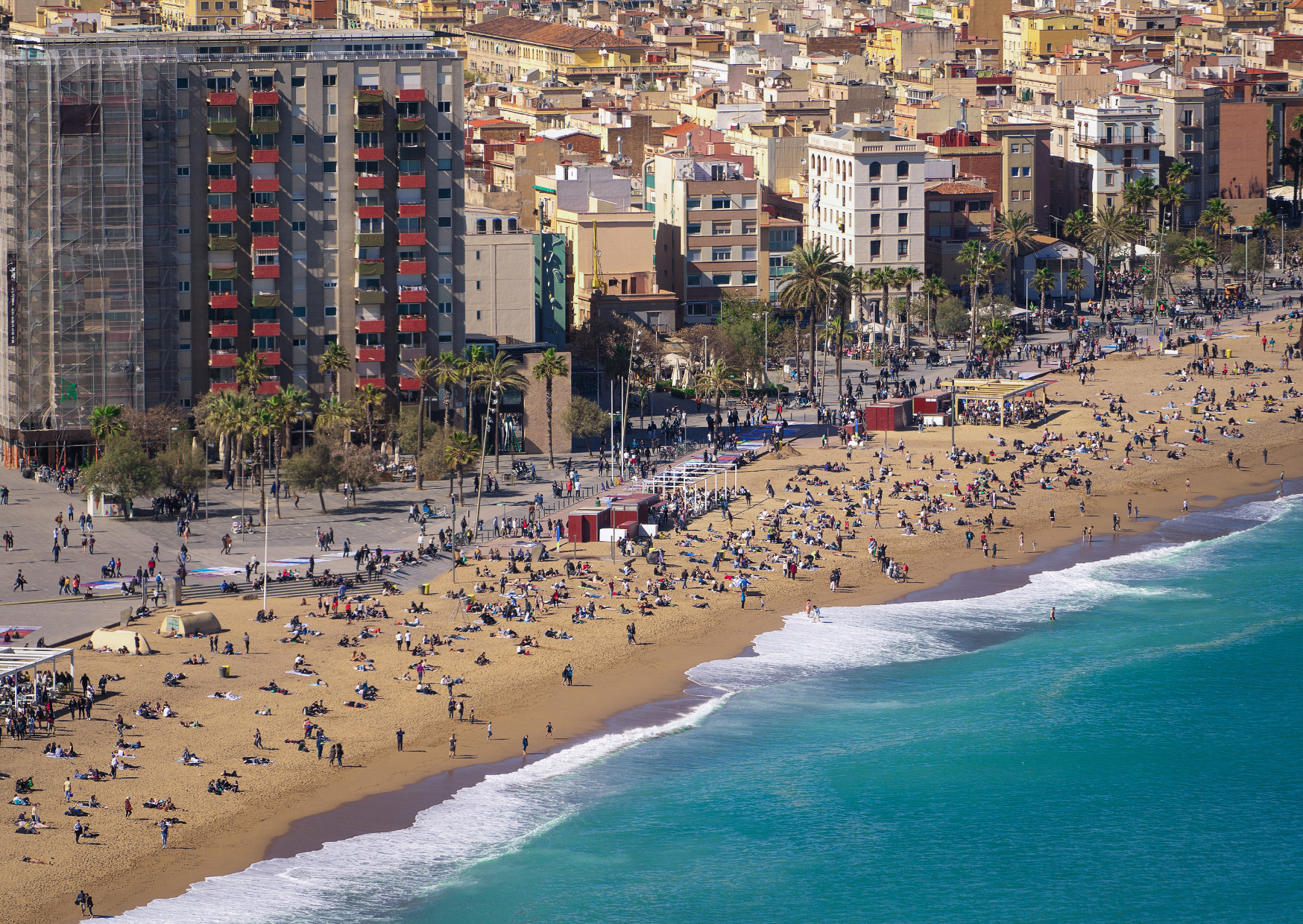
The single retiree in this profile, two years in, has confronted the math that the relocation marketing did not emphasize.
He has either solved it through remote work, relocated to a cheaper city, or is running on borrowed time toward Social Security. He has built some social fabric. He has integrated into the healthcare system. He has tasted the daily life that drew him to Spain in the first place, and he has confirmed that the daily life is real even when the financial structure is fragile.
The two-year mark is where the structural decisions get made. The retiree who does not make them by month 24 is generally in trouble by month 36. The cohort that thrives is the cohort that confronts the math early and adjusts.
The next single American man considering this move should know it is possible. It is possible at $130,000 only with intervention. The Spanish life is available. The Barcelona life is available, conditionally. The unconstrained Barcelona retirement at this asset level is not. The cohort that succeeds is the cohort that designs around the constraints, and the cohort that struggles is the cohort that arrives without acknowledging them.
Two years in, the typical single retiree in this profile is making it work. The portfolio is preserved or supplemented. The lifestyle is real. The decisions ahead are about renewal, about Social Security timing, about whether to move within Spain or stay where he is. The decisions are real decisions, not crisis responses, and that is the marker of a successful first two years for this cohort.
The math is tight. The life is good. Both have to be true for the move to make sense, and for most in this cohort at the two-year mark, both are.

About the Author: Ruben, co-founder of Gamintraveler.com since 2014, is a seasoned traveler from Spain who has explored over 100 countries since 2009. Known for his extensive travel adventures across South America, Europe, the US, Australia, New Zealand, Asia, and Africa, Ruben combines his passion for adventurous yet sustainable living with his love for cycling, highlighted by his remarkable 5-month bicycle journey from Spain to Norway. He currently resides in Spain, where he continues sharing his travel experiences with his partner, Rachel, and their son, Han.