
Most people think of dementia as a disease of memory, something that announces itself when a person starts forgetting names, losing words, or repeating questions, and they assume that memory is where the first signs will appear. But a growing body of research points to a stranger and earlier warning sign, one that has nothing to do with memory at all: the sense of smell. Years before the memory begins to slip, often a decade or more, many people who will go on to develop Alzheimer’s disease or Parkinson’s show a measurable decline in their ability to smell, and a simple smell test can pick it up. It is one of the most intriguing findings in the study of aging brains, that the nose may know something is wrong long before the mind shows it.
This matters because so much of what we can do about brain aging depends on catching changes early, and a quiet loss of smell is the kind of thing that slips by unnoticed for years. It is important to say immediately and clearly, though, that losing your sense of smell does not mean you are developing dementia, because the great majority of smell loss has ordinary, harmless causes, and this is emphatically not a test you can run on yourself to diagnose anything. Here is what the smell-and-brain connection actually is, why the nose is linked to the aging brain, what the research shows, what a smell test does and does not tell you, and how to think about it sensibly. This is general health information and is not medical advice, a screening tool, or a diagnosis.
Why Smell Is Tied to the Brain
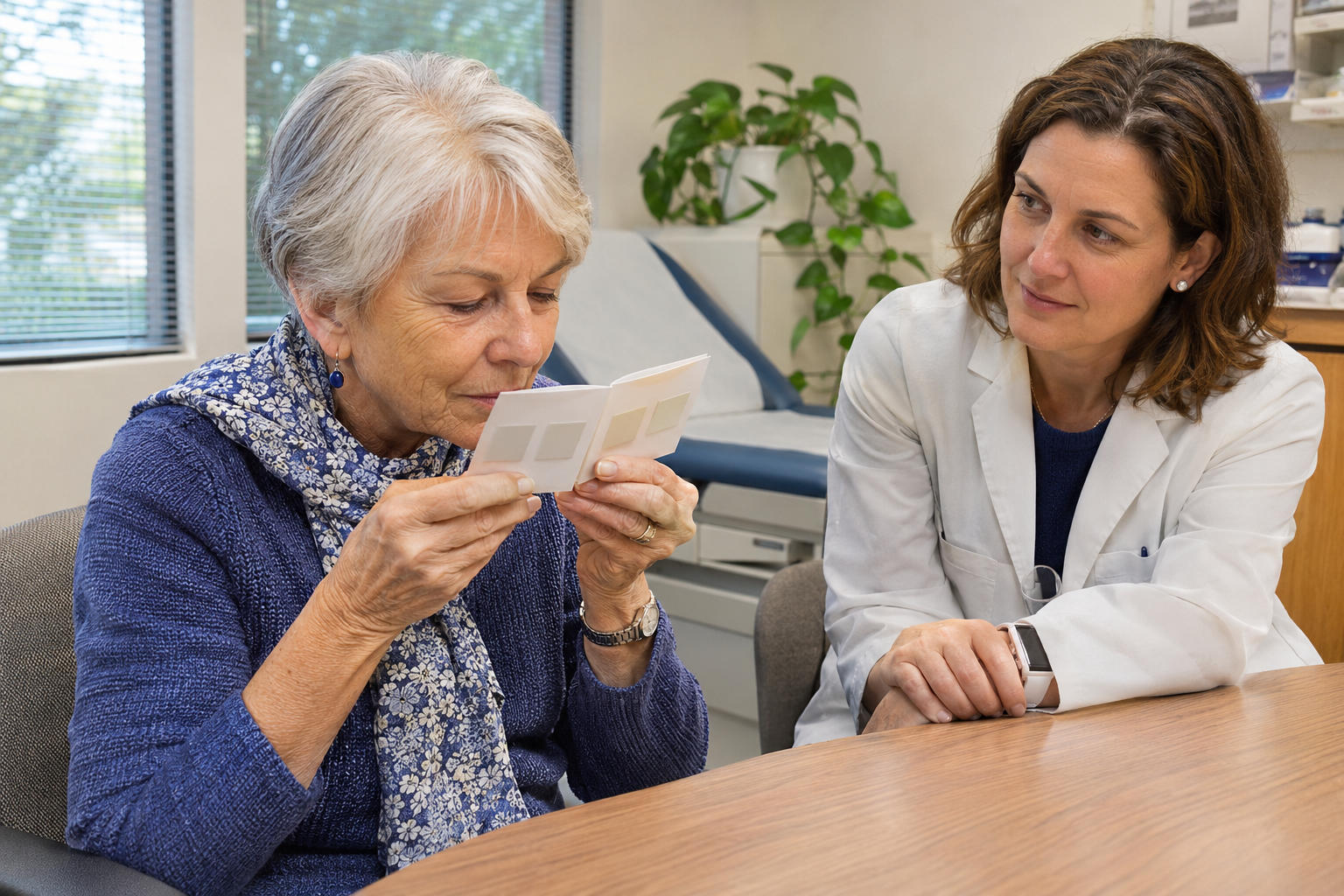
The connection between smell and the brain is not a coincidence, and understanding the anatomy makes the finding far less mysterious. The sense of smell is unusual among the senses in how directly it connects to the brain, with the olfactory nerves running straight into regions deep in the brain that handle smell, memory, and emotion, with fewer of the relay stations that other senses pass through. This direct wiring means that smell is, in a sense, a close neighbor of the brain’s memory machinery, sharing territory with the very structures that dementia attacks.
Crucially, some of the brain areas involved in processing smell are among the first to be affected by the changes of Alzheimer’s and Parkinson’s disease, which begin their damage years before symptoms appear. Because the smell-processing regions lie early in the path of the disease, the sense of smell can be degraded before the damage spreads to the areas that govern memory and thinking, which is why a decline in smell can act as an early signal. The disease, in effect, reaches the nose’s territory before it reaches the memory’s, and so the loss of smell can come first.
This is the biological reason the finding holds up rather than being a mere statistical curiosity, because there is a clear mechanism behind it. The olfactory system is not randomly associated with dementia, it is anatomically entangled with the brain regions the disease strikes early, so a change in smell reflects a change in exactly the kind of brain tissue that matters. That is what makes researchers take the smell signal seriously, and what distinguishes it from the many spurious health correlations that do not survive scrutiny. The nose is connected to the brain in a way that makes it a plausible early witness.
What the Research Shows

The research on this has accumulated over years and points consistently in the same direction, that declining smell is associated with higher risk of later cognitive decline and dementia. Large studies following older adults over time have found that those with a poorer sense of smell, measured by formal smell tests, are more likely to go on to develop dementia, and that a rapid decline in the ability to smell is a particularly notable signal. Researchers have also linked poorer smell to smaller volumes in brain regions tied to Alzheimer’s, reinforcing the connection between the nose and the disease process.
The striking feature is the timing, because the smell changes can precede the memory symptoms by a long margin, often years and sometimes a decade or more, placing olfactory decline among the earliest detectable signs. This is what gives the smell test its appeal as a potential early warning, the possibility of flagging risk while the person still seems cognitively well, during the long silent phase when the disease is developing but has not yet surfaced as forgetfulness. An early window like that is valuable precisely because it opens before the obvious symptoms do.
It is important to frame this accurately, though, as a matter of risk and association rather than certainty. A poorer sense of smell raises the statistical likelihood of later cognitive decline across a population, but it does not mean any given individual with reduced smell will develop dementia, and many people with diminished smell never do. The research establishes smell as a useful marker that tends to travel with elevated risk, a signal worth studying and, in the right hands, worth acting on, not a verdict on any one person’s future. The science is genuinely interesting, and it is also genuinely probabilistic, and both things are true at once.
What a Smell Test Actually Is

The smell tests used in this research are more formal than sniffing a flower, and knowing what they involve removes some of the mystique. The best known is a scratch-and-sniff identification test, in which the person is presented with a series of standardized odors and asked to identify each from a set of choices, with the score reflecting how many they correctly recognize. Another common research tool uses pens or sticks impregnated with different scents in the same way. These tests measure not just whether you can detect a smell but whether you can identify it, which is the ability that tends to decline with the relevant brain changes.
What these tests capture is a person’s olfactory function against a standardized scale, allowing researchers and clinicians to compare an individual’s smell ability to what is normal for their age and to track changes over time. A low score, or a score that has dropped notably since a previous test, is the kind of result that draws attention, because it is the pattern associated with elevated risk. The test is objective and repeatable, which is what makes it useful in research, as opposed to a vague personal sense that one’s smell might be fading.
This is also why the smell-and-dementia link is not something you can properly assess at home with a casual self-check, because the signal lives in standardized testing interpreted against norms and over time, not in a one-off impression. Noticing that a candle seems less fragrant than it used to is not a smell test in the research sense, and reading meaning into such impressions is exactly the kind of self-diagnosis that leads to needless worry or false reassurance. The formal test exists for a reason, and the finding belongs to that formal context, in the hands of people trained to interpret it.
The Caveat That Matters Most

Here is the single most important thing in this whole piece, the point that must not be lost: most loss of smell is not dementia, and has perfectly ordinary, often temporary, causes. A great many things dull or remove the sense of smell, including common colds and sinus infections, nasal congestion and allergies, nasal polyps, head injuries, smoking, a long list of medications, and, very prominently in recent years, viral infections such as COVID-19, which has left many people with lingering smell loss entirely unrelated to any brain disease. Smell also tends to fade somewhat with normal aging on its own.
Because the ordinary causes are so common, a reduced sense of smell is far more likely to reflect one of them than to signal anything about dementia, and jumping from smell loss to fear of dementia is both statistically wrong and needlessly frightening. The research finding is about patterns across populations and about smell decline interpreted in context, not about any individual noticing their smell is off and concluding the worst. If you have lost your sense of smell, the overwhelming probability is that the reason is something benign and often treatable, and the responsible first thought is a stuffy nose or a medication, not a neurological disease.
This is why the smell test, for all its scientific interest, is not a self-diagnosis tool and should never be treated as one. Smell loss is a signal that can mean many things, the large majority of them harmless, and only a doctor can sort out what any particular case reflects, after considering the whole picture. The finding is a reason for researchers and clinicians to pay attention to olfactory changes, not a reason for anyone to panic over a dull nose, and holding that distinction is essential to using the information well rather than being harmed by it.
What It Is Good For, and What It Is Not
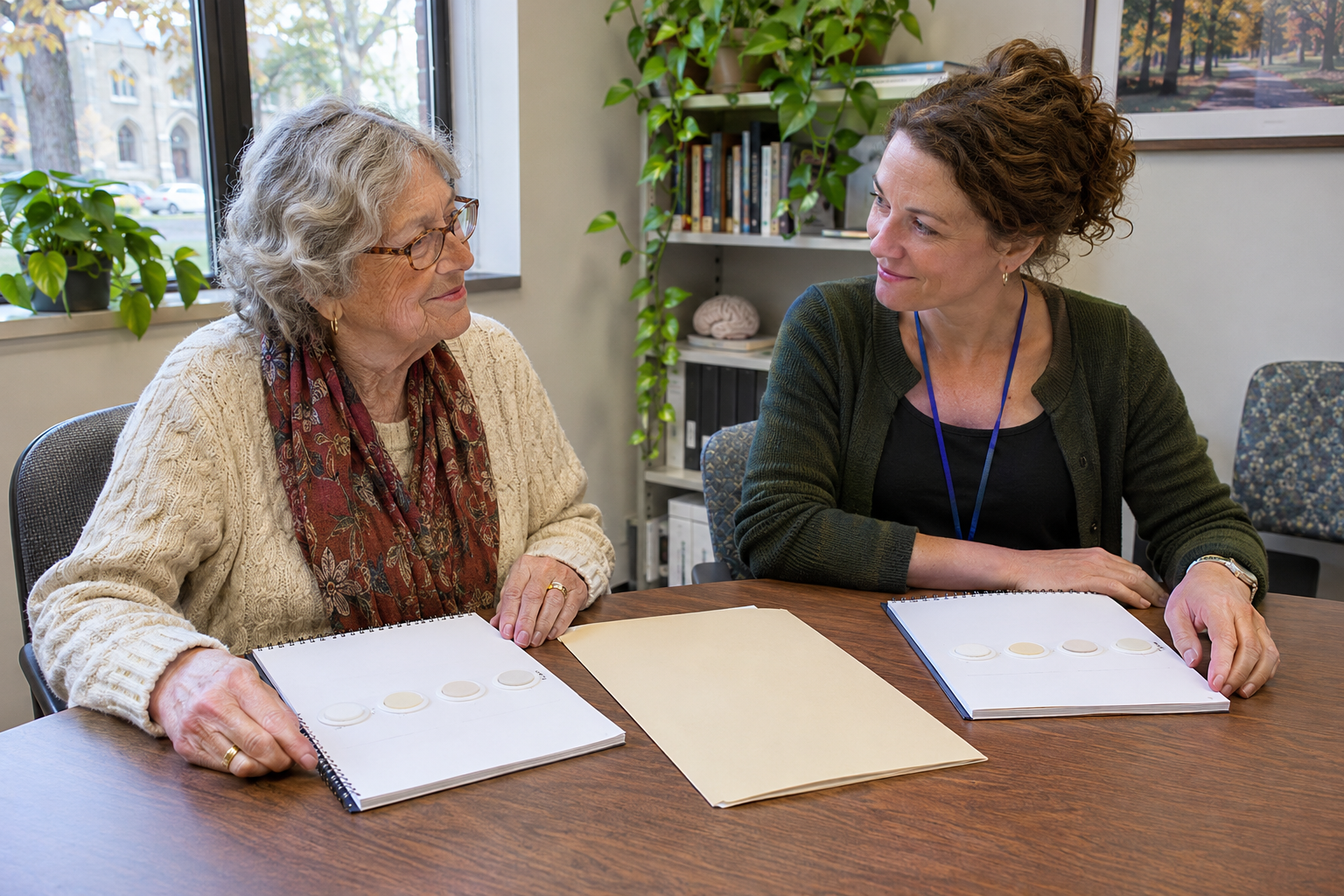
Put together, the honest value of the smell-dementia link is as an emerging marker that may help flag risk early in appropriate medical contexts, not as a routine test you should demand or run on yourself. Researchers and some clinicians are increasingly interested in olfactory testing as one tool among several for identifying people at elevated risk of cognitive decline, during the long period before memory symptoms appear, which could in principle allow earlier monitoring and earlier action. That is a real and promising direction, and it is why the topic deserves attention.
But it is not yet a standard, universal screening performed on everyone at a fixed age, and presenting it as a routine check that doctors run on all sixty-five-year-olds would overstate current practice. Olfactory testing is used in research and in the evaluation of specific patients, and its role in general screening is still developing rather than established, so the realistic picture is of a marker that is gaining recognition, not a box everyone’s doctor ticks. The interest among doctors is genuine, and the routine, age-triggered screening implied by some popular framing runs ahead of where things actually stand.
For an individual, then, the sensible use of all this is simple and calm. If you notice a persistent, unexplained change in your sense of smell, one not clearly tied to a cold, allergies, or a known cause, it is worth mentioning to your doctor, both because it may have a treatable cause and because, in context and with everything else they know about you, it is one more piece of information. That is the whole practical takeaway, to notice and report a real change rather than ignore it, and to let a professional interpret it, without either dismissing smell as meaningless or treating it as a crystal ball. Attention without alarm is exactly the right posture.
When a Change Is Worth Mentioning
Since the whole practical value of this comes down to noticing a real change and reporting it, it helps to have a sense of what kind of change is worth a mention and what is just noise. The signal worth raising is a persistent, unexplained decline in your sense of smell, one that has lasted rather than come and gone, and that is not accounted for by an obvious cause like a cold, congestion, allergies, or a recent illness. A smell that is dulled for a week while you have a stuffy nose and then returns is not the thing, whereas a lasting fade with no clear reason is worth a conversation.
It also matters whether the change is new and different from your own baseline, because some people have simply always had a weaker sense of smell, and the research interest is in decline over time rather than a lifelong low. A noticeable drop from what used to be normal for you, especially a fairly sudden or steady one, is more worth attention than a long-standing mild weakness. You are watching for a change in yourself, not measuring yourself against other people.
None of this is cause for alarm, and the right move is simply to tell your doctor at your next visit if you notice such a change, mentioning it as one piece of information among the many they hold about you. They can check for the common, treatable causes first, which are by far the most likely, and interpret the rest in context. Noticing and reporting a genuine change, calmly and without self-diagnosis, is the entire sensible use of what the smell research has found.
The Bigger Lesson About Early Signs

The smell story fits into a larger and genuinely hopeful theme in the study of brain aging, that the diseases behind dementia develop slowly and silently for years before they announce themselves, which means there may be a long window in which risk can be noticed and, increasingly, acted on. Smell is one possible early signal among several that researchers are studying, alongside things like changes in gait, sleep, and mood, all of which may shift before memory does. The common thread is that the body may offer early hints, if we learn to read them properly.
This matters because the more we can identify risk early, the more scope there is for the things that may help, from managing the many modifiable risk factors for dementia to monitoring closely to, potentially, future treatments that work best when started early. The value of an early signal is the time it buys, and the smell research is part of a broader effort to find and use such signals wisely. It is a field moving forward, and the nose has turned out to be an unexpectedly interesting part of it.
This write up is not to tell you to run smell tests in a state of anxiety but to understand that brain aging has a long, quiet prelude, to take real and persistent changes in any of these early signals seriously enough to mention to a doctor, and to keep doing the broadly protective things that support brain health over a lifetime. The sense of smell may be a more interesting early witness than anyone expected, but it is one witness among many, best heard in a doctor’s office and in its proper proportion. Notice changes, report the real ones, do not panic over a stuffy nose, and let the people trained to interpret these signals do the interpreting.

About the Author: Ruben, co-founder of Gamintraveler.com since 2014, is a seasoned traveler from Spain who has explored over 100 countries since 2009. Known for his extensive travel adventures across South America, Europe, the US, Australia, New Zealand, Asia, and Africa, Ruben combines his passion for adventurous yet sustainable living with his love for cycling, highlighted by his remarkable 5-month bicycle journey from Spain to Norway. He currently resides in Spain, where he continues sharing his travel experiences with his partner, Rachel, and their son, Han.