
American scrambled eggs are a rushed, functional thing, cranked over high heat, stirred hard, and served up in big firm curds a few minutes later, perfectly fine, but nobody’s idea of luxury and nobody’s idea of a treat. French scrambled eggs are something else entirely, so soft and creamy and silky they are almost a custard, the sort of thing that makes you pause and close your eyes on the very first bite. And the difference, beyond a little patience, comes down to one thing the French add that most Americans never think to, a single spoonful of an ingredient that transforms ordinary eggs into something velvety and rich. That one thing is creme fraiche, and once you have had scrambled eggs finished with it, the dry, high-heat version starts to feel like a missed opportunity every single morning.
What follows is the one thing that turns scrambled eggs to silk, the technique that makes the most of it, and exactly how to cook them the French way. It is one of those small kitchen upgrades that costs almost nothing and changes breakfast forever.
The One Thing Is Creme Fraiche
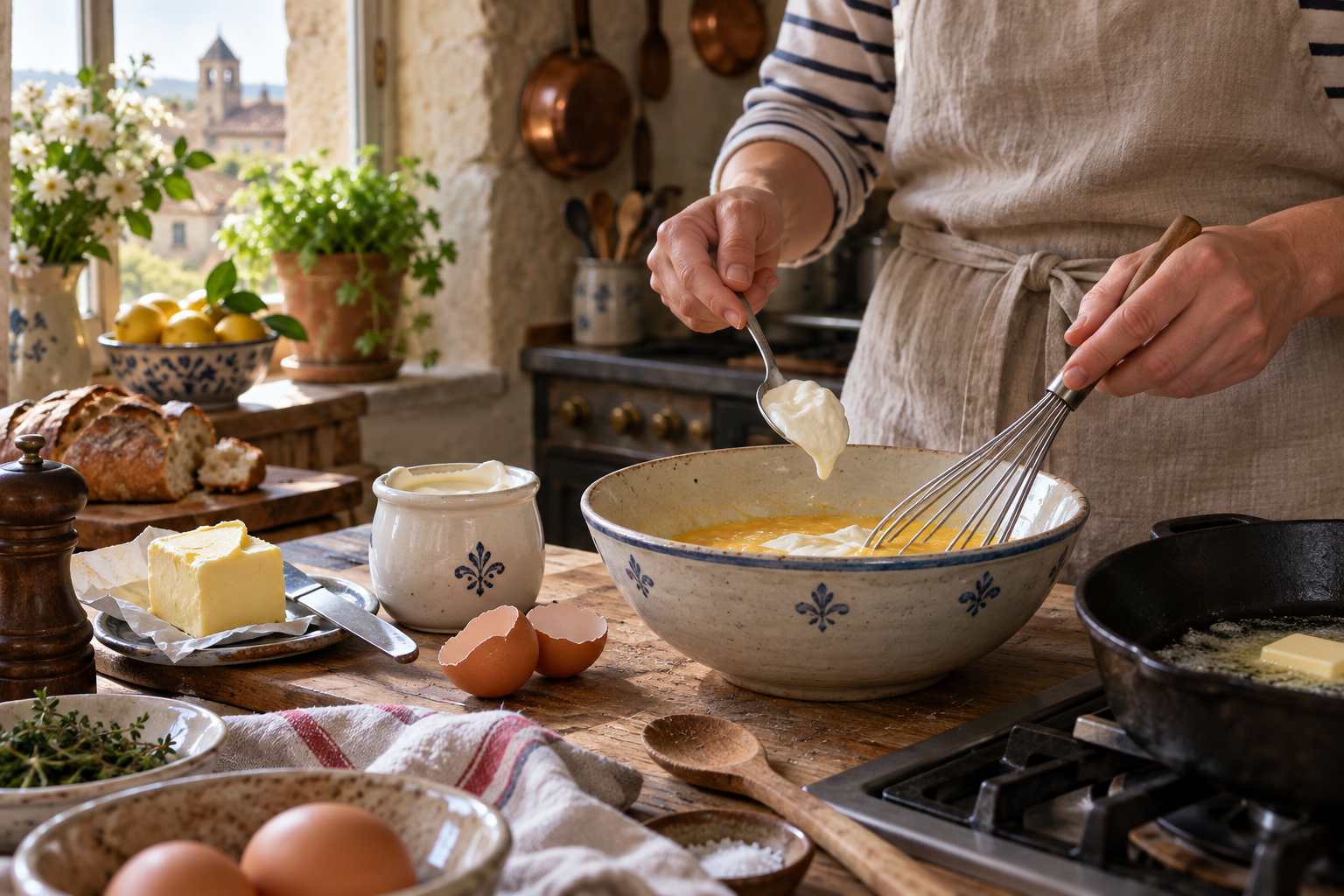
Ask a French cook, or for that matter chefs like Thomas Keller and Bobby Flay, what makes their scrambled eggs so extraordinary, and a remarkable number of them will point to the same secret ingredient: creme fraiche. It is essentially a richer, tangier, more luxurious French cousin of sour cream, and a single spoonful stirred into scrambled eggs at the end of cooking does something close to magic, lending them a silky smoothness and a gentle tang that plain eggs simply do not have. It is the difference between eggs that are good and eggs that are unforgettable. A little goes a long way, roughly a spoonful for every couple of eggs, and it does far more than a splash of milk ever could, because where milk merely thins the eggs and can make them watery, creme fraiche enriches them and makes them silkier, which is the whole point.
The trick with creme fraiche is entirely in the timing, and it is worth getting right. You stir it in right at the end, ideally with the pan just off the heat, so that it melts gently into the eggs without curdling, cooling them slightly and stopping the cooking at the same time. Add it too early, over full heat, and it can split or simply cook away, losing the whole benefit, so this is one of those small timing details worth respecting. That last part is a quiet bonus, because scrambled eggs keep cooking from their own heat even after you pull them off the stove, and the cool spoonful of creme fraiche halts that overcooking in its tracks, locking in the soft, custardy texture. One ingredient, added at one precise moment, and everything changes. If there is a single takeaway from the whole French method, it is this small habit of finishing the eggs with a cool spoonful of creme fraiche off the heat, because even done nothing else differently, it will make your scrambled eggs noticeably better tomorrow morning.
Low and Slow Is the Other Half
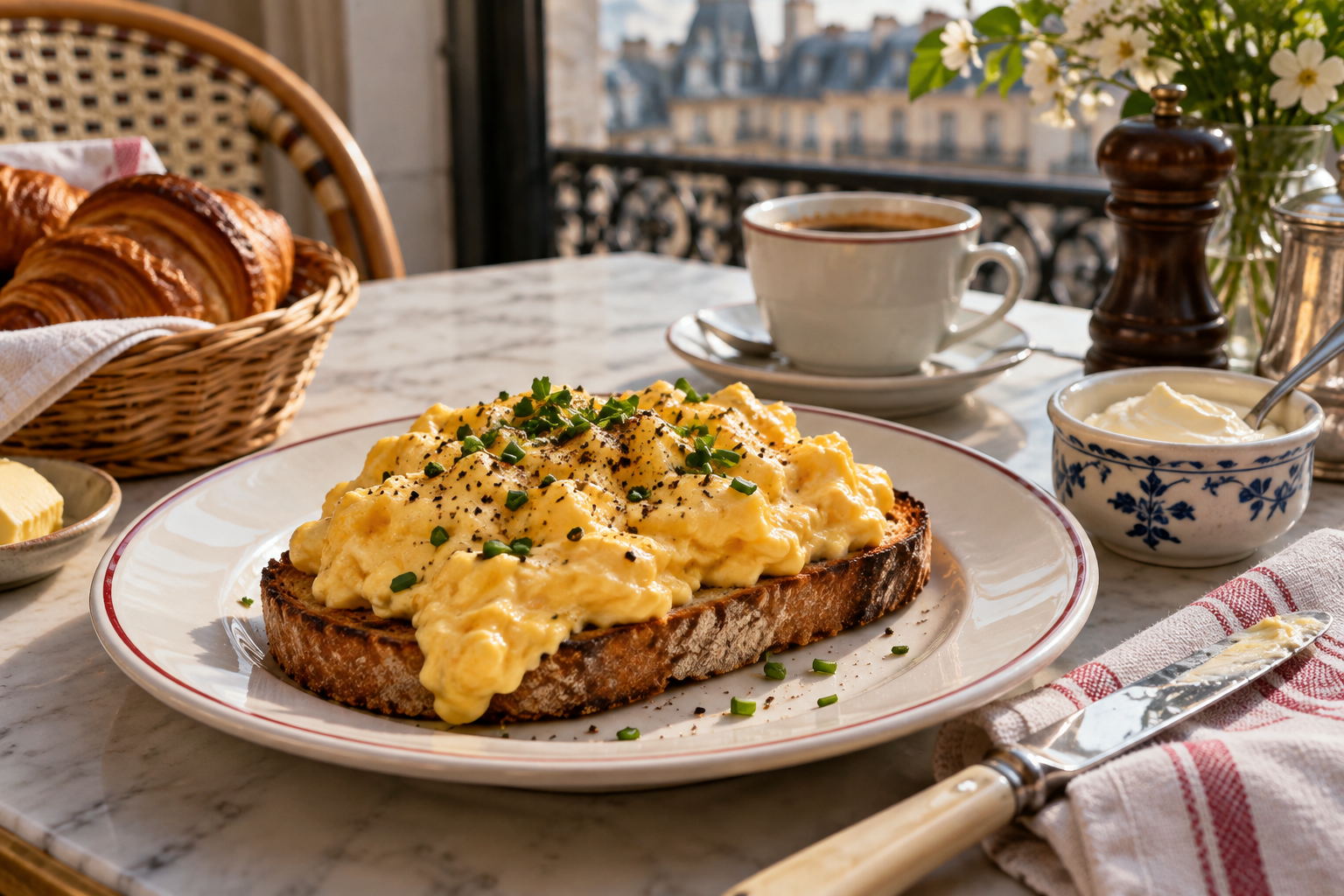
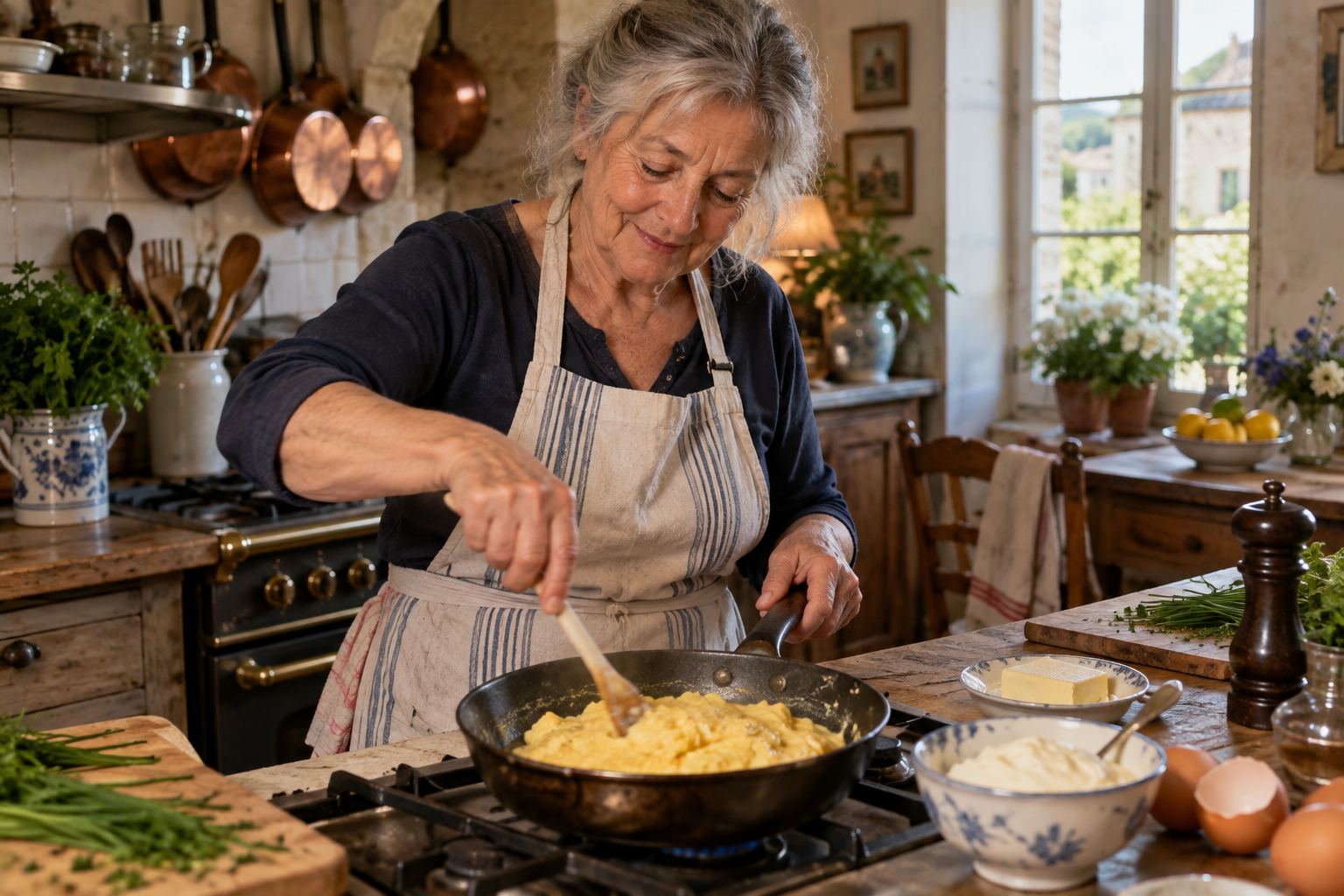
The creme fraiche does the heavy lifting, but it needs the right technique to shine, and the French method for that is the opposite of the American rush. Where an American might scramble eggs over high heat in a couple of frantic minutes, the French cook them low and slow, over gentle heat, stirring almost constantly, coaxing them to set gradually rather than blasting them firm. This patience is the whole game, because it lets the eggs form tiny, delicate curds and stay creamy instead of drying out into the big rubbery curds that high heat produces. There is no shortcut for it, no clever tool that replaces simply keeping the heat low and the spoon moving, which is why the French method rewards the unhurried cook and quietly punishes the impatient one.
It genuinely does take a few extra minutes, and there is no rushing it, but the reward is a texture worlds away from the diner version. The eggs come together slowly into something soft and glossy, almost pourable, closer to a loose porridge than to the firm, plated scramble most people know from a diner. The other small secret is to pull them off the heat while they still look a touch underdone, because they will finish cooking on their own, and that, combined with the cooling spoonful of creme fraiche, is how you land on eggs that are perfectly silky rather than a few seconds overcooked.
Why It Actually Works
There is real science behind why this produces such a different result, and it is worth understanding because it explains every step. The fat in the creme fraiche coats and softens the proteins in the egg as they cook, physically getting between them so they cannot bond into the tight, rubbery network that makes overcooked eggs tough. That is why a fatty addition like creme fraiche, and plenty of butter, yields such a tender, silky result, since the fat is actively keeping the eggs soft at a molecular level. It is the same reason a rich, buttery sauce feels smooth on the tongue, the fat coating everything and preventing the tough, dry mouthfeel that lean, overcooked eggs have.
The low, slow heat works on the same principle from the other direction. Eggs turn rubbery when their proteins seize up too fast and too hard under high heat, squeezing out moisture and going firm, so cooking them gently and slowly lets the proteins set in a loose, tender way that stays creamy and moist. Put the two together, the fat holding the proteins apart and the gentle heat setting them softly, and you get the custardy, silky texture the French are after. Everything about the method serves that one goal of keeping the proteins loose and tender rather than tight and tough, which is really all that separates a great scrambled egg from a mediocre one. It is not a trick so much as good cooking chemistry, and the creme fraiche is the star of it.
Where the American Version Goes Wrong
To appreciate the French approach, it helps to see exactly what most of us do wrong, because the American scramble makes a few small mistakes that add up to a big difference. The first is heat, since the instinct is to get the eggs done fast over a medium-high or high flame, which cooks the proteins violently and squeezes them into tough, weeping curds before you have any control over the texture. The second is timing, since most people cook the eggs until they look completely done in the pan, forgetting that they will keep cooking from residual heat and arrive at the table a step too far, dry and firm.
Neither mistake is a sign of a bad cook, they are simply what happens when you treat scrambled eggs as a thing to get over with rather than a thing to coax. The French method is really just the correction of these two habits, lower heat and a little patience, plus the spoonful of creme fraiche to guarantee softness and stop the cooking. There is nothing exotic or difficult about any of it, which is the best news of all, since it means anyone can make restaurant-quality scrambled eggs at home tomorrow with ingredients they probably already have. Understand that the enemies are high heat and overcooking, and you are already halfway to silky eggs before you change a single ingredient.
Small Touches That Lift Them Further
Once you have the method down, a few small touches make already-lovely eggs even better, and they are worth knowing. What you serve them on matters more than you might think, since French scrambled eggs are traditionally spooned onto buttered toast or a torn piece of good baguette, or, for a treat, over toasted brioche, whose sweetness plays beautifully against the rich, tangy eggs. The bread is not an afterthought but part of the dish, soaking up the soft eggs and giving them something to sit against. A pile of silky scrambled eggs on a bare plate can feel like it is missing something, while the same eggs spooned over crisp, buttery toast become a complete and genuinely luxurious little meal.
A scattering of fresh herbs lifts them too, with finely chopped chives the classic choice, adding a little sharp freshness that cuts the richness, though parsley, tarragon, or the delicate chervil all work beautifully in the French style. And because these eggs are so soft and rich, they reward being treated as something special rather than a rushed weekday breakfast, made slowly on an unhurried weekend morning and eaten straight away while still warm and silky. Cooked with care and finished with creme fraiche, a couple of eggs become one of the nicest small pleasures a kitchen can offer, proof that the humblest ingredients, handled well, can outshine far fancier ones.
Making French Scrambled Eggs
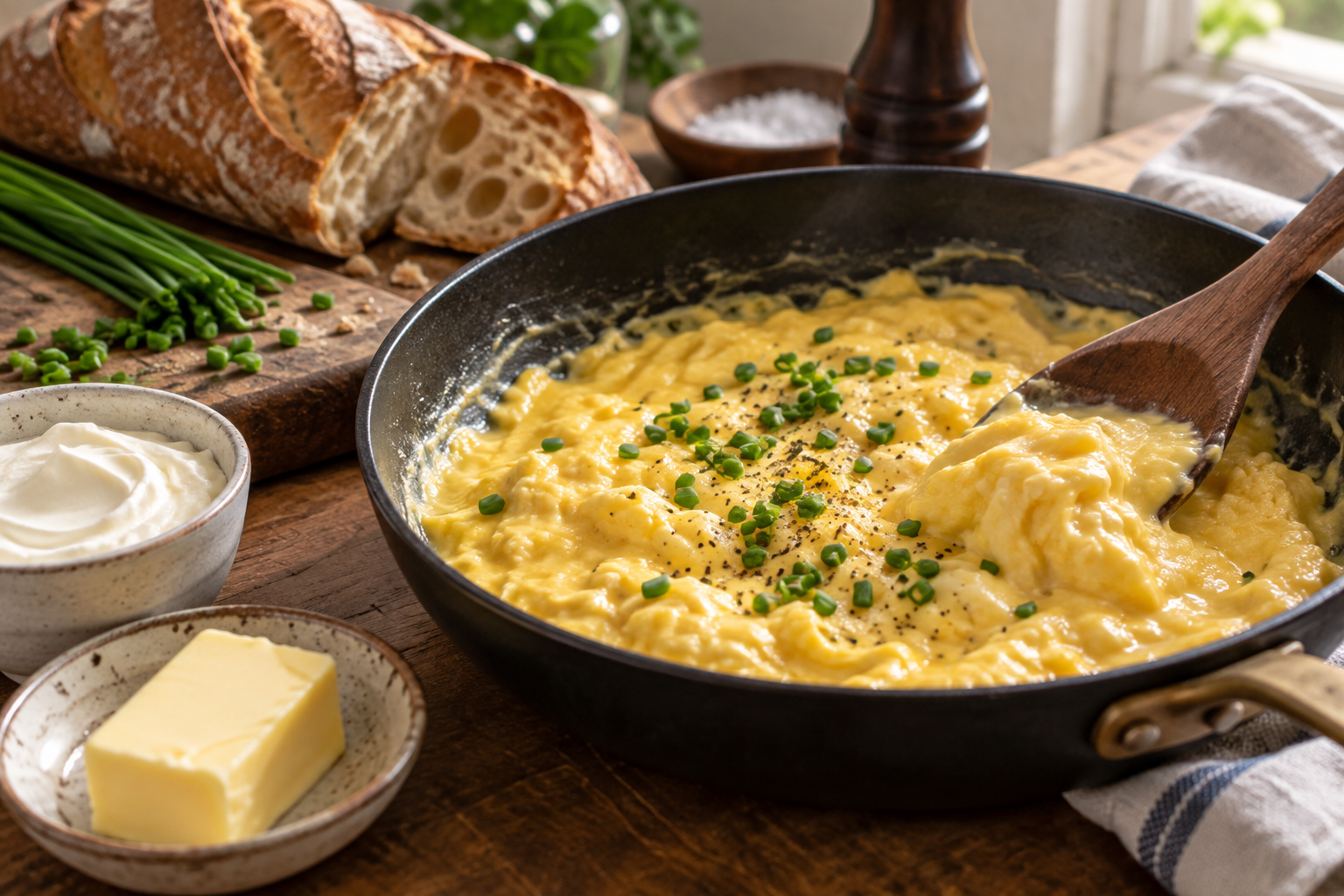
Here is the French method, oeufs brouilles, for two people. It takes only a few minutes more than the usual way and rewards you many times over.
Ingredients
- 4 large eggs, preferably at room temperature
- 2 tablespoons butter
- 1 to 2 tablespoons creme fraiche
- Salt, to taste
- 1 tablespoon fresh chives, finely chopped
- Toast or a good baguette, to serve
Instructions
- Crack the eggs into a bowl and whisk them thoroughly until the yolks and whites are completely combined and slightly frothy. Season with a little salt.
- Melt the butter in a nonstick pan over low heat, letting it coat the bottom without browning or bubbling hard.
- Pour in the eggs and begin stirring gently and almost constantly with a spatula or wooden spoon, scraping across the bottom of the pan in slow circles. Keep the heat low.
- Continue stirring patiently as the eggs slowly begin to set into small, soft curds. This takes a few minutes, and it should not be rushed. If they seem to be cooking too fast, lift the pan off the heat for a few seconds and keep stirring.
- When the eggs are just barely set but still look slightly wet and loose, pull the pan off the heat. They will keep cooking from their own warmth.
- Immediately stir in the creme fraiche, which will cool the eggs slightly, stop the cooking, and turn them silky. Taste and adjust the salt.
- Spoon the eggs onto toast or alongside a good baguette, scatter with chives, and serve at once, while they are soft and warm.
And do feel free to make the method your own, since some cooks add a knob of cold butter at the very end alongside the creme fraiche for extra richness, others cook the eggs in a bowl set over simmering water for the gentlest possible heat, so treat the creme fraiche and the low, slow patience as the two things that matter and adjust the rest to your own taste.

About the Author: Ruben, co-founder of Gamintraveler.com since 2014, is a seasoned traveler from Spain who has explored over 100 countries since 2009. Known for his extensive travel adventures across South America, Europe, the US, Australia, New Zealand, Asia, and Africa, Ruben combines his passion for adventurous yet sustainable living with his love for cycling, highlighted by his remarkable 5-month bicycle journey from Spain to Norway. He currently resides in Spain, where he continues sharing his travel experiences with his partner, Rachel, and their son, Han.