
Spend enough time studying the oldest people in Europe and you start looking for the pattern, the one thing they all have in common that explains those long, vigorous lives. The obvious candidates are diet and exercise, the two levers the whole wellness industry pulls. Yet when you line up the longest-living Europeans side by side, from the Greek islands to the Spanish villages to the mountains of Sardinia, the diet and the exercise turn out to vary a great deal, and the real common thread is something else entirely.
There is one habit that every long-lived European population shares, more consistently than any food and more reliably than any form of movement. It is not glamorous, it cannot be bottled or sold, and it appears in every single one of these places without exception. The habit is daily human connection, and the science now suggests it may be the most powerful longevity factor of them all.
Here is why it is not the diet and not the exercise, what the one shared habit really is, and what the research reveals about its extraordinary power. This is an overview of the evidence rather than medical advice, and longevity always has many causes, but on this particular point the science is unusually clear.
It Isn’t the Diet
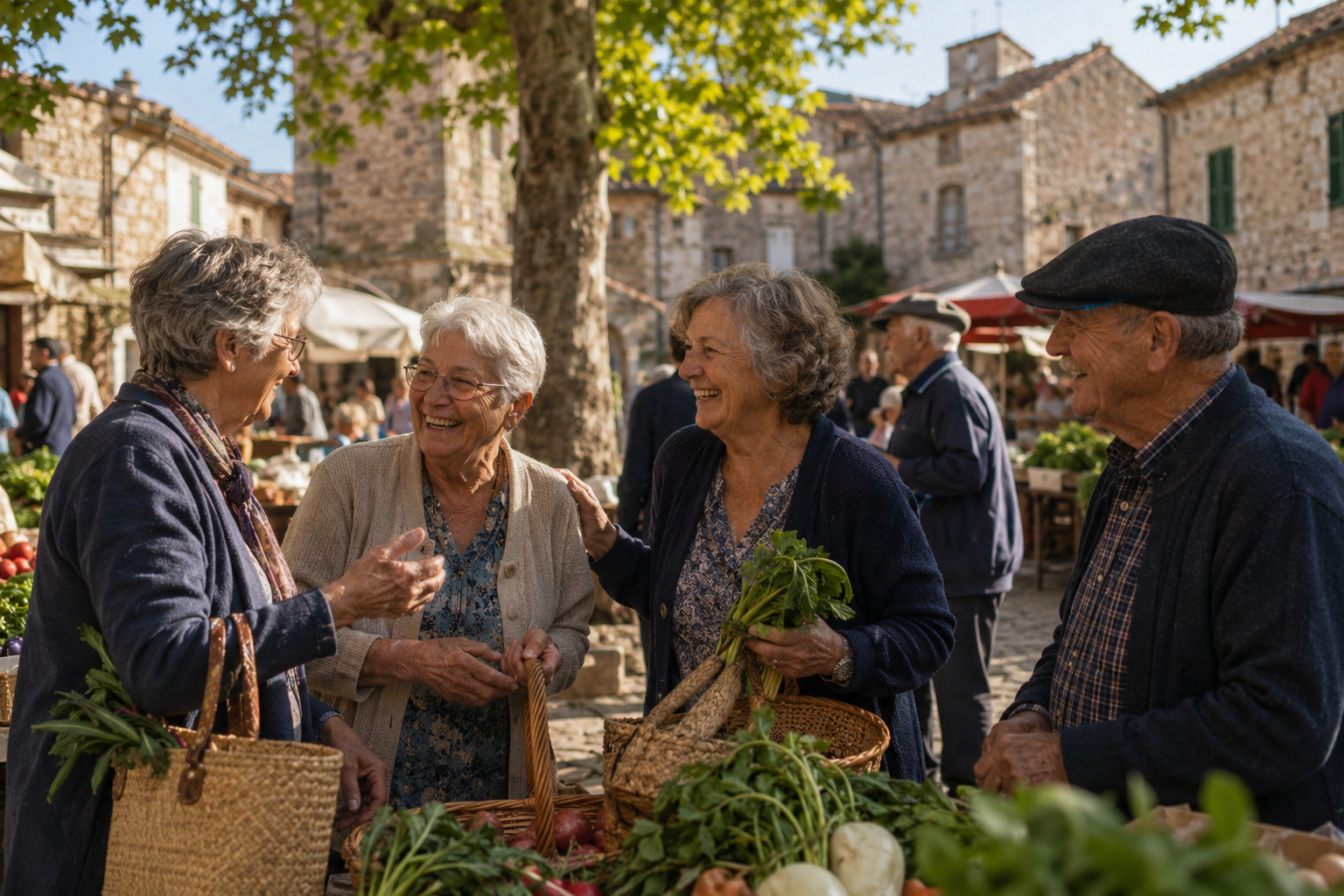
The Mediterranean diet gets most of the credit for European longevity, and it deserves a large share of it, but it cannot be the single answer, because the diets of the long-lived vary so widely. The olive-oil-and-vegetable plate of a Greek island is not the fish-heavy Atlantic table of coastal Portugal, which is not the pork-and-cheese-and-bread diet of the shepherds of Sardinia, and yet all three regions produce extraordinary numbers of very old people.
If a single diet were the secret, you would expect the longest-living places to eat the same way, and they simply do not. What they share is a general tilt toward real, unprocessed, home-cooked food and away from the industrial diet, which certainly matters, but the specifics differ enormously from region to region. Diet is clearly part of the story, yet it is not the constant that unites them.
This is the first clue that the usual explanation is incomplete. The food varies, the longevity does not, so the thread that ties these populations together has to be something present in all of them regardless of what is on the plate. The diet is a supporting actor, not the lead, and looking only at food misses the thing that truly connects the longest-living corners of Europe. Consider the Sardinian highlanders, who eat a good deal of meat and cheese and bread, foods a modern diet guru might frown at, and who nonetheless produce some of the highest concentrations of male centenarians in the world. Set beside the fish-and-vegetable eaters of the Greek islands, they make nonsense of the idea that one perfect diet explains longevity. Both eat real, traditional food, and both live very long, but the plates could hardly be more different, which tells you the answer lies elsewhere.
It Isn’t the Exercise
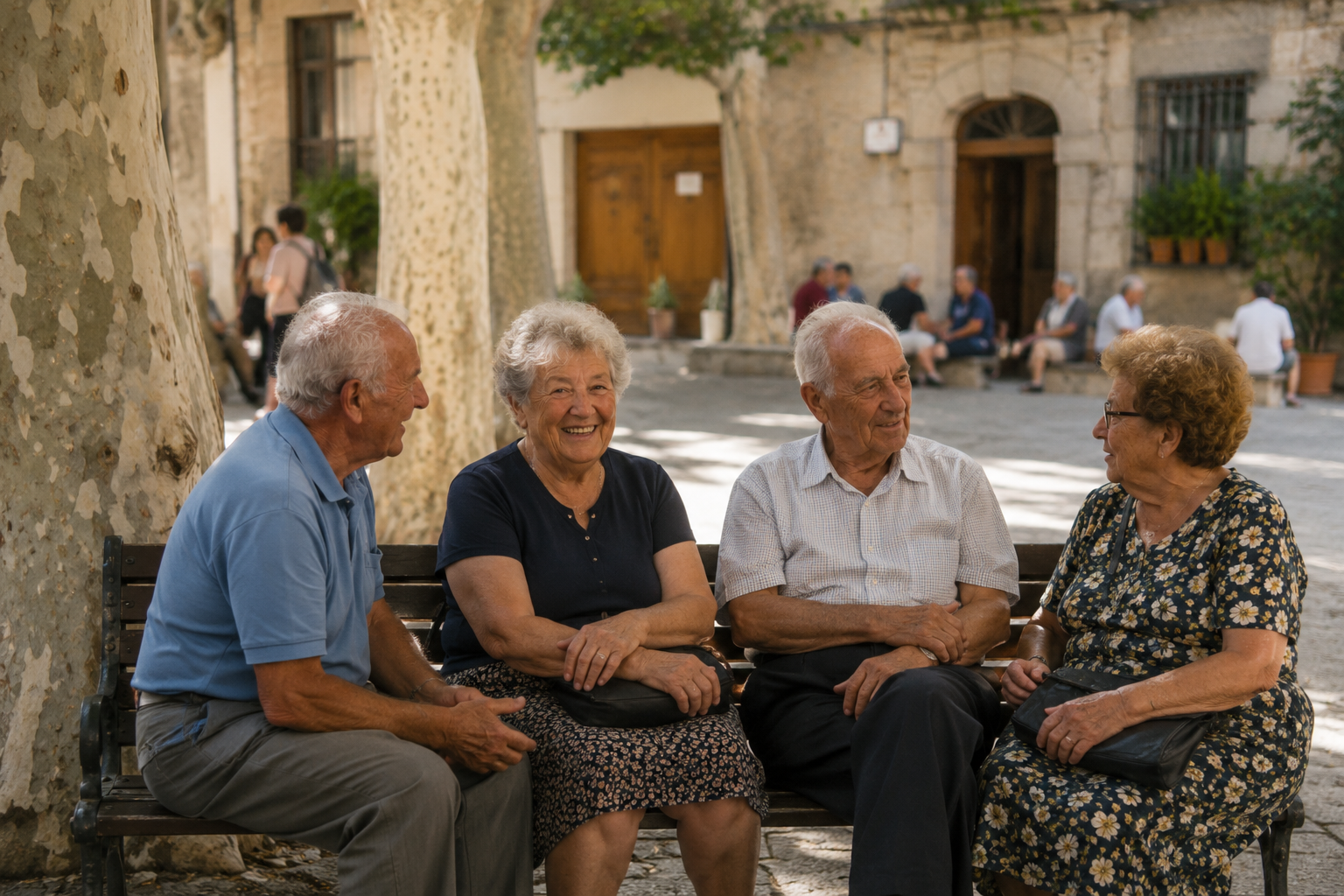
The same is true of exercise, only more so, because most of these old Europeans do not exercise at all in the way the word usually means. They have never seen the inside of a gym, they do not run or lift or follow programs, and the idea of a workout would strike most of them as faintly absurd. What movement they get comes from daily life, from walking and gardening and chores, and even that varies widely from place to place.
The mountain shepherd of Sardinia walks steep terrain all day, the coastal Portuguese swims and strolls the seafront, and the village grandmother does her housework and walks to the market, and these are very different physical lives. What unites them is only that they move gently and often, built into the ordinary day, rather than any particular exercise routine. Movement matters, but again it is not the shared constant.
So the two levers everyone reaches for, diet and exercise, both turn out to vary across the longest-living places rather than uniting them. They are real contributors, and no one should stop eating well or moving. But neither is the single thread running through every long-lived European population, which means the actual secret has been hiding behind the two things we were busy staring at. It is worth dwelling on how thoroughly the fitness model misses these people. They log no steps, join no classes and track no workouts, and if you measured their exercise by modern standards many would barely register. Yet they stay strong and mobile into their nineties, because their bodies are used gently all day rather than pushed hard for an hour. The lesson is real, but it is about a way of living rather than a routine, and it is not the thing that unites them.
The One Thing They All Share
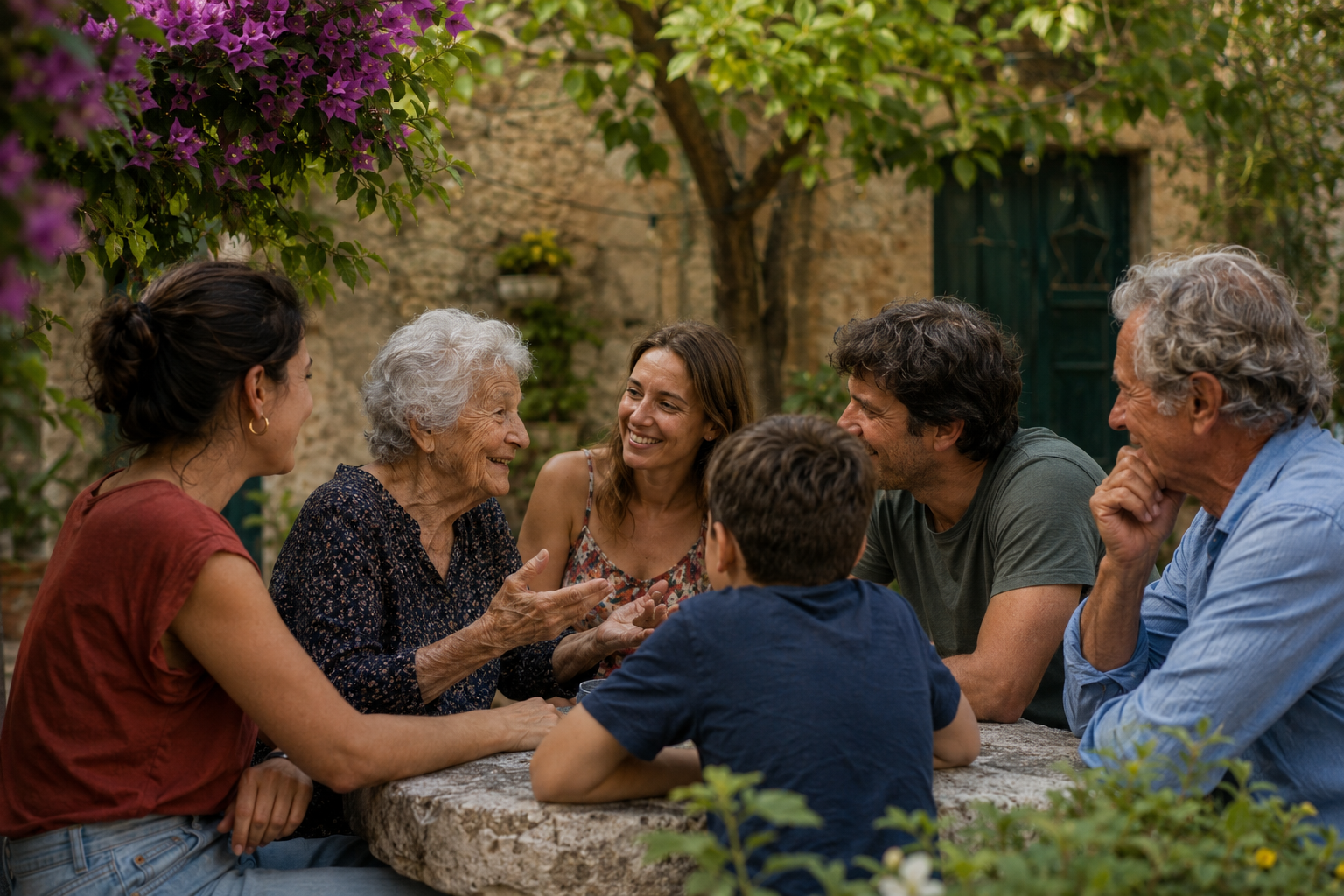
Here is what every one of these populations has in common, without exception. In every long-lived corner of Europe, the old are deeply, daily, richly connected to other people. They are embedded in family and community, they see and speak with others every single day, and they are almost never alone. That constant human connection, not any food or any exercise, is the thread that ties them all together.
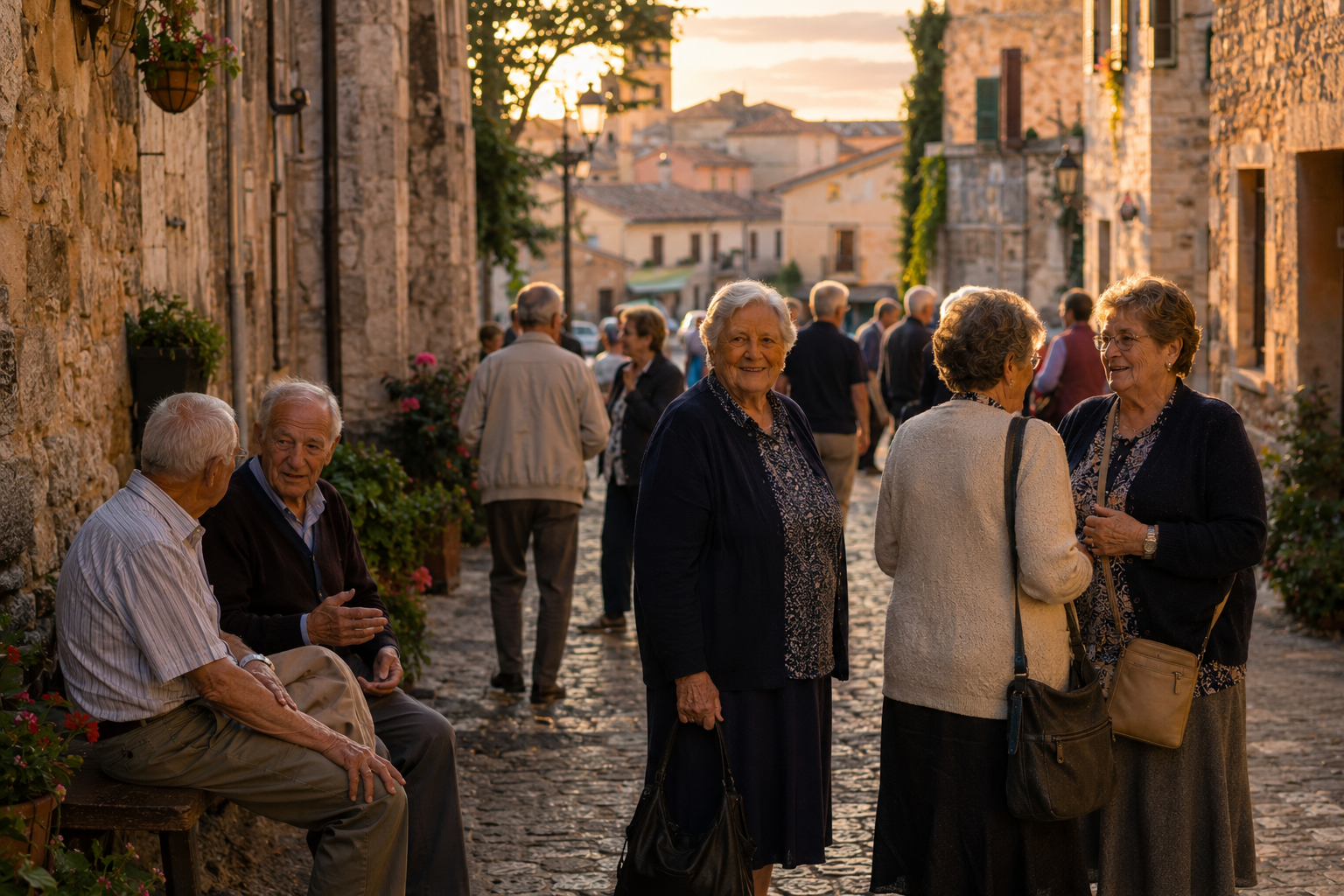
Look closely and it is everywhere. The Greek grandmother surrounded by family and neighbors, the Spanish man at his daily bar, the Sardinian village where everyone knows everyone, the Portuguese coffee house full of old friends, the Italian piazza alive with talk. The forms differ, but the substance is identical, an old person woven tightly into a web of daily contact, known and needed and never isolated.
This is the habit that survives every comparison. Change the diet, change the climate, change the exact form of the daily movement, and the longevity holds as long as the connection is there. It is the one variable that never varies, present in every long-lived population and absent from the lonely, isolated old age that has become so common elsewhere. If there is a single secret, this is it. What makes this so easy to overlook is that connection does not look like a health intervention. It looks like ordinary life, like sitting in a square or lingering at a table or stopping to talk in the street, none of which registers as effort or discipline. Precisely because it is invisible and pleasurable, it gets left out of the health advice, which prefers things that can be measured, sold and performed. The most important habit of all hides in plain sight because it feels like nothing at all.
What the Science Says
For a long time this might have sounded like sentiment, but the research has caught up, and the findings are striking. Large analyses of the evidence have concluded that strong social connection is associated with a dramatically lower risk of early death, while chronic loneliness and isolation raise that risk by an amount researchers have compared to smoking, and greater than the risk from obesity or physical inactivity.
The single longest study of human lives makes the same point from another angle. Harvard‘s study of adult development, which has followed the same people for more than eighty years, found that the strongest predictor of who would grow old healthy and happy was not wealth or cholesterol or career, but the quality of their relationships. The people with warm, close connections lived longer and better, and the isolated declined faster, across an entire lifetime of data.
The biology behind this is increasingly understood. Connection lowers chronic stress and blunts its damage, it buffers against depression, it encourages people to look after themselves and gives them reasons to keep going, and it seems to act directly on the systems that govern inflammation and aging. Isolation does the reverse, registering in the body as a persistent stress that wears it down. The old idea that we need each other turns out to be not just true but measurable, and its measure is large. To put a number on it, some analyses have found that strong social ties are associated with a roughly fifty percent greater likelihood of survival over a given period, a benefit on the scale of quitting smoking and larger than that of many treatments medicine works hard to provide. That such a powerful effect flows from something as simple and unmedical as human company is one of the more remarkable findings in all of health, and one of the most neglected.
How Connection Shows Up Across Europe
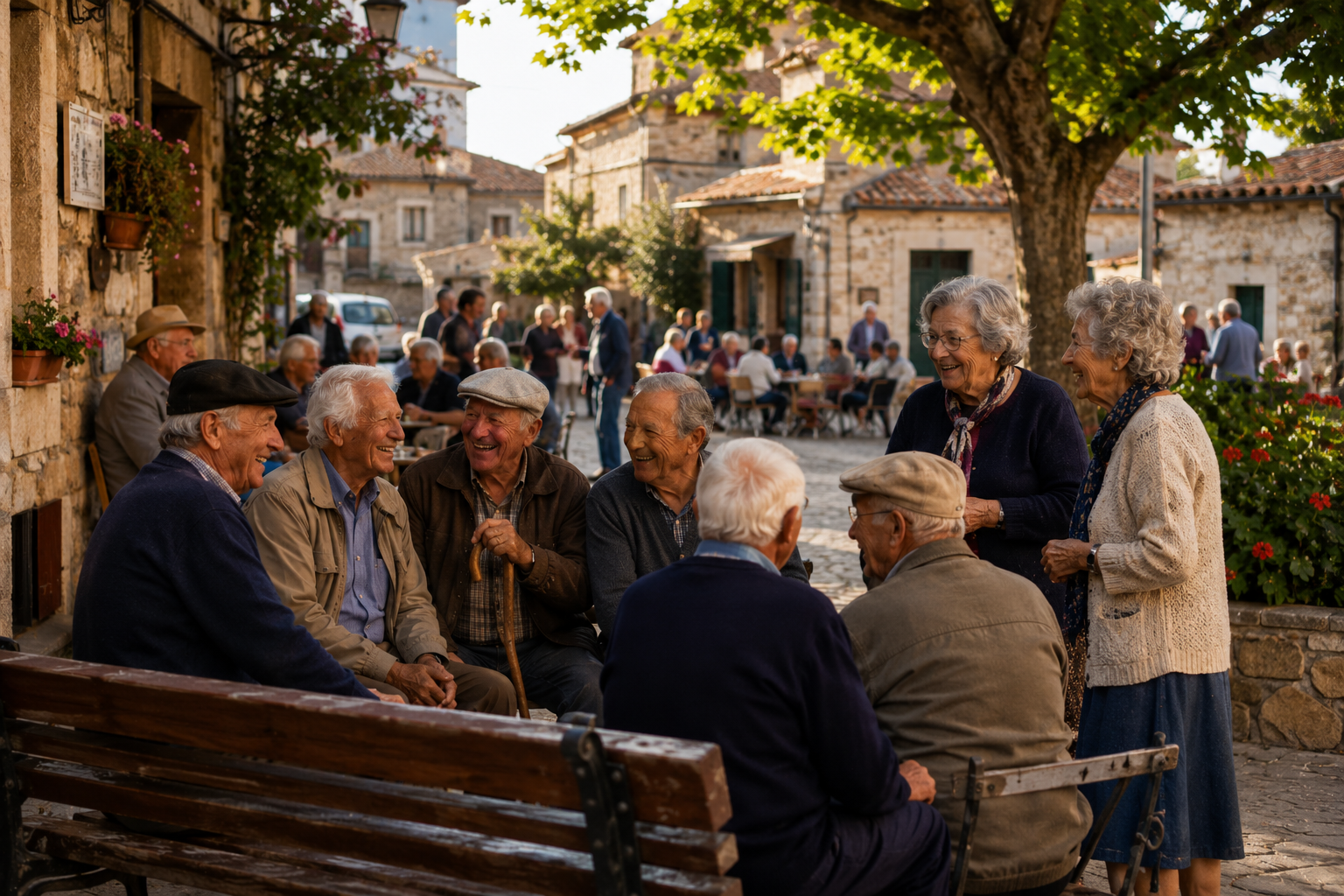
What makes the European examples so instructive is that their social connection is structural, built into the culture rather than left to individual effort. These are places where an old person does not have to work to stay connected, because daily contact is simply how life is arranged, waiting for them the moment they step outside their door.
The vehicles are wonderfully varied. There is the Spanish bar and the long lunch, the Italian passeggiata and piazza, the Greek village square and its all-night festivals, the Portuguese coffee house, and everywhere the daily walk to buy fresh food, which is really a daily walk into a hundred small conversations. There is the great ritual of the shared table, the meal that stretches for hours and the lingering talk that follows. Each of these is a machine for producing exactly the daily human contact that keeps people alive.
The genius of it is that none of it depends on willpower. In a culture built this way, staying connected in old age takes no effort at all, since the connection is structural and constant, folded into the geography of the town and the rhythm of the day. The old European is carried along by a current of daily contact that never lets them drift into the isolation that quietly kills, and that effortless, structural connection is the deepest reason these places produce such long lives. The daily walk to buy fresh food deserves singling out, because it is connection disguised as an errand. Where you shop most days at small local shops and a market, buying a little at a time, every trip becomes a round of greetings and small talk with people who know you. What looks like inefficiency, shopping daily instead of weekly, is in fact one of the richest sources of the casual daily contact that keeps these communities so tightly woven together.
It Holds Beyond Europe
If the pattern were confined to Europe, it might be a quirk of European culture. It is not. The same thread runs through every one of the world’s identified Blue Zones, the handful of places scattered across the globe where people live longest, and social connection sits at the center of all of them.
In Okinawa, Japan, older people belong to a moai, a committed group of lifelong friends who support one another for decades, meeting regularly and sharing resources and troubles, a formal structure of connection that lasts a whole life. On the Nicoya Peninsula of Costa Rica, in the Adventist community of Loma Linda in California, and across the Sardinian highlands, the story repeats itself, with tight family bonds and strong community and faith and belonging and daily contact with others.
These places could hardly be more different in diet, climate and custom. The Okinawan plate looks nothing like the Sardinian one, and neither resembles the Costa Rican table, and their landscapes and religions and daily work all differ. Yet every one of them is built around deep, durable human connection, the old embedded in family and community rather than left alone. It is the one factor that crosses every border.
That global consistency is what raises connection from a nice idea to something close to a law of long life. When the same single factor appears in every long-lived population on earth, across cultures that share nothing else, it stops looking like a local custom and starts looking like a fundamental human need. The world’s longest-lived people, on every continent, agree on this one thing, and the agreement is very hard to argue with or to ignore.
The Habit You Can Build
The hard truth for much of the modern world is that this one crucial habit is exactly the one it has been losing. Loneliness has been called an epidemic, isolation in old age is widespread, and the individualist, car-dependent, screen-mediated shape of modern life works against daily human contact at every turn. Many people reach old age having optimized their diet and their exercise while starving of the very thing that matters most.
The good news is that connection, unlike genes or climate, is something a person can deliberately build, and the European example shows how. It means prioritizing relationships as seriously as any diet or workout, staying woven into a community, seeing people face to face every day rather than through a screen, and refusing to let retirement become a slide into isolation. It means treating the shared meal, the daily walk among neighbors and the standing appointment with friends as essential rather than optional. For someone who has drifted toward isolation, the repair is rarely dramatic, and it starts small. A standing weekly meal with friends, a daily walk that passes people you can greet, a club or a church or a volunteer role, a deliberate choice to shop and move among others rather than alone, all rebuild the daily contact the modern world strips away. The point is not grand gestures but frequency, the small, regular, face-to-face moments that add up, across the years, to a connected life.
None of this is a guarantee, and genes and healthcare and fortune all still matter, as they always do. But if the longest-living people of Europe agree on one thing, across every difference of diet and climate and habit, it is that a long life is a connected life. The single most powerful thing you can do for your years may not be found on a plate or in a gym at all, but in the simple, daily, deeply human act of staying close to other people, and of never letting yourself grow old and alone in the world. Everything else is important. This appears to be essential.

About the Author: Ruben, co-founder of Gamintraveler.com since 2014, is a seasoned traveler from Spain who has explored over 100 countries since 2009. Known for his extensive travel adventures across South America, Europe, the US, Australia, New Zealand, Asia, and Africa, Ruben combines his passion for adventurous yet sustainable living with his love for cycling, highlighted by his remarkable 5-month bicycle journey from Spain to Norway. He currently resides in Spain, where he continues sharing his travel experiences with his partner, Rachel, and their son, Han.