
The Florentine waiter is one of the great unbluffable men of Europe. He has seen ten thousand American tourists, he can read a table in the time it takes to set down the water, and he runs, without ever appearing to, a quiet examination that the American sitting down has no idea he is taking. Pass it and the evening warms, the recommendations get better, the kitchen tries a little harder. Fail it and nothing rude happens, nothing ever happens, you simply get the tourist version of the night, polite, efficient, and a degree colder than the one the table beside you is having.
The test is not about money or manners in the stiff sense. It is about whether you understand how Italians eat, which is a whole grammar an American has never been taught. Here are the eight rules the Florentine server is quietly checking, gathered over years of watching it happen from the next table, why each one registers, and how to pass without pretending to be something you are not.
The Cappuccino After Lunch
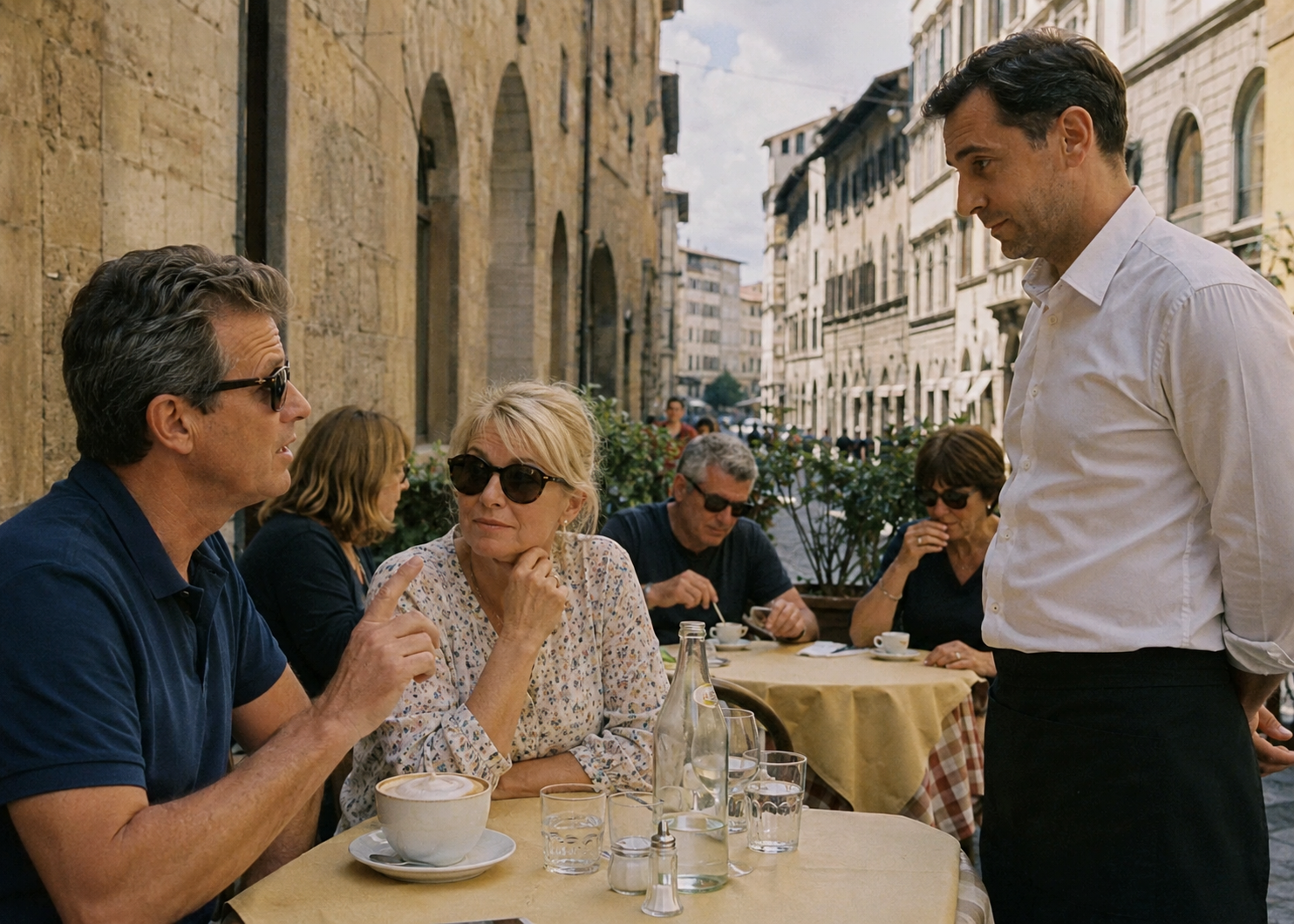
This is the famous one, and it is famous because it is real. Order a cappuccino after a meal and the waiter knows everything he needs to know.
In Italy, milk-heavy coffee is a morning thing, a breakfast drink, finished by mid-morning and never seen again that day. A cappuccino after lunch or dinner sits, to the Italian mind, somewhere between odd and slightly unwell, like ordering a bowl of cereal to close a steak dinner. The waiter will bring it, because the customer is the customer, but something has been noted, and the something is that you do not know the rule. The after-dinner coffee in Italy is an espresso, small, black, taken quickly, sometimes a macchiato with its single spoonful of foam, never the big milky cup that belongs to eight in the morning.
The fix is easy and it is not pretending. Have your cappuccino with breakfast, where it is perfect and where Italians are having theirs too. After lunch and dinner, order a caffè, which means an espresso, and you have not performed Italianness, you have simply eaten the way the day is shaped here. The waiter clocks that too, and the clocking is the opposite of the cappuccino one.
Asking For Parmesan On The Wrong Dish
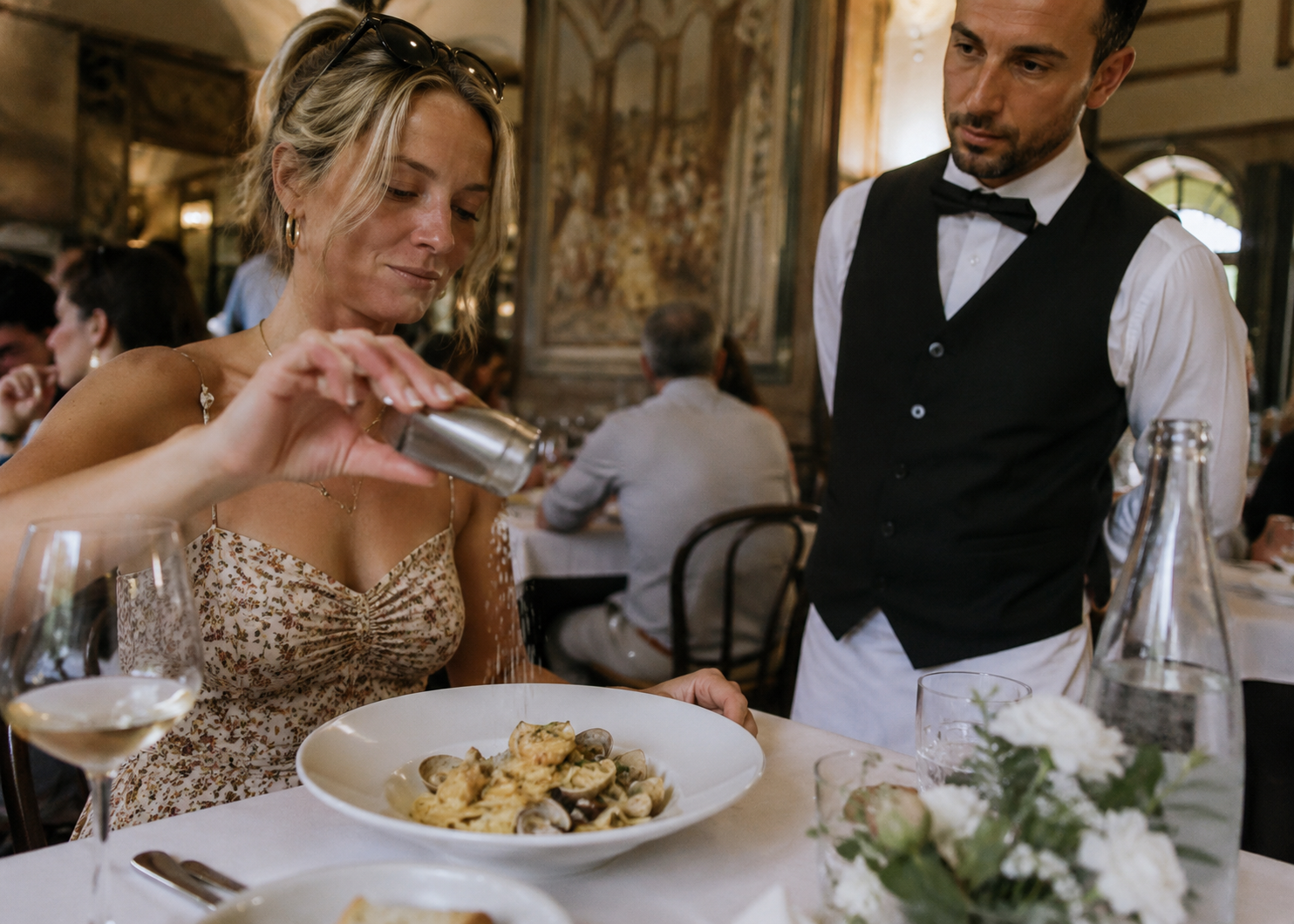
There is a rule about cheese, it is strict, and the seafood pasta is where Americans break it.
Italians do not put parmesan on everything, and there are dishes where adding it is close to an insult to the kitchen, seafood pasta above all. A spaghetti alle vongole, with its clams and garlic and oil, is built on the delicate taste of the sea, and burying it under grated cheese, to the Italian palate, ruins it, which is why asking for parmesan on a seafood dish makes a Florentine waiter wince behind his face. The cheese-on-everything instinct is read as the mark of someone who does not taste what the dish is actually doing, and seafood is the bright line, the place where the request lands worst.
The rule underneath is that cheese goes where it belongs and stays away where it does not, and the kitchen has already decided which is which. The fix is to trust that, eat the dish as it arrives, and resist the reflex to customize. If a dish wants cheese, it will have it or it will come with it. If it does not, the absence is a decision, not an oversight, and respecting that decision is most of what the waiter is checking when the seafood pasta lands and the American does or does not reach for the parmesan that is, pointedly, not on the table.
Rushing The Meal
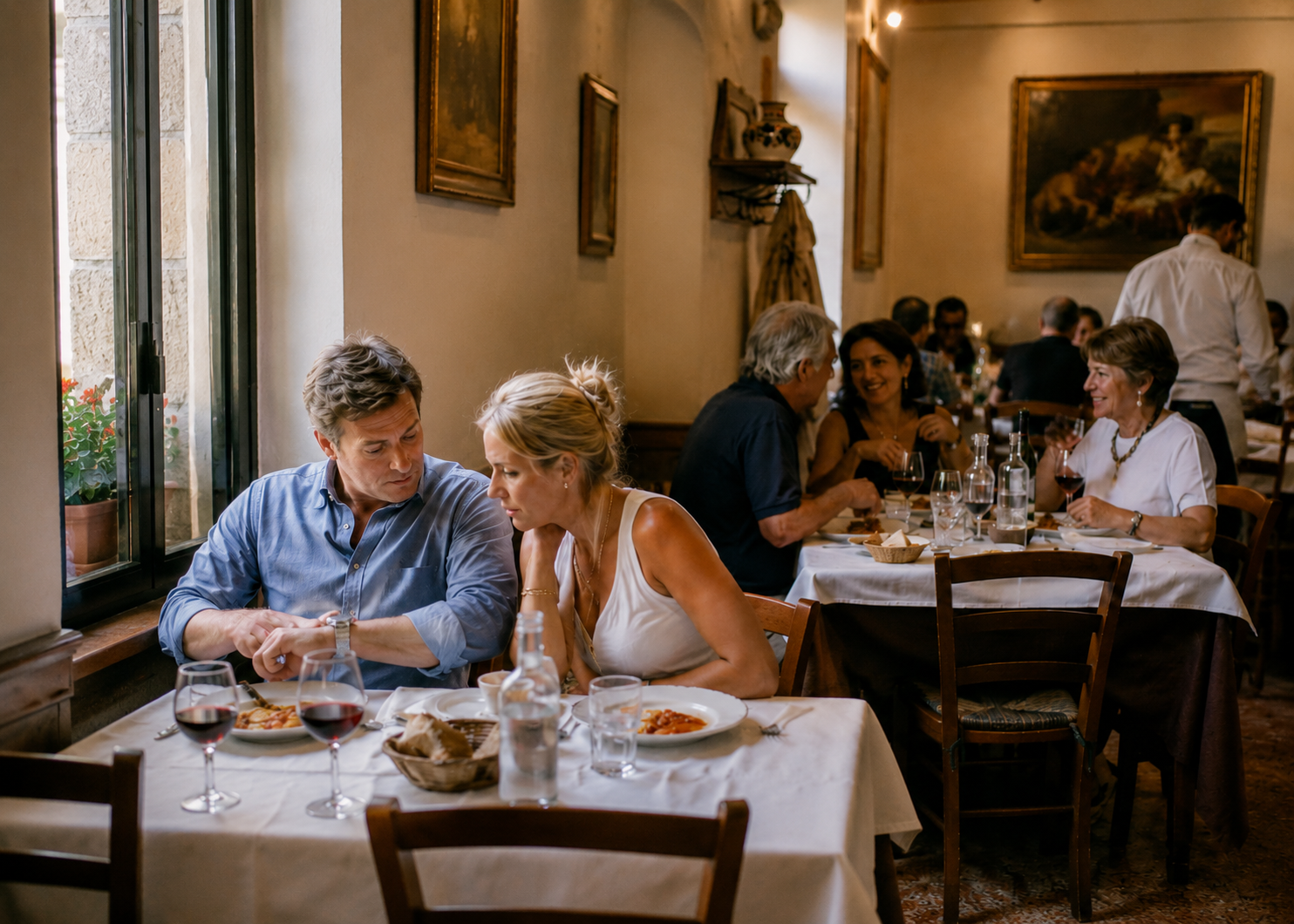
The American eats to finish. The Italian eats to be there. The waiter can tell which one sat down within about four minutes.
An Italian meal, especially dinner, is an event with its own unhurried pace, courses arriving in sequence with pauses between, the whole thing unfolding over a couple of hours, and the waiter paces the night to that rhythm. The American instinct, to get the food, eat it, get the check, and go, reads as a kind of anxiety, a failure to understand that the sitting is the point, not an obstacle between you and the exit. The tourist who asks for everything at once, eats fast, and wants the bill the moment the fork is down has announced that they think of dinner as refueling, and the waiter adjusts to that, delivering the efficient version because that is what has been requested.
The fix costs nothing but a change of mind. Let the meal take its time, order in courses, talk between them, let the pauses happen, and understand that the waiter leaving you alone for twenty minutes is not neglect, it is respect for a table that is doing dinner properly. An Italian would be offended by a waiter who rushed them. The American, trained to read attentiveness as good service, has to unlearn the reflex and grasp that here, being left to your evening is the good service.
Asking For The Check Too Early, Or Expecting It At All
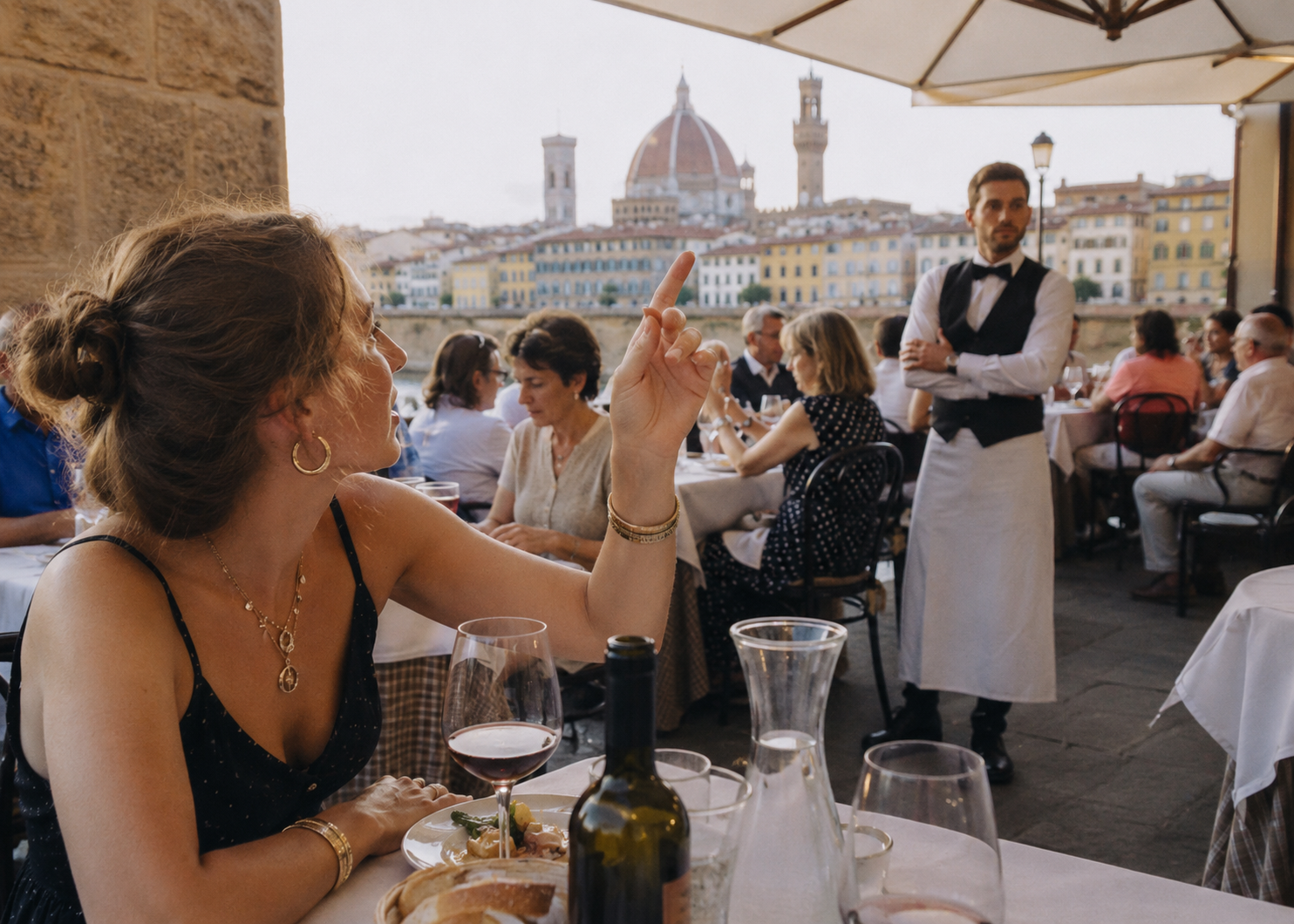
Connected to the rushing, but its own rule, is the check, which in Italy does not come until you ask, and the asking has its own timing.
In Italy the bill is never brought unbidden, because to drop the check on a table is to tell the diners to leave, and no Italian waiter would presume to end your evening for you. The check comes when you request it, il conto, and not a moment before, which means the American waiting for the bill to arrive, growing puzzled and then annoyed that it has not, has misread a courtesy as neglect. The waiter is not ignoring you. He is leaving you in possession of your table for as long as you want it, which is the gift, and the bill waits on your word.
The fix is simply to know it and to ask when you are ready, with a small gesture or a quiet request for il conto, at which point it arrives promptly. The deeper thing the rule teaches is the whole Italian attitude to the table, that it is yours for the evening, that no one will hurry you off it, and that the pace is in your hands rather than the restaurant’s. An American who understands this stops waiting for the check and starts enjoying the unhurried possession of the table that the unbrought bill is quietly offering, which is a better evening and a passed test at once.
Drowning Everything In Cheese, Bread, And Customization
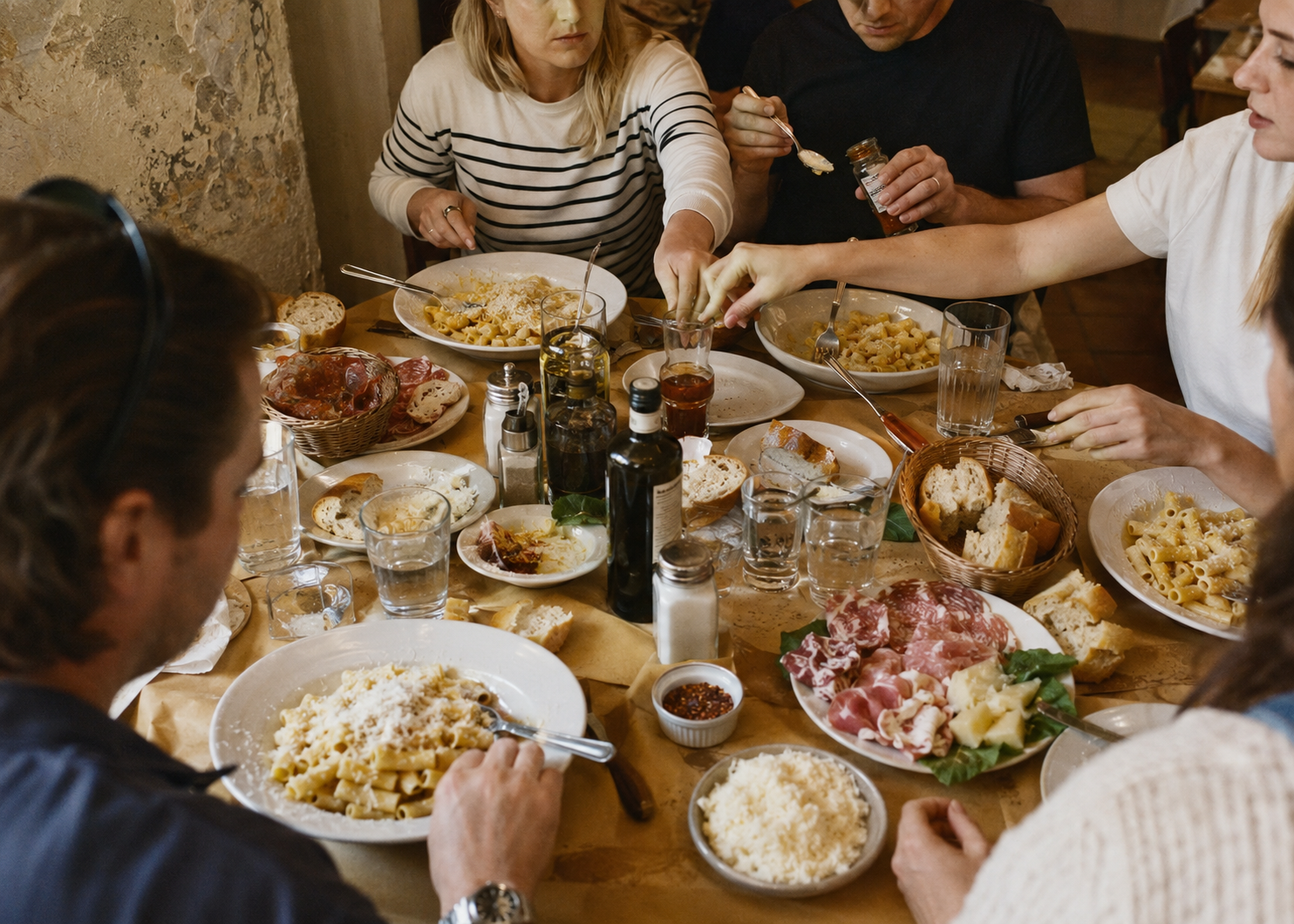
Beyond the seafood-parmesan line lies a broader rule, that the dish arrives as the kitchen intends it, and the American urge to modify is the thing being watched.
The American restaurant trains people to customize, substitutions, sauce on the side, extra this, hold that, the meal assembled to order, and in Italy this instinct reads as a small distrust of the kitchen. The dishes are composed, balanced, traditional, made the way they are made for reasons, and the request to alter them, to add cheese where there is none, to swap components, to remodel the plate, tells the waiter that the diner does not trust the cooking to know what it is doing. Bread is the small daily example, it comes to mop and accompany, not as a pre-meal course with butter, and the American treating it as a bread-basket starter is reading an Italian table through an American one.
The fix is trust and a light touch. Order what the menu offers as it offers it, let the kitchen make the dish its way, use the bread the Italian way, and save the customizing instinct for home. This is not about rigidity, Italians have their own preferences and make them known, but about the default posture being trust in the kitchen rather than command over it. The waiter watching an American accept the dish as composed, rather than rebuild it on arrival, reads someone who came to eat Italian food rather than to make Italian ingredients do American things.
Bad Bread And Oil Behavior
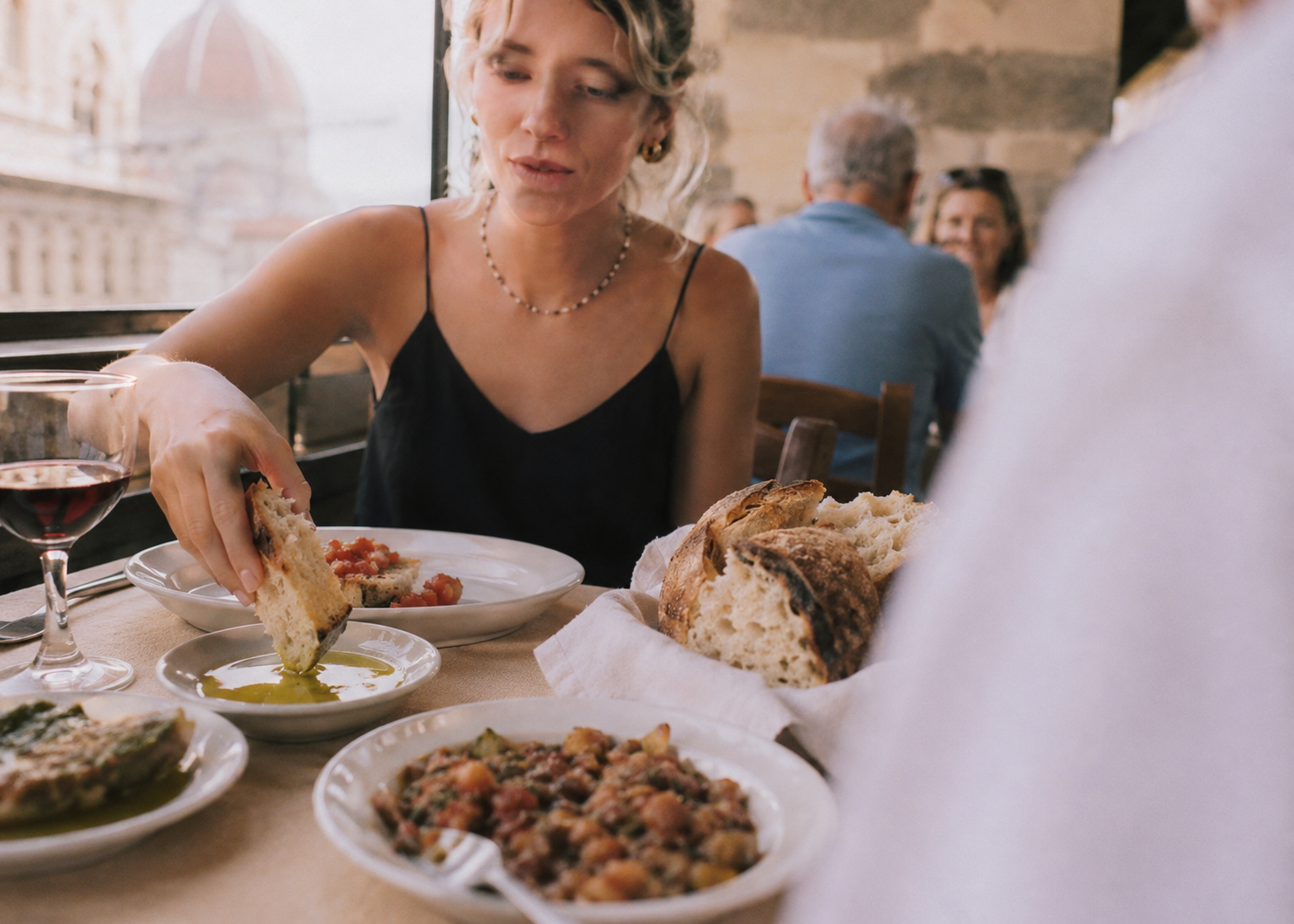
A specific table ritual trips up Americans constantly, the bread and the olive oil, because the American version of it is not the Italian one.
In much of America, bread arrives with a dish of olive oil, perhaps balsamic, for dipping before the meal, and Americans import this expectation to Italy, where it is not really the custom. Italian bread on the table is there to accompany the meal and to do the fare la scarpetta at the end, the mopping up of the good sauce left on the plate, which is not only allowed but is a quiet compliment to the kitchen. It is generally not there as a pre-meal dipping course in oil and vinegar, and the American dunking bread in a dish of oil before the food arrives is performing a ritual that belongs to an American Italian restaurant, not an Italian one.
The fix is to let the bread do its real Italian jobs, accompanying the meal and, at the end, the joyful scarpetta, dragging a torn piece through the last of the sauce, which Italians do with relish and which marks you as someone who knows. Skip the pre-meal oil-dipping ceremony, which is not the local custom, and embrace the scarpetta, which is, and you have swapped the American Italian ritual for the actual Italian one. The waiter notices the scarpetta with approval, the sign of a diner enjoying the food the way it is meant to be enjoyed, down to the last swipe of sauce.
Treating The Waiter Like American Waitstaff
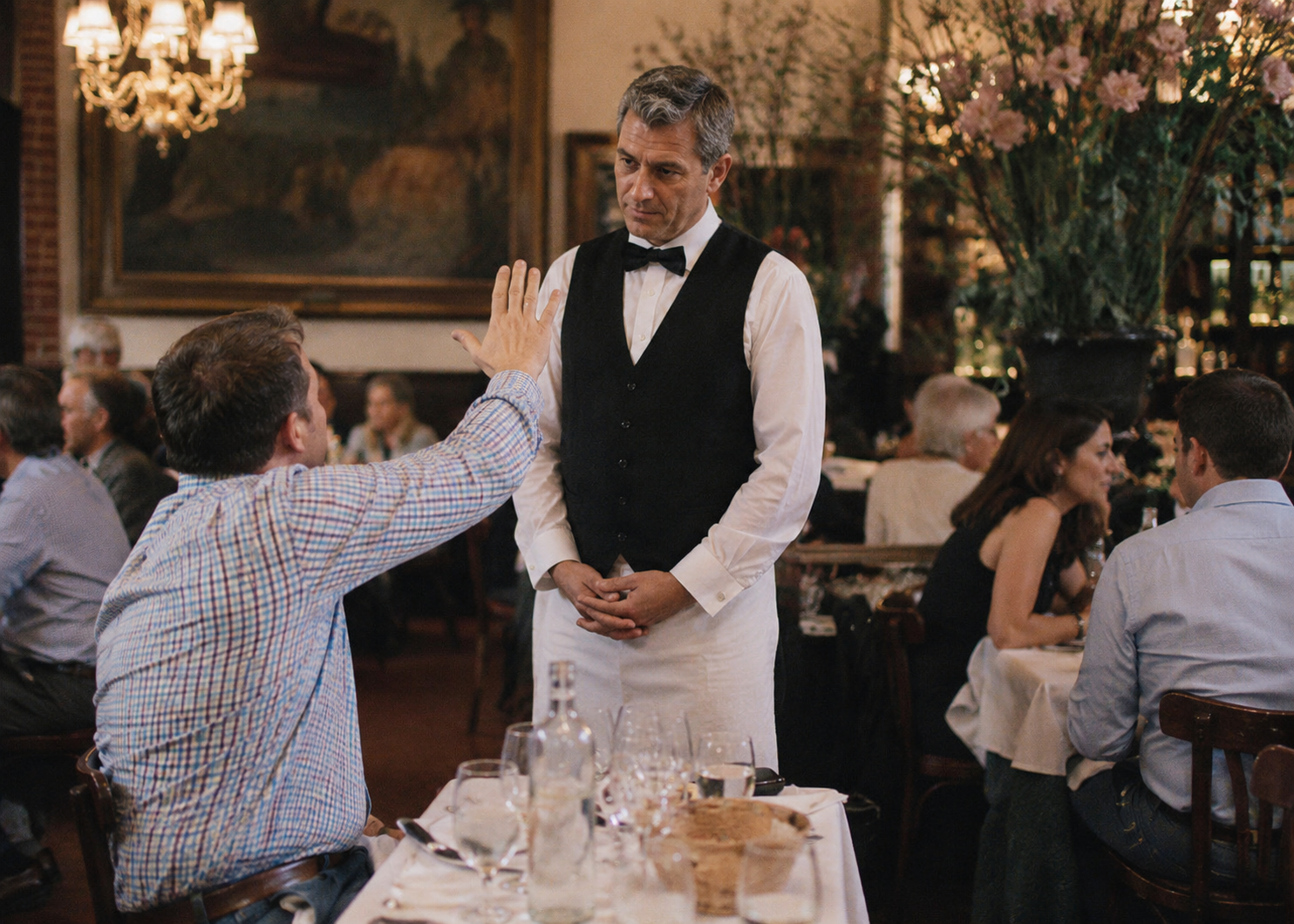
The relationship between diner and waiter runs differently in Italy, and the American who imports the American version gets it subtly wrong.
The American waiter performs friendliness, introduces themselves, checks back constantly, is tipped heavily and behaves accordingly, and the American diner expects this warm, attentive, frequently-interrupting service. The Italian waiter is a professional running a table with dignity and a certain reserve, attentive when needed and absent when not, neither your new friend nor your servant, and the American expecting the chummy check-every-five-minutes routine reads the Italian’s professional reserve as coldness, while the American performing excessive matey-ness can read, to the Italian, as slightly undignified. The relationship is more formal, more mutually respectful, and less performed than the American one.
The fix is to meet the Italian register, polite, warm but not effusive, treating the waiter as a competent professional rather than a friend or a servant, getting their attention with a clear discreet gesture rather than either a snap or an over-familiar hail. Tipping confirms it, since Italy does not tip the American way, service is different and rounding up or leaving a small amount is plenty, and the American leaving a towering American tip is not generous so much as foreign. Match the Italian register, and the waiter relaxes into the easy mutual respect that is the real Italian service relationship, better than the performed American one once you understand it.
The Eighth Rule, Which Contains The Other Seven
The deepest test, underneath all the specific ones, is whether you treat the meal as something to be entered on its own terms or imposed upon from yours.
Every specific rule, the coffee, the cheese, the pace, the check, the customizing, the bread, the waiter, is really one rule wearing different clothes, that Italian eating is a coherent culture with its own internal logic, and the diner either steps into that logic or stands outside it trying to make it behave like home. The waiter is not checking whether you are Italian, which you obviously are not, or whether you know every rule, which you cannot. He is checking whether you arrived curious and respectful, willing to eat the way the place eats, or whether you came to have an American meal that happens to be in Florence. That posture, far more than any single rule, is what he reads and what determines which version of the evening you get.
The wonderful thing is that passing requires no performance and no expertise, only the willingness to follow the culture’s lead, eat in courses, trust the kitchen, take your time, have the espresso, do the scarpetta, treat the waiter as a professional, and let dinner be the long Italian event it wants to be. Do that and you will get every rule slightly wrong in the details and still pass overwhelmingly, because the thing being tested was never the details but the attitude, and an American who comes to Florence ready to eat as Florence eats is welcomed warmly whatever small mistakes they make. The eight rules are really one invitation, to stop eating like a tourist and start eating like a guest, and the Florentine waiter, that unbluffable man, opens up the moment he sees you accept it.
What Passing Actually Gets You
It is worth being concrete about the reward, because the test is not its own point, the better evening is.
When the Florentine waiter decides you are a guest rather than a tourist, the night changes in small specific ways. The recommendations stop being the safe tourist suggestions and become the things he would tell a friend, the dish not on the English menu, the wine the table next to you is drinking, the way the kitchen does the bistecca tonight. The pacing relaxes into the real Italian rhythm rather than the efficient tourist version. A small thing might arrive unbidden, a taste of something, a splash of the good digestivo at the end, the gestures a restaurant makes for people it has decided it likes. None of it is dramatic, and all of it adds up to the difference between eating at a place and being welcomed by it.
The deeper reward is that you get the real Florence, the one the tourists eating fast at the next table will never see, because they failed a test they did not know was running and got the polite cold version without ever understanding why their evening felt thinner. Florence, like all of Italy, keeps its best self for those who approach it on its own terms, and the table is one of the main places that self is offered or withheld. Learn to pass the waiter’s quiet exam and the city opens a door, the same door it has been opening for curious respectful guests for five hundred years, the one marked, if you could read the sign, for people who came to eat the way Florence eats.

About the Author: Ruben, co-founder of Gamintraveler.com since 2014, is a seasoned traveler from Spain who has explored over 100 countries since 2009. Known for his extensive travel adventures across South America, Europe, the US, Australia, New Zealand, Asia, and Africa, Ruben combines his passion for adventurous yet sustainable living with his love for cycling, highlighted by his remarkable 5-month bicycle journey from Spain to Norway. He currently resides in Spain, where he continues sharing his travel experiences with his partner, Rachel, and their son, Han.