
Order a glass of red in a Madrid bar and the pour costs less than a coffee in some American cities. It will also, very often, be better than the bottle you paid thirty dollars for back home. Spain sits on more vineyard land than any country on earth, makes wine the French would charge triple for, and stays a relative secret to most American drinkers, who reach for France or Italy out of habit.
That habit is worth breaking. Spanish wine offers something the famous French regions increasingly cannot, which is serious quality at prices that have not yet caught up to the reputation. From this side of the Pyrenees, watching Americans pay French prices for French names, the value gap looks almost unfair. Here are six regions worth knowing, and the specific thing each one does that its French rival charges far more for.
Rioja, For Aged Reds That Bordeaux Cannot Match On Price
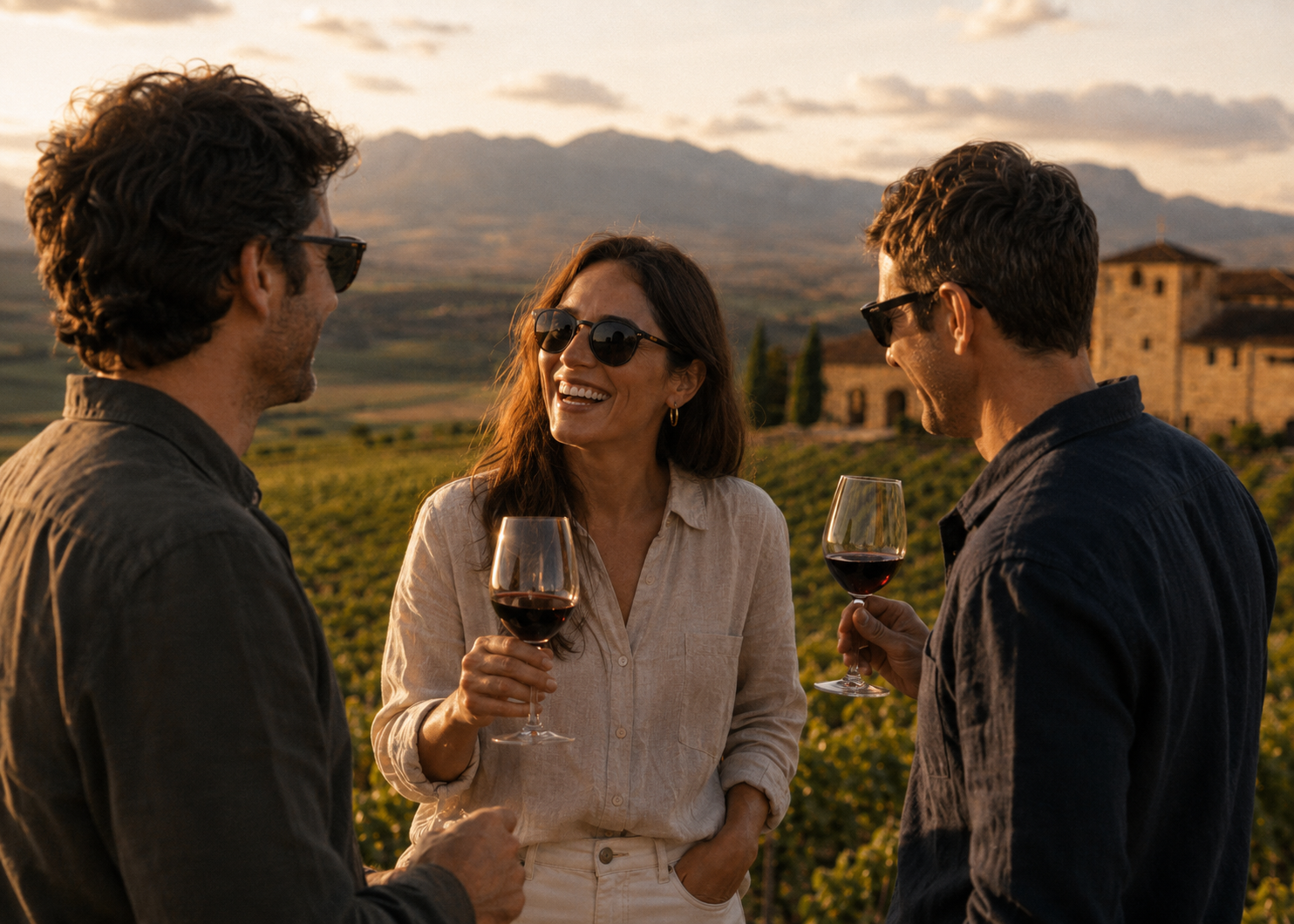
Rioja is where most Americans should start, because it does the one thing that makes French wine expensive, long oak aging, and sells it for a fraction of the Bordeaux equivalent.
The region built its identity on Tempranillo aged for years before release. A Rioja labeled Reserva has spent at least three years aging, much of it in oak barrels, before it ever reaches a shelf. A Gran Reserva has spent at least five. In Bordeaux, that kind of patient barrel time pushes a bottle into serious money. In Rioja, a genuinely aged Gran Reserva still sits at a price an ordinary drinker can justify on a weeknight.
What you taste is the payoff of all that time, soft leather and dried cherry and vanilla, the sharp edges already smoothed away by the aging the producer did for you. You are buying maturity off the shelf. A young Bordeaux at the same price needs years in your own cellar to become drinkable. A Rioja Reserva is ready the moment you open it, because the waiting already happened. For an American used to the idea that good red wine demands either patience or a large budget, Rioja quietly removes both requirements.
It helps to know the region is not one place but three, and the label often tells you which. Rioja Alta and Rioja Alavesa, in the cooler, higher western part, make the more elegant, structured wines built for long aging. The warmer eastern zone, now called Rioja Oriental, makes rounder, riper, fruitier wines, often with more Garnacha blended into the Tempranillo. Neither is better, but knowing the split helps you choose: the western zones for the classic aged style, the east for something softer and more immediately generous. The blend matters too, since Tempranillo gives the backbone and Garnacha adds warmth and body, and most Riojas lean on that partnership rather than a single grape.
Ribera Del Duero, For Power That Rivals The Great French Names
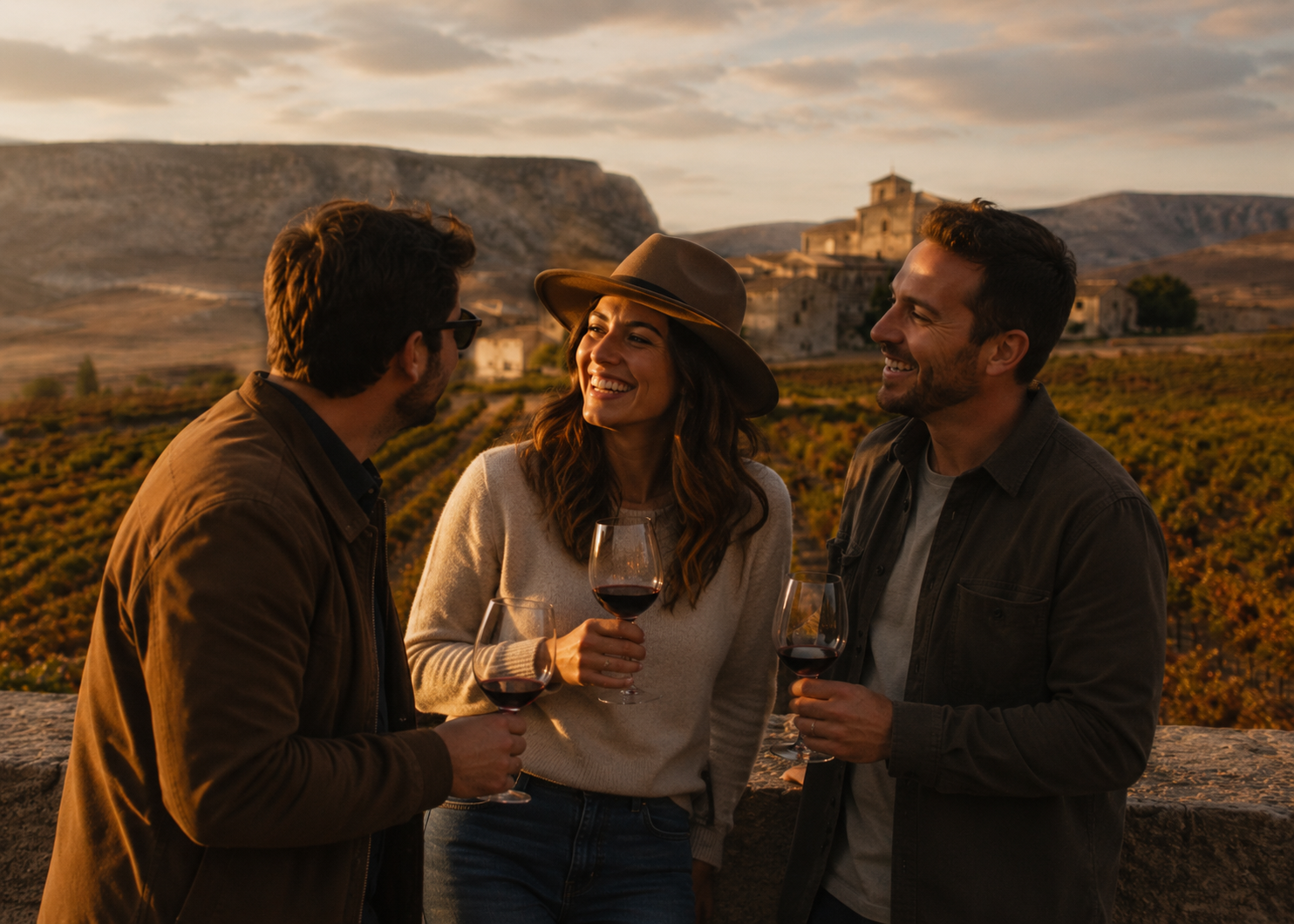
An hour’s drive from Rioja, along the Duero river, the same Tempranillo grape makes a completely different wine, and this is the one that competes with France’s most prestigious bottles on sheer intensity.
The high, harsh plateau of Ribera del Duero, brutally hot by day and cold by night, stresses the vines into producing dark, concentrated, powerful reds with more muscle than their Rioja cousins. The locals call the grape Tinto Fino here, a regional clone of Tempranillo adapted to the punishing altitude, and the wines it makes are dense and structured in a way that invites comparison to the heavyweights of the French establishment. One Ribera estate, Vega Sicilia, is regularly mentioned in the same breath as the first growths of Bordeaux, and its bottles command the same kind of prices, which is the proof that this dusty Castilian plateau can produce wine at the very top of the global scale.
The altitude is the secret. Many of the best vineyards sit well above 700 meters, where the enormous gap between hot days and cold nights lets the grapes ripen their sugars fully while holding onto acidity and developing thick, dark skins. Those skins are where the color, the tannin, and the concentration come from, which is why Ribera reds pour almost opaque and fill the mouth with dark fruit and structure.
The comparison that matters for a buyer is at the everyday level, not the trophy level. A mid-priced Ribera del Duero delivers a concentration of fruit and structure that a French wine of equivalent power would price well above it. If you like big reds, the kind that stand up to a steak and fill the glass with dark fruit, Ribera is where Spain answers France directly and undercuts it on the bill. Start with a Crianza or a young Reserva from the region and you get the muscle without the trophy-bottle price.
Rías Baixas, For A Seafood White The Loire Cannot Beat
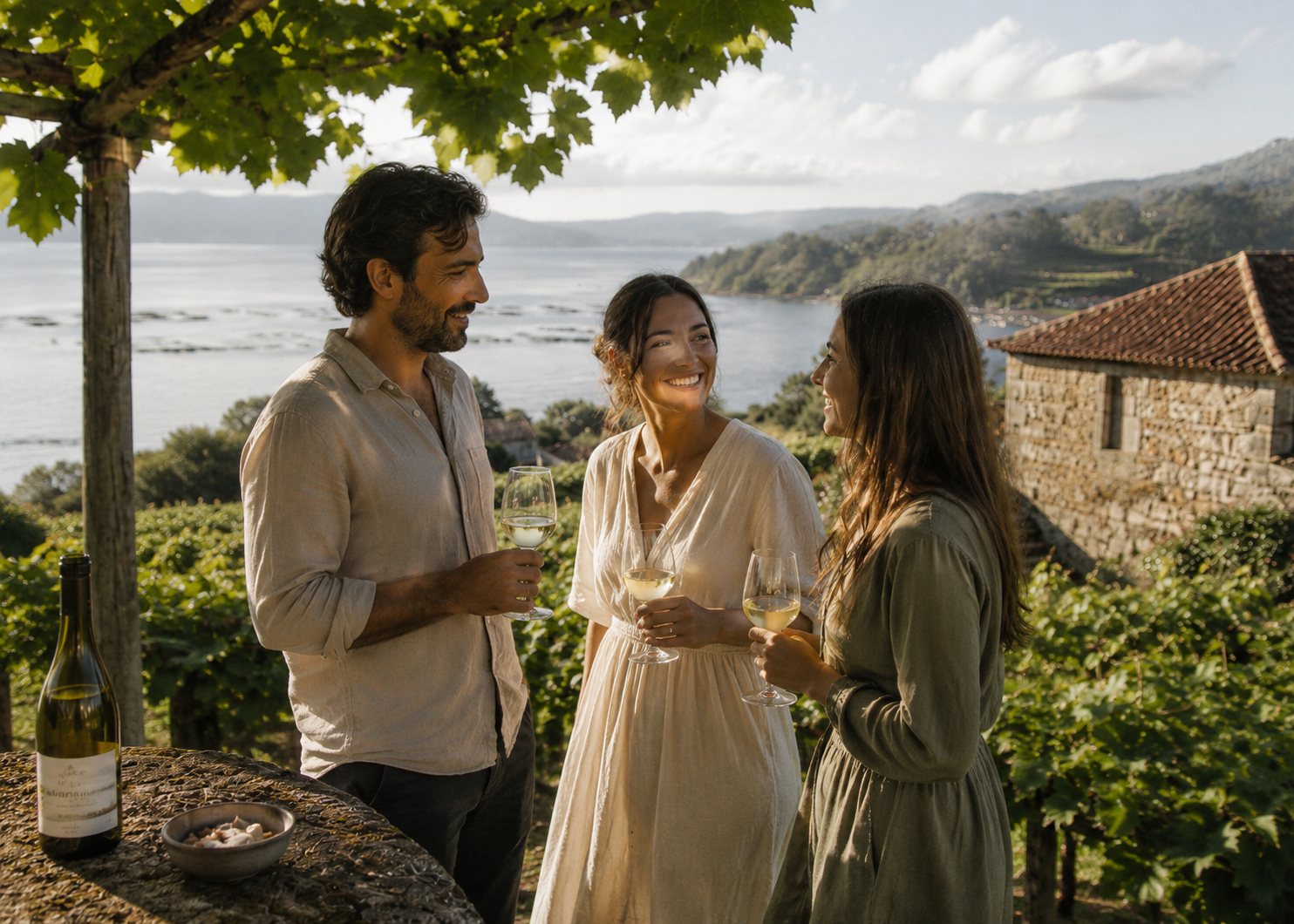
Spain is not only red, and its best white answers one of France’s signature categories, the crisp seafood wine, with something arguably better suited to the job.
In the green, rainy northwest corner of Galicia, the Albariño grape makes a bright, saline, citrus-edged white that tastes like it was designed for shellfish, because in a sense it was. This is Atlantic coast wine, grown in sea air on granite soils, and it carries a mineral salinity that makes it sing alongside oysters, clams, and grilled fish. The French equivalent is the crisp white of the Loire, a Muscadet or a Sancerre, the traditional reach for a plate of seafood.
Galicia barely feels like the Spain of the popular imagination. It is cool, wet, and green, closer in climate to the Atlantic coast of France or even Ireland than to the sunbaked interior, and that climate is exactly what gives Albariño its nervy freshness. The vines are often trained high on granite posts, a traditional method that lifts the fruit off the damp ground and lets the sea breeze move through, and the wines carry that coastal character right into the glass.
What Rías Baixas does that those French wines often do not is combine that crispness with a rounder, more aromatic fruit, peach and citrus and a faint floral note over the saline base, so the wine is refreshing without being austere. It is the bottle to bring to a seafood dinner, and it tends to cost less than a Sancerre of comparable quality. For an American who only knows Spanish white as an afterthought, Albariño is the discovery that reframes the whole category, and the one most likely to convert a committed red drinker to caring about white at all.
Priorat, For Intensity The Rhône Charges A Fortune For
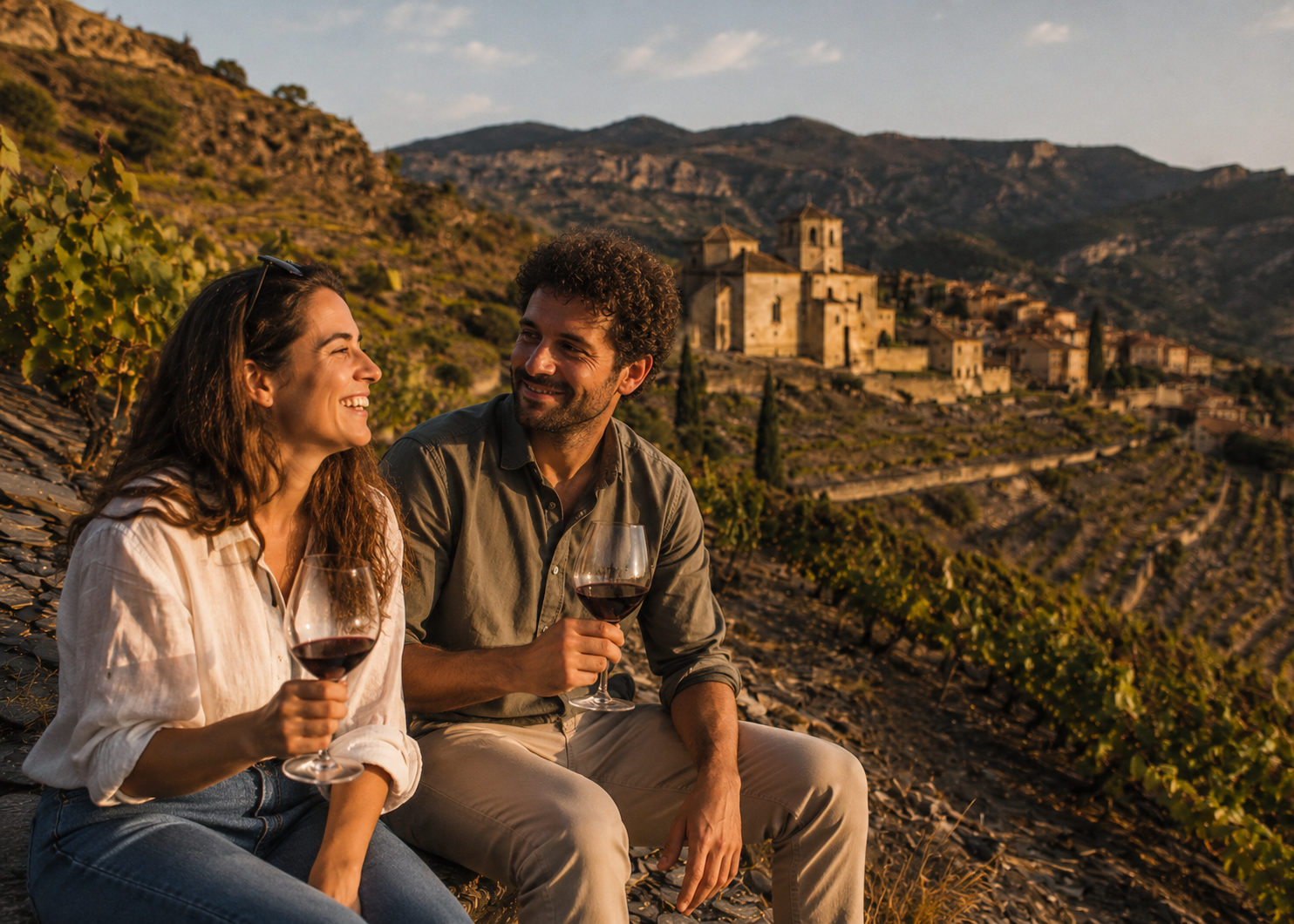
For the drinker who wants something rare and serious, Priorat is Spain’s answer to the powerful reds of southern France, and one of the few Spanish regions that has begun to command genuinely high prices, for good reason.
The wines come from a small, steep, almost vertical landscape of dark slate the locals call llicorella, where old vines of Garnacha and Cariñena cling to terraces and produce tiny yields of intensely concentrated fruit. The slate forces the roots deep in search of water, and the resulting wines are mineral, powerful, and unmistakably of their place. The natural French comparison is the Rhône, the dense Grenache-based reds of Châteauneuf-du-Pape and its neighbors, since Garnacha and Grenache are the same grape and Cariñena is the Spanish Carignan.
Priorat has a story worth knowing, because it explains both the quality and the price. The region was nearly abandoned through much of the twentieth century, its ancient terraced vineyards left to decline, until a small group of winemakers arrived in the late 1980s and recognized what the old vines and the slate could do. Their wines stunned the critics within a decade, and Priorat went from forgotten backwater to one of only two regions in Spain to hold the top DOCa classification, the same tier as Rioja. That revival is why the wines are not cheap by Spanish standards, since the yields are tiny and the farming on those vertical slate terraces is brutally labor-intensive.
Priorat earns its higher Spanish price tag, but the comparison still favors it. A serious Priorat delivers the depth and minerality of a top Rhône wine, and even at its elevated prices it tends to sit below the most sought-after French equivalents. This is the region to explore once Rioja and Ribera have done their work, the step up that shows what Spanish reds can do at the very top of their range.
Rueda, For An Aromatic White That Undercuts Sancerre
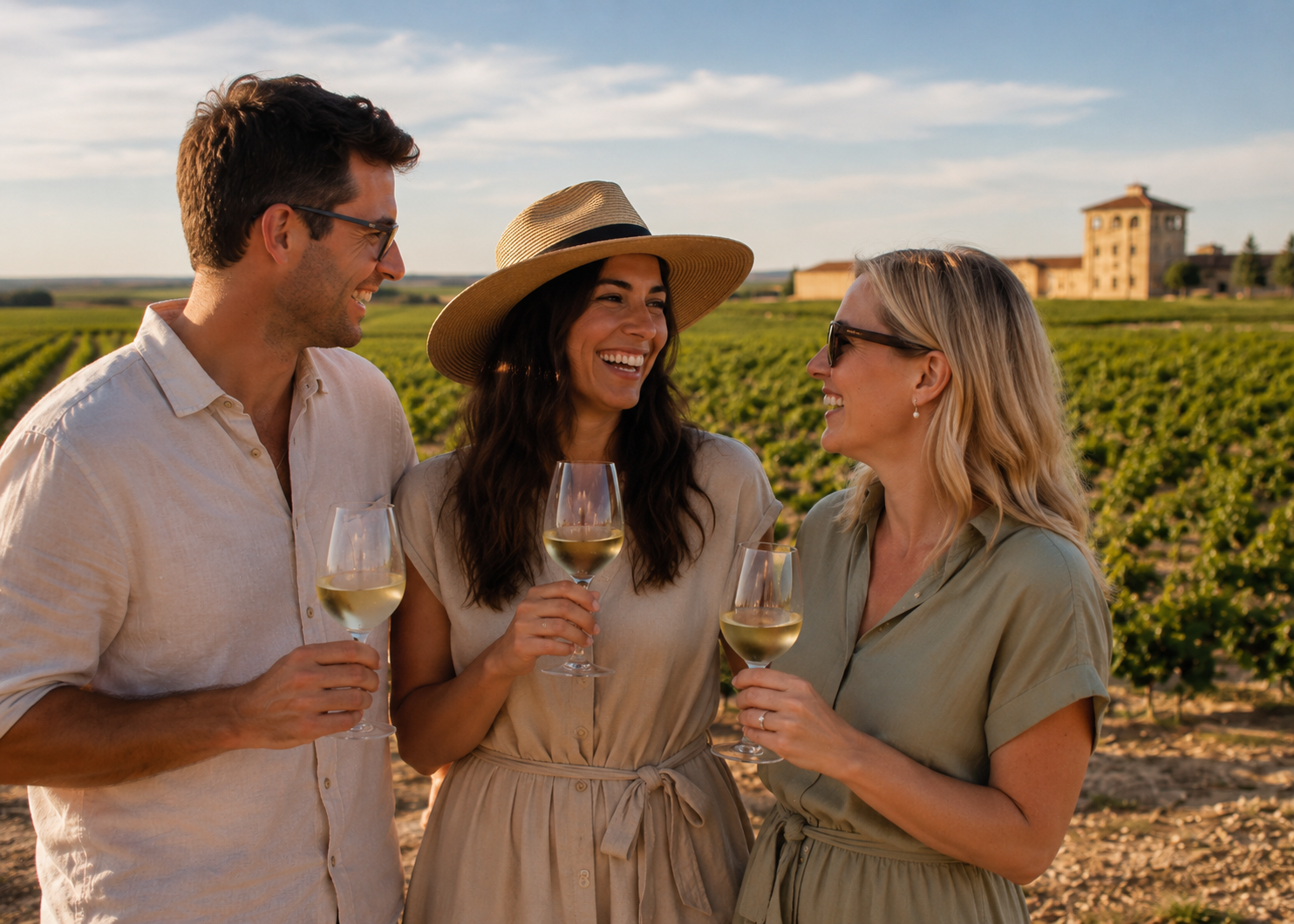
Back among the everyday bottles, Rueda is the region that quietly solves the problem of the affordable, aromatic, crowd-pleasing white, the role the Loire’s Sauvignon Blanc usually plays.
The Verdejo grape makes a fresh, herbal, slightly nutty white with a citrus snap and a faintly bitter almond finish that keeps it interesting. It drinks easily on a warm evening, pairs with almost anything light, and asks nothing of the drinker. The French comparison is Sancerre or the broader category of Loire Sauvignon Blanc, the go-to crisp white for people who want something reliable and bright. Rueda sits on the high plains of Castilla y León, where hot days and cool nights again do the work of preserving freshness in the grapes, giving the wine its lively acidity despite the heat.
There is history in the glass too. Rueda was historically known for a heavy, oxidized, sherry-like wine that had fallen out of fashion, and the region reinvented itself from the 1970s onward around fresh, modern Verdejo, a transformation so complete that most drinkers today have no idea the old style ever existed. The result is one of Spain’s most reliable everyday whites, made in enormous quantity to a consistently good standard.
The case for Rueda is almost entirely about value. A good Verdejo costs a fraction of a Sancerre and delivers most of what a casual drinker wants from that style, the freshness, the aromatics, the easy food pairing. It is the house white that makes you wonder why you were paying Loire prices for the same job. For stocking a fridge rather than a cellar, Rueda is the smart Spanish default, the bottle you buy by the case for summer.
Jerez, For Something France Simply Does Not Make

The last region on the list is the one with no French rival at all, because nobody in France makes anything quite like it.
In the far south, around the town of Jerez de la Frontera, Spain makes Sherry, a fortified wine of extraordinary range that most Americans know only as a sweet afterthought, if they know it at all. That reputation does it a deep disservice. A bone-dry fino or manzanilla, served cold, is one of the great aperitif wines of the world, bracing and saline and astonishing alongside olives, almonds, and jamón. An amontillado or oloroso brings nutty, savory depth that goes with almost any rich dish, and a true Pedro Ximénez is dark as motor oil and sweet as raisins, a dessert in itself.
The way Sherry is made has no real parallel, which is part of why nothing else tastes like it. The dry styles age under a layer of living yeast called flor that forms on the surface of the wine and protects it from the air while it develops a distinctive tang. The wines then pass through a solera, a stacked system of barrels where younger wine is gradually blended with older, so that a bottle of Sherry is a blend across many years rather than a single vintage. This is centuries-old technique, and it produces flavors that simply cannot be made any other way.
This is the region that rewards curiosity most, precisely because there is no French equivalent to fall back on. France has nothing in this category, no fortified style with this combination of dryness, complexity, and price. A genuinely fine dry Sherry costs very little for what it delivers, partly because the world has not yet caught on and partly because the region produces more than the fashionable demand requires. For the American willing to try the least familiar wine on this list, Jerez offers the biggest surprise and the steepest drop in price for the quality in the glass.
Why Spanish Wine Still Costs So Little
It is worth pausing on the reason all of this is cheaper than it should be, because understanding it tells you how long the bargain will last.
Spain has more land under vine than any other country, and for most of modern history it sold much of that wine in bulk, cheaply, without the marketing machine that built the global reputations of Bordeaux and Burgundy. The quality revolution in regions like Ribera del Duero, Priorat, and Rías Baixas is recent, mostly a matter of the last few decades, and prices have not yet fully caught up to how good the wine has become. You are buying in the window between the quality arriving and the world noticing.
That window is closing, slowly. As critics and sommeliers push Spanish wine harder and as the best regions gain recognition, the prices climb to meet the reputation, the way they already have in Priorat and at the top of Ribera. The everyday Riojas and Ruedas and Albariños remain genuine bargains for now, but the structural reason they are cheap, that the world still reaches for France first, is exactly the thing that erodes a little every year.
How To Buy These Without Getting Lost
The practical problem for an American buyer is not desire, it is the unfamiliar labels, so a few simple rules make the whole category navigable.
For reds, let the aging words guide you. Crianza means a younger, fresher wine ready for casual drinking. Reserva means more aging and more seriousness. Gran Reserva means the producer aged it for years before selling it to you, which is the value proposition in a single word. You do not need to know the producer to know roughly what you are getting, which makes Spanish red one of the easiest categories in the world to buy blind.
For whites, match the grape to the meal. Albariño from Rías Baixas for seafood, Verdejo from Rueda for everyday pouring and lighter food. Both are usually labeled clearly with the region, and both reward buying the most recent vintage you can find, since freshness is the point and these are not wines built for aging. Sherry asks only that you start dry, with a fino or manzanilla, serve it properly chilled rather than at room temperature, and treat it as the food wine it is rather than the sticky after-dinner drink its reputation suggests.
The larger point is that the value gap between Spanish and French wine is real and currently in the drinker’s favor, but reputation eventually catches up to quality and prices follow. The regions on this list are not secrets forever. The smart time to learn them is while they are still underpriced, which for most of them is right now. Walk into a good wine shop, ask for a Rioja Reserva and a bottle of Albariño, and you will understand the argument better than any article can make it.

About the Author: Ruben, co-founder of Gamintraveler.com since 2014, is a seasoned traveler from Spain who has explored over 100 countries since 2009. Known for his extensive travel adventures across South America, Europe, the US, Australia, New Zealand, Asia, and Africa, Ruben combines his passion for adventurous yet sustainable living with his love for cycling, highlighted by his remarkable 5-month bicycle journey from Spain to Norway. He currently resides in Spain, where he continues sharing his travel experiences with his partner, Rachel, and their son, Han.