
Last updated on July 29th, 2026 at 11:52 am
The American walks into the bakery in Lyon and says “hi, how are you doing today?” The baker looks confused for a half second, then says “bonjour” and waits. The American is mildly hurt. The baker has not asked back. The transaction proceeds, the bread is purchased, and the American leaves with the impression that French people are cold.
This impression is wrong. The French baker was not being cold. The French baker was being polite by the standards of French interaction, which differ from American standards in a specific way that produces this exact misunderstanding thousands of times a day across France, year after year, without either side fully understanding what is happening.
The “how are you doing” greeting is not a French greeting. It is an American greeting that has been imposed on French interactions by visitors and expats who think they are being friendly. In French context, the question is not friendly. It is either inappropriate (asked of a stranger or acquaintance) or genuinely intrusive (asked of someone in a service role). The French response of “bonjour” without asking back is not the rejection it appears to be. It is the correct response to an inappropriate question.
This piece walks through what French people are actually doing when they greet, why the American “how are you” framework does not translate, and what Americans living in France or visiting France should do instead.

What French People Actually Do
The French greeting structure is more layered than the American structure and contains specific information about social distance.
When a French person enters a shop, a bakery, a cafe, or any small commercial space, the first word said is “bonjour.” This is non-negotiable. Failing to say “bonjour” is rude in a way that Americans often do not register, because Americans usually skip directly to the order or question. The “bonjour” establishes that you are a person acknowledging another person before commerce begins. The shopkeeper then says “bonjour” back, and only then does the actual transaction proceed.
For acquaintances and casual social contacts, the greeting is usually a simple “bonjour” or “salut” depending on time of day and degree of familiarity. There is no automatic follow-up question. The greeting itself is complete.
For closer friends, the greeting includes “ça va?” which translates roughly as “is it going?” This is closer to the American “how are you” but is still more limited. The expected answer is “ça va” (it’s going) or “ça va, et toi?” (it’s going, and you?). The conversation may then expand or may simply settle into whatever the actual topic is. The “ça va” exchange is a brief greeting marker, not an opening for an actual report on how someone is doing.
For genuine close friends and family, more substantive questions can come, but they come later, after the initial greeting has been completed and the conversation has moved into a private register. The substantive question “how are you really doing” is reserved for context where the person actually wants to know and the responder is willing to actually say.
The American “how are you doing” attempts to compress all of these registers into a single all-purpose phrase. The compression does not work in French context because the registers are kept distinct.
Why The American Phrase Does Not Translate

The American “how are you doing” carries specific cultural baggage that French language and culture do not have a place for.
In American context, “how are you doing” is a greeting marker that is not actually a question. The expected response is “good, how about you?” or “fine, thanks.” The actual state of the asker or the responder is not part of the exchange. The phrase functions as a friendly noise that acknowledges the other person without committing to anything substantive.
This works in American culture because Americans have collectively agreed that the phrase is empty. Both parties know it is empty. The emptiness is the point: it allows brief friendly contact without requiring actual engagement.
French culture does not have this convention. Questions in French generally mean what they ask. If someone asks how you are, the French speaker assumes they want to know. The American empty-question convention does not exist as a parallel cultural form. When an American imports the question into French interaction, the French listener has three options: take it as a genuine question (which produces awkwardness because the asker did not actually want a real answer), recognize it as an American import that means nothing (which produces a neutral non-response), or take it as a slight social violation (asking something inappropriately personal in a context where it does not belong).
The baker in Lyon, faced with the American “how are you doing today,” chose the third interpretation. The baker did not want to be asked how she was doing by a stranger buying bread. The question was not friendly in her cultural framework. It was a small intrusion that she handled by ignoring the question and proceeding with the actual transaction.
What This Reveals About French Social Structure
The French approach to greetings reflects a broader cultural pattern around the boundary between public and private life.
French interactions in public spaces are conducted at a specific register. Politeness, formality, acknowledgment of the other person as a fellow citizen, and progression to the actual purpose of the interaction. The register does not include personal questions, casual familiarity, or pseudo-friendly noises.
Personal questions belong to private life. A close friend asking “how are you?” with intent is engaging the private register. The same question from a stranger or a service worker is a category error: applying private register to a public context.
This is not coldness; it is structure. The French baker who responds with only “bonjour” is treating the American customer with the appropriate amount of respect for the public register. Asking back about the customer’s day would be intrusive. Sharing her own day would be inappropriate. The neutral response is the polite response.
The pattern extends beyond greetings. French people in public spaces generally do not engage in casual conversation with strangers. The waiting room, the queue at the bank, the elevator, the bus stop are not occasions for chatting. The American who tries to start friendly conversations in these spaces often experiences the same neutral non-response that confused the American at the bakery. The non-response is not unfriendliness. It is the maintenance of the public register.
When French people do engage in casual conversation, the markers are specific. A question that is genuinely about something practical (asking for directions, asking about the location of a product in a store, asking about the time of the next train) is welcomed. A statement that contains substantive content (commenting on the weather in a way that connects to something real, like an upcoming trip) can open a brief interaction. But the open-ended American conversational style (“hi, how are you, beautiful weather we’re having, where are you from”) is a category violation in French public space.
What Americans Get Wrong
Americans visiting or living in France tend to make specific mistakes around greetings and casual social contact.
Trying to be friendly the American way. The American walks into the shop, smiles, says “hi, how are you, beautiful day, isn’t it?” and expects warmth. The French shopkeeper does the minimum polite response and the American leaves feeling rejected. The American then concludes that French people are cold. The conclusion is wrong; the American was performing friendliness in a culturally inappropriate way and the French shopkeeper was responding correctly.
Skipping the bonjour. Many Americans walk into French shops and immediately start their request without saying “bonjour” first. This is the actual rude behavior. The shopkeeper notices. The American who skips bonjour is being rude in French terms even if they are smiling and being friendly in American terms.
Misreading the French response as personal coldness. The French shopkeeper or service worker who responds with appropriate professional politeness, completes the transaction efficiently, and does not engage in casual conversation is doing the job correctly. The American who interprets this as the shopkeeper not liking them or being having a bad day is reading personal coldness into structural politeness.
Persisting with American conversational style. Some Americans, recognizing that their first attempts at friendly contact did not work, conclude that they need to try harder. They become more effusive. They ask more questions. They try to share more about themselves. This makes the situation worse. The escalation moves further away from the French register rather than closer to it.
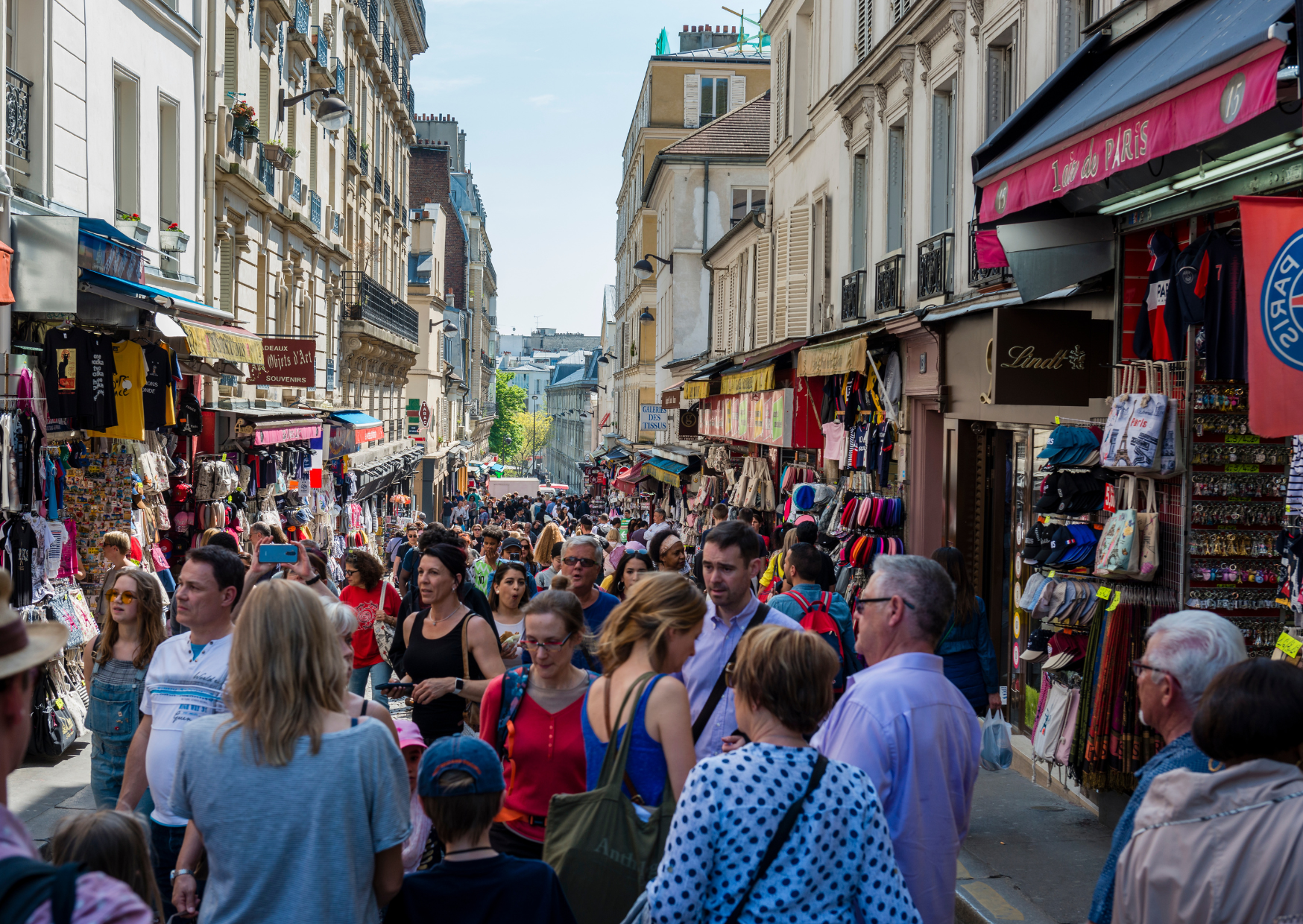
Confusing tourist-zone behavior with real French behavior. Tourist zones in Paris, the Côte d’Azur, and major cities have shopkeepers and service workers who have adapted to American conversational expectations and will respond in something closer to American style. This is not what French interactions are actually like. It is what tourist-zone French interactions are like, calibrated for the customer base. American tourists who only experience tourist zones often conclude that French people are friendly when they make an effort, when in fact the tourist zones are simply giving Americans the kind of interaction the Americans expect.
How To Actually Greet In France
The practical adjustments for Americans are several and specific.
Always say bonjour first. Walking into any commercial space, any office, any small social context, the first word is “bonjour.” Madame or monsieur if you know the person’s gender and title. Even just “bonjour” alone is sufficient. Do not skip this step. Skipping it is the actual rudeness Americans most commonly commit in France.
Wait for the bonjour back before proceeding. The exchange is a small ritual. You say bonjour, they say bonjour, then you say what you came to say. Trying to skip the second beat by going directly into your request after your own bonjour is also rude.
Do not ask “how are you” of strangers or service workers. The question does not belong in this context. If you want to be polite beyond bonjour, “merci beaucoup” at the end of the transaction is the right addition.
Reserve “ça va?” for friends and casual acquaintances. This is a real greeting marker for casual relationships, but it is not an all-purpose phrase. Use it where it belongs and not in commercial or stranger interactions.
Allow the conversation to develop or not develop based on French cues. If the French person you are speaking with extends the interaction beyond the basic transaction, follow their lead. If they keep it transactional, keep it transactional. Do not try to force a casual register on someone who is signaling that they want to keep things at the public register.
Recognize that French politeness is real. The French baker who efficiently completes the transaction, says “bonne journée” at the end, and turns to the next customer was being polite. The American who wanted more warmth was misreading what politeness looks like in this culture.
At the end of any interaction, say “merci, bonne journée” or some variation. “Merci, au revoir” works. “Bonne journée” alone works. The closing ritual is as important as the opening one. Walking out without a closing is rude in the same way walking in without bonjour is rude.
What The French Approach Recognizes

The French greeting structure recognizes something that the American structure does not: that asking someone how they are doing, when you do not actually want to know and they do not actually want to tell you, is a small lie that both parties are participating in.
The American framework treats this small lie as friendly social grease. The French framework treats it as inappropriate intrusion into a register where it does not belong. Neither framework is wrong. Each works internally. Each produces a specific kind of social experience. The American framework is warmer at the surface but emptier at the substance. The French framework is more reserved at the surface but, when you do reach the genuine question stage with someone, the question carries more weight because it is not asked casually.
The French acquaintance who eventually asks how you are really doing, after some months of polite acquaintance, is asking a real question. The answer matters to them. The conversation that follows is substantive. The American who has been waiting for this moment, having spent months feeling that French people did not seem to care about her, suddenly experiences French friendship as something deeper than American casual friendship typically is.
The structure produces the depth. The depth is hidden behind the structure. Americans who only see the structure and never reach the depth conclude that French people are cold. Americans who learn to navigate the structure and reach the depth conclude that French people are loyal, present, and substantively warm in ways American friendships often are not.
The French Rule Across Different Contexts
The general French pattern applies across most contexts but with specific local variations worth knowing.
Paris is the most formally cold-seeming environment because the volume of foreign visitors has trained Parisians to be efficient with strangers. The structure is the same as elsewhere in France but the warmth threshold is higher. Building a social life in Paris takes longer than in smaller cities for this reason.
Lyon, Toulouse, Bordeaux, and other major regional cities apply the same structure with somewhat more warmth available once acquaintance is established. The “bonjour” rule is enforced; the casual conversational rules apply; but reaching the genuine question stage with French friends generally happens faster than in Paris.
Smaller towns and villages apply the structure less rigidly in some specific contexts. The local boulangerie where the baker has known you for two years may include some pleasantries that go beyond the strict structural minimum. But even here, the foundation is the same: bonjour first, then the transaction, then the close. The pleasantries are an addition to the structure, not a replacement for it.
The French Riviera and other tourist-heavy areas show the pattern broken down by exposure to foreign visitors. Tourist-zone French behavior is not representative of French behavior generally.
Specific professional contexts (medical appointments, legal meetings, business interactions) have additional layers of formality that go beyond the basic greeting structure. The “Monsieur” or “Madame” form of address is generally maintained. The polite forms of speech (vouvoiement) are maintained. Casual familiarity is generally not appropriate.
What Long-Term American Residents Eventually Learn
Americans who live in France for several years generally come to appreciate the structure rather than resent it.
The initial frustration with French “coldness” usually fades within the first 12 to 18 months as the structure becomes familiar. The American starts saying “bonjour” automatically. The American stops asking “how are you” of strangers. The American begins to read the French response not as coldness but as appropriate professional politeness.
In the 18-month to 3-year window, Americans typically begin building actual French friendships. These friendships develop more slowly than American friendships but go deeper once they develop. The same French acquaintance who seemed cold for the first year becomes the friend who shows up consistently, who maintains the relationship over years, and who treats the friendship with seriousness that American friendships sometimes do not have.
By year 5, most American long-term residents in France have largely adopted the French structure for their own French interactions. They still use American patterns when speaking with American friends or visitors. The bilingual social pattern becomes natural.
By year 10, many American long-term residents find the French structure preferable. The “how are you” question, when it comes from American visitors, starts to feel intrusive in the way the French baker experienced it. The empty pleasantries that once felt warm now feel performative. The substantive engagement with friends, when it happens, feels more meaningful for being protected from constant casual contact.
This adaptation is not universal. Some Americans never fully adapt and continue to experience France as somewhat cold. But the pattern of gradual adaptation followed by genuine appreciation is common enough among long-term residents to be considered the typical trajectory.
What The Rule Actually Recognizes

The French rule about not asking “how are you” of strangers and service workers recognizes the integrity of three things: the question itself, the time of the person being asked, and the social register of the public space.
The question retains its meaning because it is asked only when the answer matters. The time of the service worker is respected because they are not required to participate in pseudo-personal exchange while doing their job. The public register is maintained because casual familiarity does not intrude into spaces where it does not belong.
The American rule about always asking “how are you” recognizes different things: surface friendliness, social lubrication, the comfort of constant low-grade contact. Neither set of values is wrong. Each produces a different kind of public life and a different kind of friendship structure.
For Americans visiting or living in France, the practical reality is that you are in a country with the French rule. Trying to apply the American rule does not produce more friendliness; it produces awkwardness, occasional rudeness, and the cold-French stereotype that gets repeated in American travel writing for the wrong reasons.
The French baker is not cold. The French neighbor is not unfriendly. The French shopkeeper is not having a bad day. They are all operating within a social framework that does not include the American greeting style and that produces real warmth through different mechanisms than Americans are used to.
The American who learns to say “bonjour” first, who stops asking “how are you doing today” of strangers, who allows French interactions to follow their own structure rather than forcing American structure onto them, has access to the actual France. The American who keeps performing American friendliness and concluding that French people are cold has access only to the surface and to the misunderstanding.
The French response of “bonjour” without asking back is not the absence of warmth. It is the presence of a different rule about where warmth belongs and where it does not. Once you understand the rule, France stops being cold. France becomes what it actually is: a country where public interaction is calibrated and private connection runs deep, where the structure is the protection and the depth is the reward.
The baker in Lyon was not rejecting you. The baker in Lyon was treating you correctly within her culture. Once you respond correctly within her culture, the interaction works. And occasionally, after enough correct exchanges, the baker says something extra, something specific, something that signals you are no longer a stranger. That moment, when it comes, is worth more than every “how are you doing today” you ever received in an American grocery store.

About the Author: Ruben, co-founder of Gamintraveler.com since 2014, is a seasoned traveler from Spain who has explored over 100 countries since 2009. Known for his extensive travel adventures across South America, Europe, the US, Australia, New Zealand, Asia, and Africa, Ruben combines his passion for adventurous yet sustainable living with his love for cycling, highlighted by his remarkable 5-month bicycle journey from Spain to Norway. He currently resides in Spain, where he continues sharing his travel experiences with his partner, Rachel, and their son, Han.